
Last updated November 25, 2026
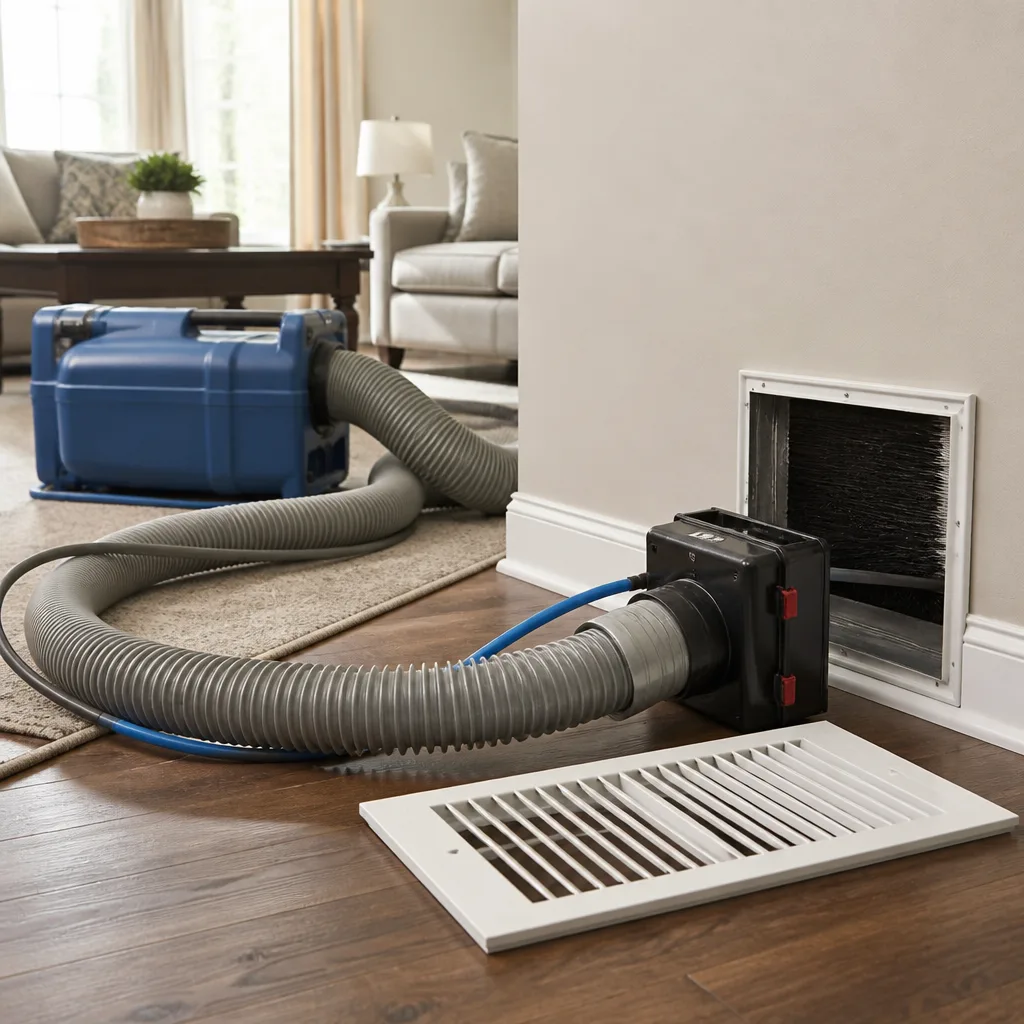 Whole-home duct cleaning
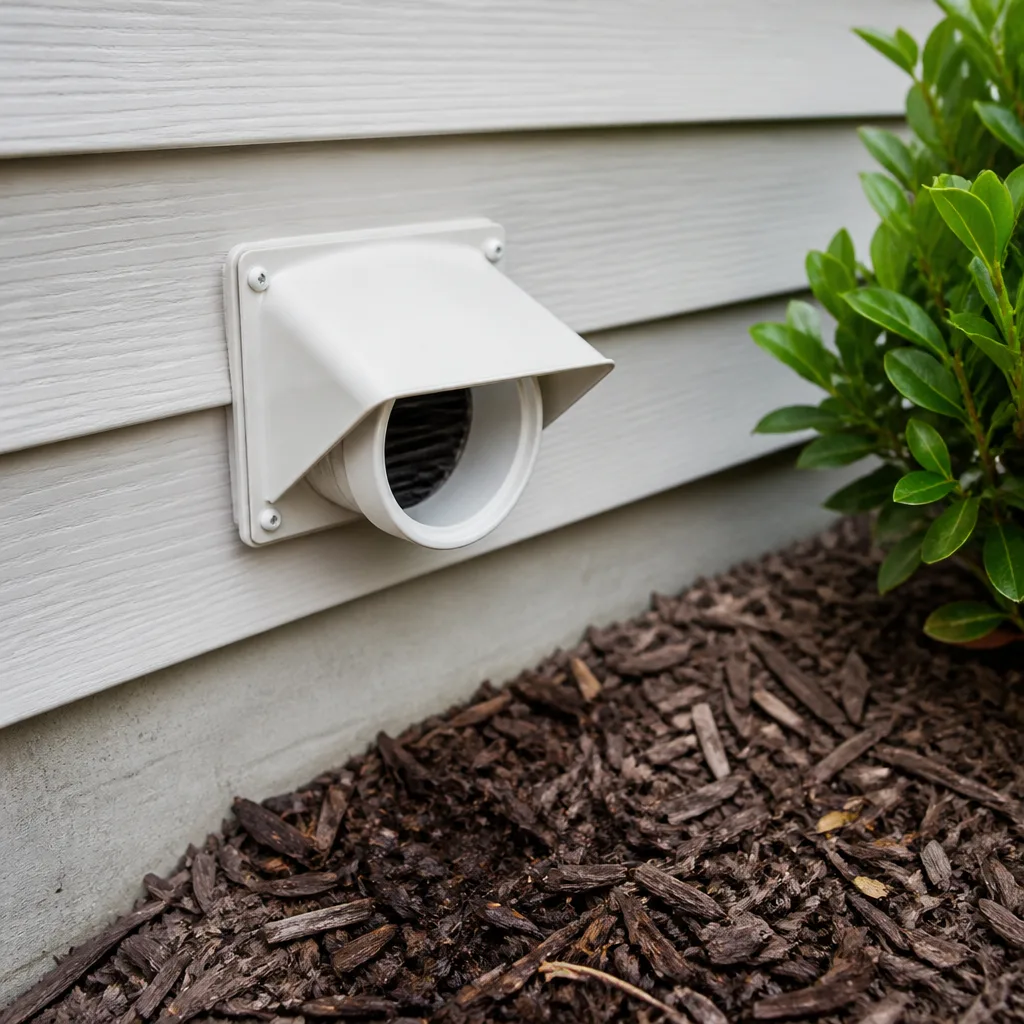 Dryer vent cleaning
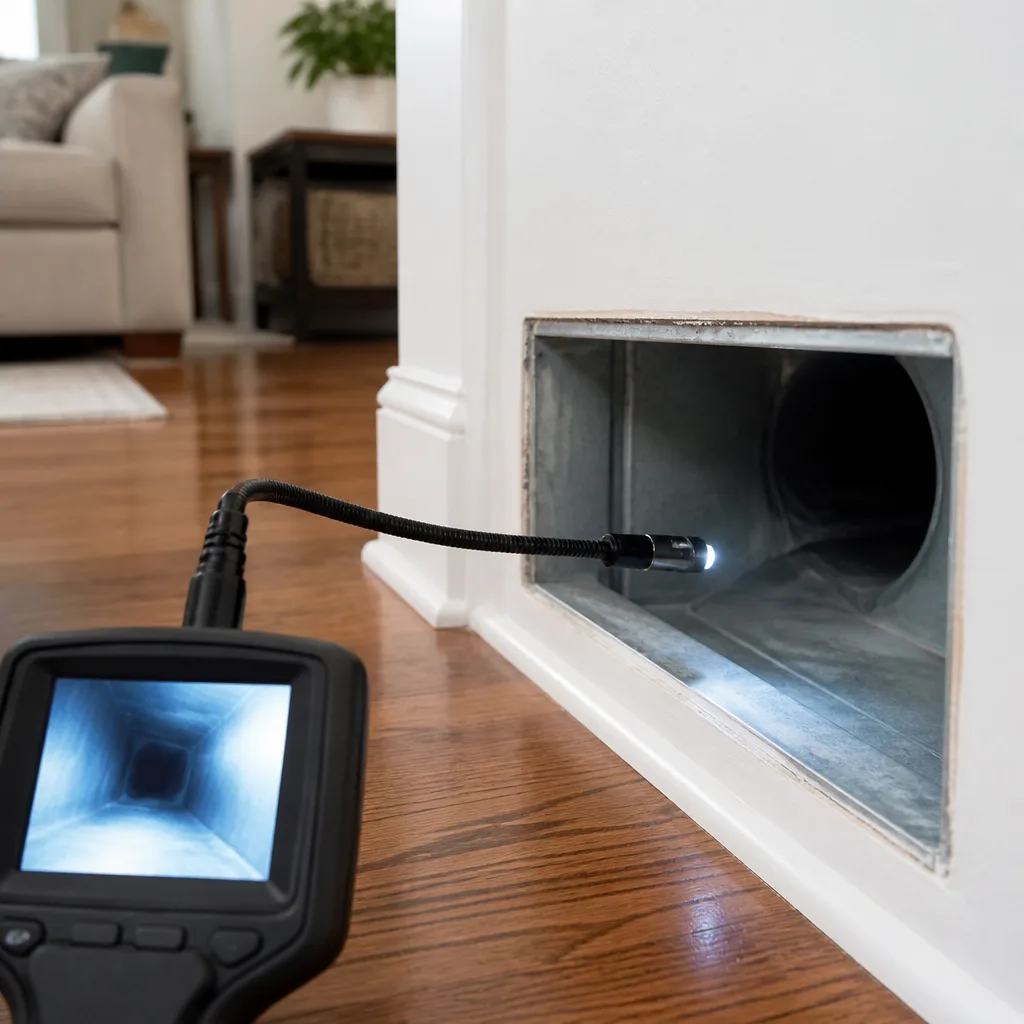 Camera inspection
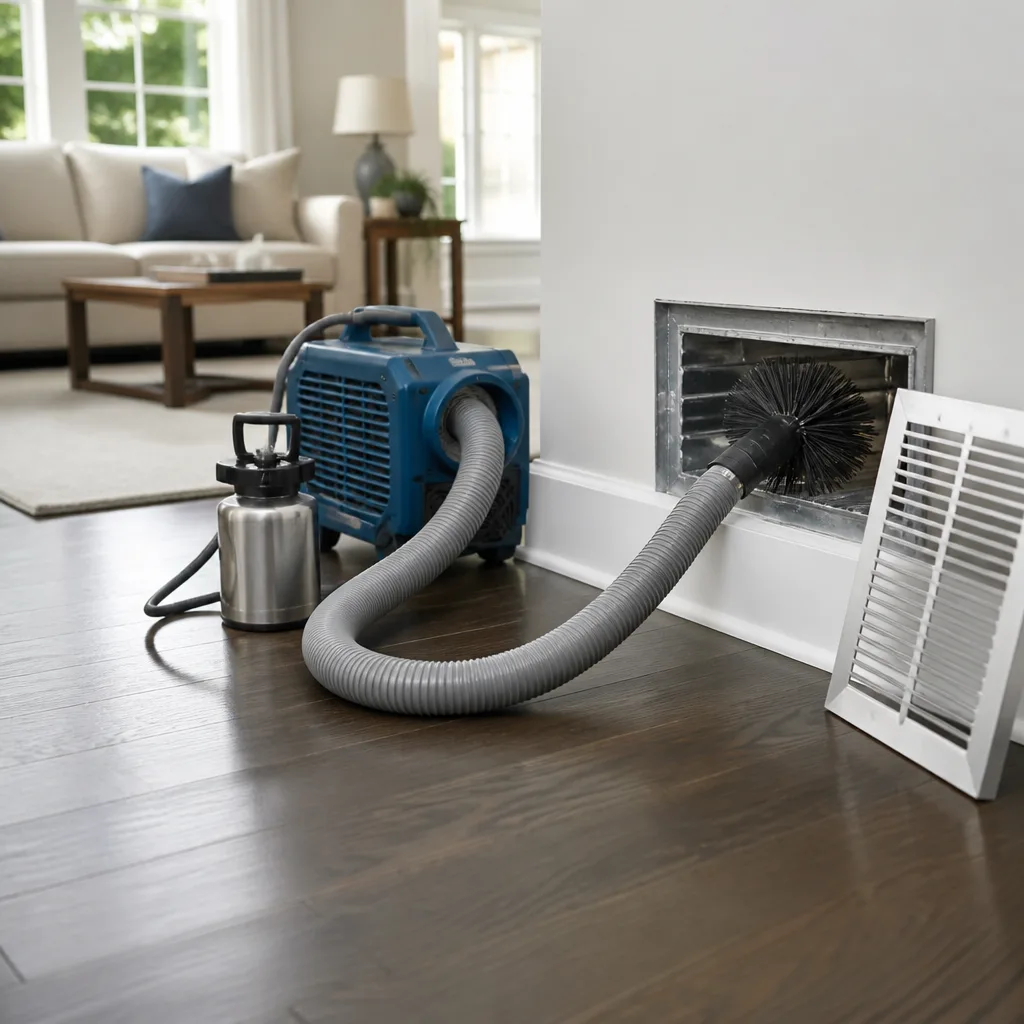 Sanitizing & deodorizing
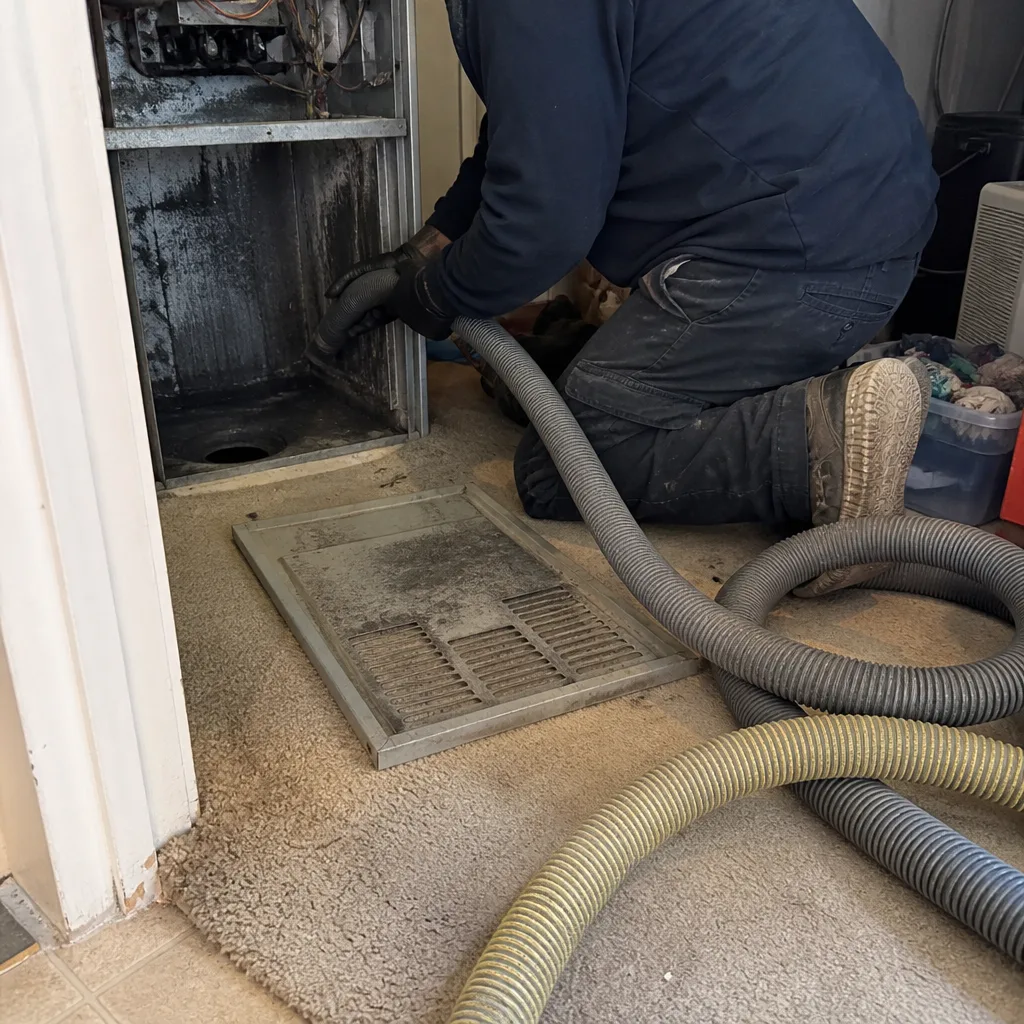
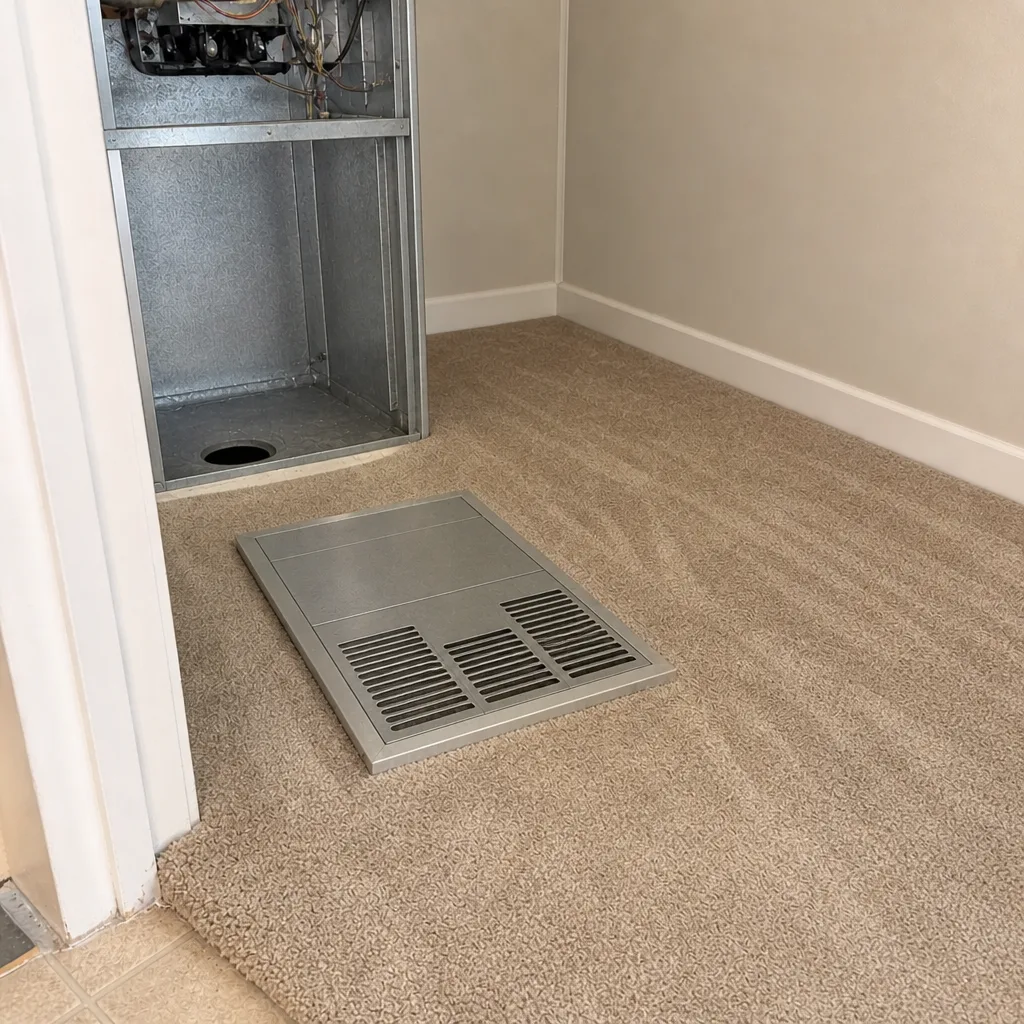
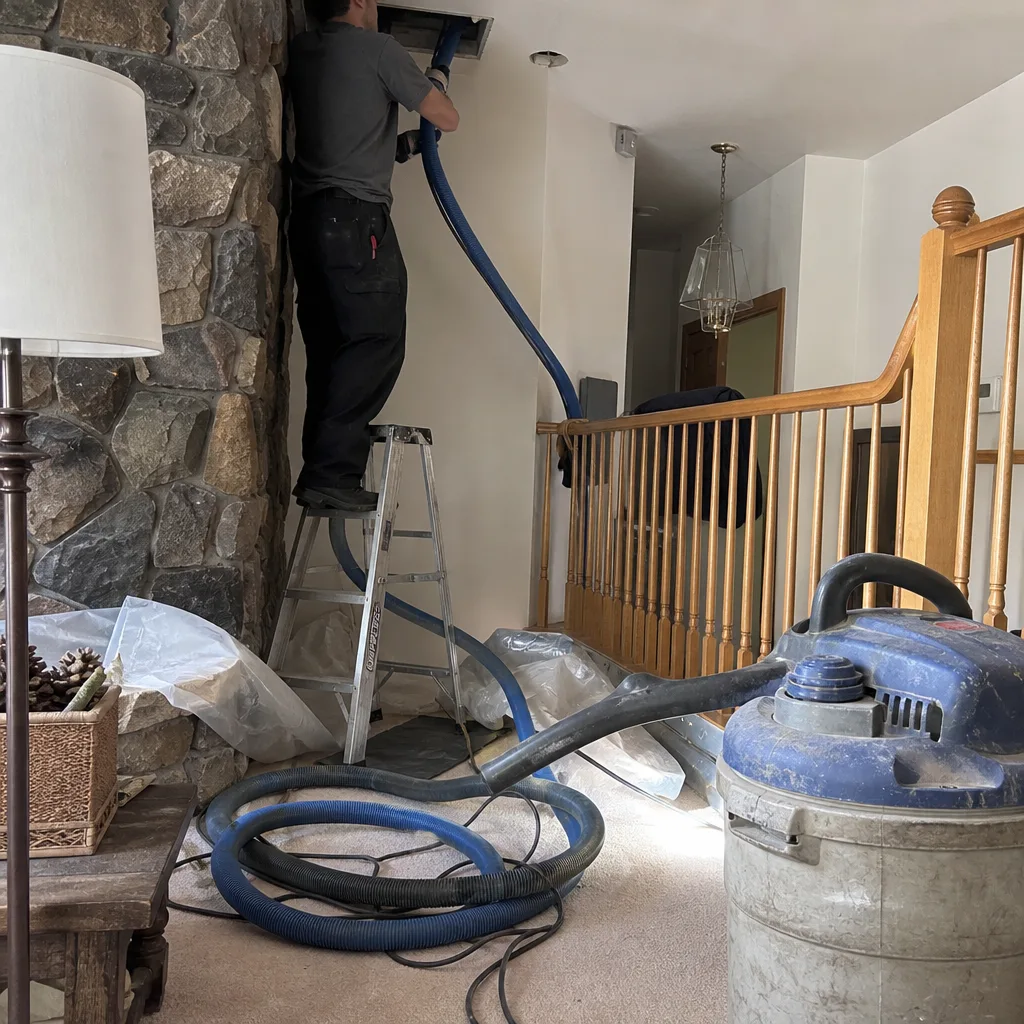
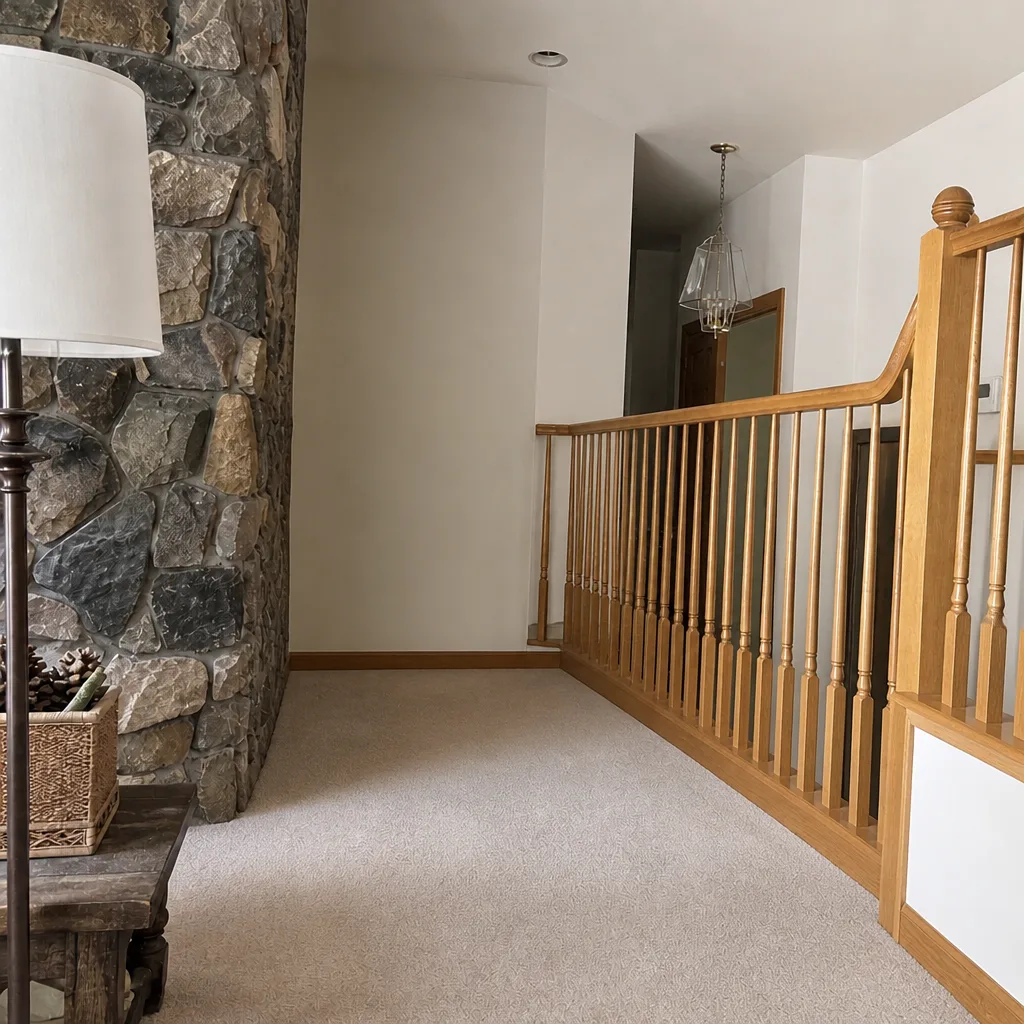
Whole-system duct and dryer vent check with before-and-after photos - you see exactly what came out of your vents
That "$99 whole-house special" is a bait ad - the real number appears once they are in your hallway, or the "clean" is a shop-vac at the register. We photograph the inside of your ducts before and after instead.
The Complete Guide to Air Duct Cleaning in Heather Gardens
Most duct cleaning guides tell you what the service is. This one tells you what’s actually happening inside the ductwork of a Heather Gardens home. That difference matters more than you’d expect. Heather Gardens is a master-planned community where a large share of homes went up in the 1970s and 1980s, an era when duct insulation and sealing practices looked nothing like they do today. The contamination profile inside those systems is different from what you’d find in a newer suburban build, and national advice written for generic housing stock doesn’t fit. This guide covers the housing, the high-altitude climate, and the inspection and documentation that let you verify the work was done.
Quick Answer
Air duct cleaning in Heather Gardens is the source removal of accumulated dust, debris, and biological growth from the supply and return duct system, not a quick vacuum of the visible registers. For the community’s older housing stock, that means a contractor-grade process using equipment like Rotobrush and Nikro systems, a full inspection of the blower and coil, and documentation before and after. Whether you need it depends on what an inspection finds, not on a calendar.
Styles & brands we work with
- Whole-home duct cleaning
- Dryer vent cleaning
- Camera inspection
- Sanitizing & deodorizing
Table of Contents
- Why Heather Gardens Housing Stock Changes the Cleaning Job
- Source Removal vs. Surface-Pass Vacuuming: What the Difference Actually Means
- How Colorado’s High-Altitude, Semi-Arid Climate Fills Ducts Differently
- What a Full-Spectrum Inspection Covers Beyond the Duct Interior
- How to Read Pre- and Post-Cleaning Documentation
- Clean Ducts Are Only Half the Job: Sealing and Repair
- Dryer Vent and HVAC Coils: The Two Systems People Forget
- How Often Ducts Really Need Cleaning in Heather Gardens
Why Heather Gardens Housing Stock Changes the Cleaning Job
Heather Gardens is a master-planned community with a large share of homes built in the 1970s and 1980s. That construction era matters because duct materials, insulation methods, and sealing practices from that period are different from what builders use now. Many of those homes were fitted with flex duct or early rigid duct systems where the insulation wrap has since degraded, the joints were never taped to modern standards, and the interior lining has had forty-plus years of cycling air through it. The contamination profile looks nothing like a newer suburban build.
What that means in practical terms:
- Duct material age. Flex duct from that era can sag, kink, or delaminate on the inside. A cleaning method that’s too aggressive can damage it further; one that’s too gentle won’t reach the settled debris.
- Contamination type. Older systems accumulate a mix of settled dust, construction-era debris, and sometimes biological growth in areas where condensation has formed and dried repeatedly.
- Sealing condition. Joints from that period are often under-sealed, which means a cleaning alone can be undone by leaks reintroducing dust from unconditioned spaces like attics and crawlspaces.
- Method selection. The right equipment and technique depend on what the inspection finds. There’s no single method that works on every Heather Gardens home.
This is why we inspect before we quote. A cleaning that treats every system the same way misses the specifics that make an older Heather Gardens home different. Our technicians have up to 10 years of experience working on systems across the housing types in this community, and that experience starts with reading the ductwork in front of them, not applying a template.
Source Removal vs. Surface-Pass Vacuuming: What the Difference Actually Means
Industry standard for duct cleaning is source removal: physically dislodging and extracting the accumulated contaminants from the entire duct system, then removing them from the building. It’s the standard the National Air Duct Cleaners Association (NADCA) sets, and it’s what separates a real cleaning from what’s sometimes called a surface-pass vacuuming. The distinction matters, especially in older flex duct systems like many in Heather Gardens.
Surface-pass vacuuming
A vacuum pulls through the registers and the visible portion of the ducts. Some dust comes out. What stays: the adhered layer on the duct walls, the debris in the branch runs, and anything that has settled past the first few feet of the trunk. It looks cleaner at the register. The system isn’t actually clean.
Source removal cleaning
A contractor-grade process that does all of the following as steps:
- Seals the supply and return openings and creates negative pressure through the system so dislodged debris gets captured, not redistributed into the home.
- Uses mechanical agitation (rotary brushes, air whips, or specialized tools matched to the duct material) to dislodge adhered debris from every branch, trunk, and plenum.
- Extracts the dislodged material through a HEPA-filtered collection system, so what comes out of the duct doesn’t end up in the living space.
- Cleans components inside the air handler: the blower wheel, the evaporator coil, and the cabinet itself, which is where a lot of accumulated dust actually lives.
- Documents the before and after condition so the homeowner can see what changed.
At Air Duct Cleaning Heather Gardens, we use Rotobrush and Nikro professional duct-cleaning systems on every job. These are purpose-built contractor machines, not consumer vacuums or shop-vacs with a long hose. The equipment choice is part of what makes source removal possible in a real Heather Gardens home.
How Colorado’s High-Altitude, Semi-Arid Climate Fills Ducts Differently
Semi-arid, high-altitude climate changes what accumulates in ductwork. Most national duct-cleaning advice is written for humid climates where the dominant problem is moisture-driven: mold growth, biological proliferation, condensation in the ducts. That’s not the main story in Heather Gardens or the broader Aurora and Denver metro area.
Here, the dominant issue is fine particulate. The climate is dry, the air carries a lot of dust and pollen, and the heating season runs long. When the furnace runs for months on end, it pulls air through the return ducts continuously, and every pass deposits a thin layer of fine dust on the duct walls. Over a heating season, that layer builds. Over several, it becomes a settled mat.
What that means for cleaning:
- Fine particulate settles deeper. Dry dust doesn’t clump and stay near the registers the way damp debris does. It migrates into the branch runs and the far end of the trunk line.
- Static charge holds it to the walls. In a dry climate, dust adheres to duct surfaces by static as well as gravity. Agitation is required to break it loose, not just airflow.
- Pollen season loads up the returns. Spring and early summer push pollen through open windows and doors, and that pollen gets pulled into the return system and deposited on the coil side of the system.
- Moisture problems are less common but still exist. Where the evaporator coil runs and the air is dry, condensation is limited, but any area that does get damp is more likely to support growth because there’s less airflow to dry it.
This climate argument is why the cleaning recommendations that circulate nationally don’t always fit a Heather Gardens home. The contamination is predominantly dry-fine particulate, which requires different equipment settings and a more thorough agitation step than a humid-climate job would need.
What a Full-Spectrum Inspection Covers Beyond the Duct Interior
A real inspection of a Heather Gardens home’s air system doesn’t stop at looking down a duct with a flashlight. That’s the standard one-task crew approach; the duct interior is only one of several components that affect air quality and airflow. A full inspection looks at the following:
- The blower compartment. The blower wheel is where a lot of fine dust collects. An unbalanced or dirty blower wheel reduces airflow throughout the system, and debris from it gets pushed downstream into the ducts and coil.
- The evaporator coil. The coil is a heat-exchange surface, and a matted coil cannot transfer heat efficiently. In a dry climate, the coil dries between cycles, so what accumulates is a dry film that gradually blocks airflow.
- The supply and return plenums. Plenums are the transition boxes between the air handler and the main duct runs. In 1970s and 1980s construction, these are often under-sealed, sometimes lined with interior insulation that has degraded.
- The return air path. Where the return pulls from and whether that path has open leaks from unconditioned space. A leaky return pulls attic or crawlspace air directly into the system.
- The duct interior. Material, condition, and contamination level, viewed with a camera and spot-checked by hand where access allows.
When we inspect, we’re looking for the root causes, not just the surface. A home with a dirty system that doesn’t get its leaks fixed will re-contaminate quickly. That’s why we offer HVAC cleaning alongside duct cleaning, and why we also handle duct repair and sealing.
How to Read Pre- and Post-Cleaning Documentation
Any contractor who cleans a Heather Gardens home should be able to show you documentation of what was found before and what was cleaned. Without it, you’re paying for a service you can’t verify. Here’s what to look for:
Pre-cleaning documentation should show
- Camera images from inside the ducts, showing the condition before work started.
- A written description of the contamination type, location, and severity.
- A description of the duct material and any pre-existing damage or degradation that limits cleaning method options.
- Images of the blower wheel, coil, and plenums before cleaning.
Post-cleaning documentation should show
- The same camera positions after cleaning, so you can compare directly.
- Close-ups of the blower compartment and coil after cleaning.
- A note on any remaining contamination that couldn’t be safely removed (for example, areas inside damaged insulation where cleaning would cause more harm than good).
Before-and-after photos of your own system are how you verify the work was done. Not stock images, not a “before” photo of a different home. Ask for your system’s documentation and read it. If a contractor can’t produce it, you have your answer about whether the cleaning happened at the source level.
At Air Duct Cleaning Heather Gardens, we document every job with before-and-after photos of the system we actually cleaned. It’s the part of the job most homeowners never ask about, and it’s the part that tells you whether you got the service you paid for.
Clean Ducts Are Only Half the Job: Sealing and Repair
Cleaning removes what’s already inside the ducts. It doesn’t do anything about leaks that let new contamination in. In a home built in the 1970s or 1980s, duct leakage is almost a given: joints that were taped with material not made for the long haul, connections that have shifted, and sometimes sections of flex duct in the attic that have come loose. Clean ducts that aren’t sealed are, in practical terms, a temporary fix.
Duct repair and sealing addresses the root cause of air loss and re-contamination. The reasoning is straightforward: a Sealed system holds pressure, so the blower pulls air where it’s supposed to, from the return, not from the attic or crawlspace. A sealed system also holds the cleaning. Debris can’t sneak back in through a gap that’s been sealed.
What repair and sealing include:
- Locating leaks at the joints, plenums, and equipment connections.
- Sealing accessible leaks with appropriate mastic and tape for the duct material.
- Replacing damaged sections where repair isn’t the right answer.
- Reconnecting loose flex duct in attics and crawlspaces.
- Verifying the system holds pressure and air is flowing where it should.
When we finish a cleaning and find leaks, we say so. We repair or seal them as a separate scope, with a written estimate before any work starts. That’s the full-system approach, and it’s what makes the cleaning last.
Dryer Vent and HVAC Coils: The Two Systems People Forget
Air duct cleaning is the visible service. Two other systems in a Heather Gardens home are often neglected and deserve a separate mention.
Dryer vent cleaning
The dryer vent is a duct system too. It carries lint and moisture out of the house. In a home that’s been through many heating and cooling seasons, lint builds up along the inside of the vent run and slows airflow. That reduces dryer efficiency and increases the load on the appliance. Annual or periodic dryer vent cleaning keeps that airflow open. It’s a separate service from duct cleaning and a separate job, and we handle both.
HVAC cleaning
Cleaning the ducts without cleaning the HVAC components is a partial job. The blower wheel, coil, and cabinet inside the air handler accumulate the fine dust that the system is pulling through the return ducts every day. In a semi-arid climate, that dust accumulates dry and adheres, and the blower wheel and coil are where it matters most for airflow and efficiency. Our HVAC cleaning service covers those components as part of a full-system clean.
If you’re scheduling duct cleaning, ask whether the quote includes the blower and coil. If it doesn’t, you’re not getting a full-system cleaning.
How Often Ducts Really Need Cleaning in Heather Gardens
There’s no universal calendar answer. The recommendation depends on the home, the system condition, and what’s happening inside it. A newer home with a well-sealed system may go many years between cleanings. An older Heather Gardens home with flex duct in an attic, a pet in the house, or a recent remodeling project may need it on a shorter interval.
What we look at:
- Home age and duct material. Older, under-sealed systems in Heather Gardens re-contaminate more quickly because there’s more opportunity for new debris to enter.
- Occupants and activities. Pets, remodeling projects, woodworking, and hobbies that generate dust all load the return system faster.
- Visible signs. Dust around registers, musty odors when the system starts, increased allergy symptoms, and uneven airflow in different rooms.
- Recent history. If the system has never been cleaned, or it’s been many years and there’s no documentation, a full inspection is the starting point.
A typical interval is every few years, but we don’t sell based on a fixed number. We inspect, tell you what’s there, and let the condition drive the recommendation.
Common Mistakes to Avoid
- Choosing a low quoted price that becomes a larger invoice. The industry has a well-known bait-and-switch problem where a low coupon price turns into a much bigger bill once the technician is on site. Ask for a flat price per system, agreed in writing, before work starts.
- Paying a per-vent price. Per-vent pricing encourages crews to rush and counts on ambiguity. A whole-system price is honest, and it’s what we quote.
- Skipping the inspection and just asking for a cleaning. The cleaning method has to match what’s actually in a Heather Gardens home’s ductwork. Inspection first, cleaning recommendation second.
- Cleaning the ducts but not addressing leaks. Cleaning without sealing is a temporary fix, and a re-contaminated system is where the money goes. Ask whether sealing is part of the scope or a separate service.
- Believing a “before” photo without a “after” photo to match. Documentation has to show the same system, the same camera positions, and what changed. Stock photos don’t verify a specific job.
- Assuming national advice fits a Heather Gardens home. Humid-climate content doesn’t address semi-arid, high-altitude dust that adheres by static and settles deeper. Ask a contractor what they see in this climate.
- Cleaning the ducts but never touching the dryer vent. In many Heather Gardens homes, the dryer vent is one of the systems that’s gone the longest without a clean. Ask about it.
See the difference
 Before
 After
 Before
 After
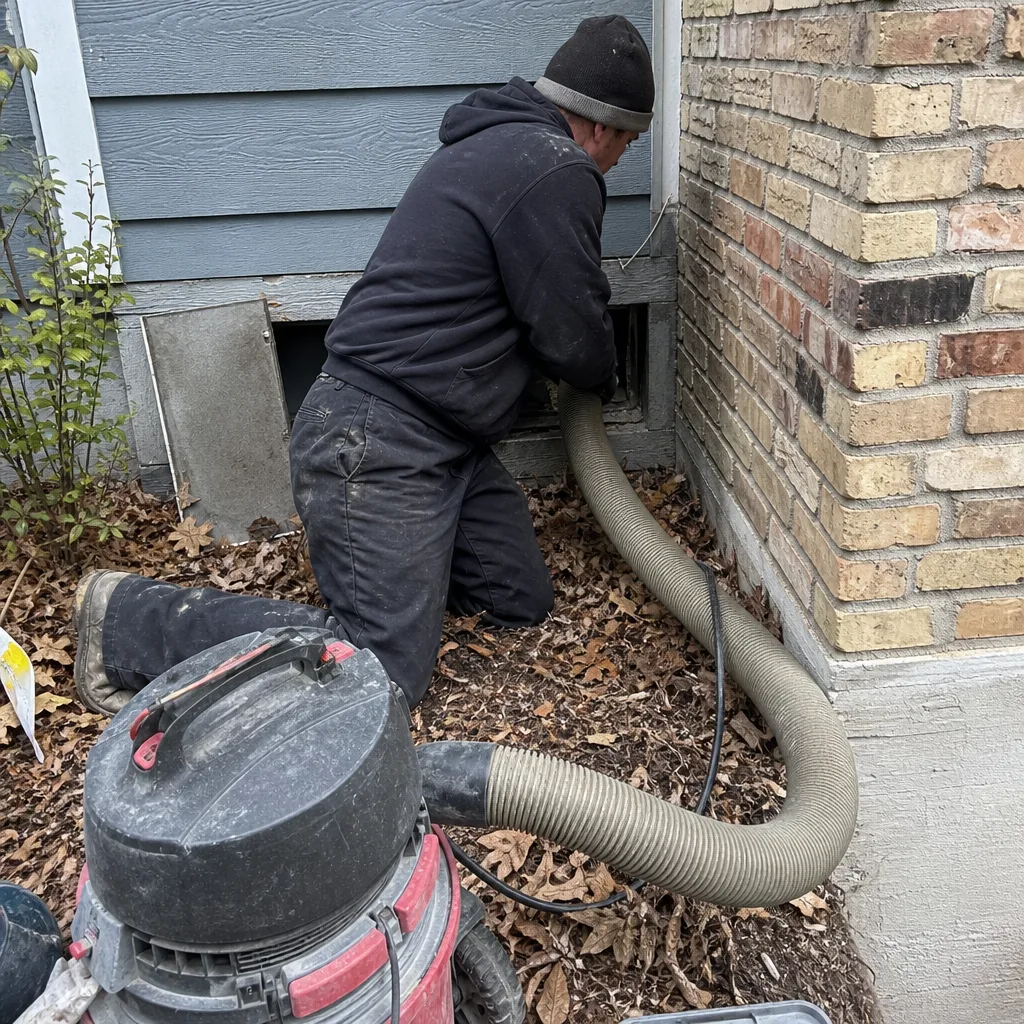 Before
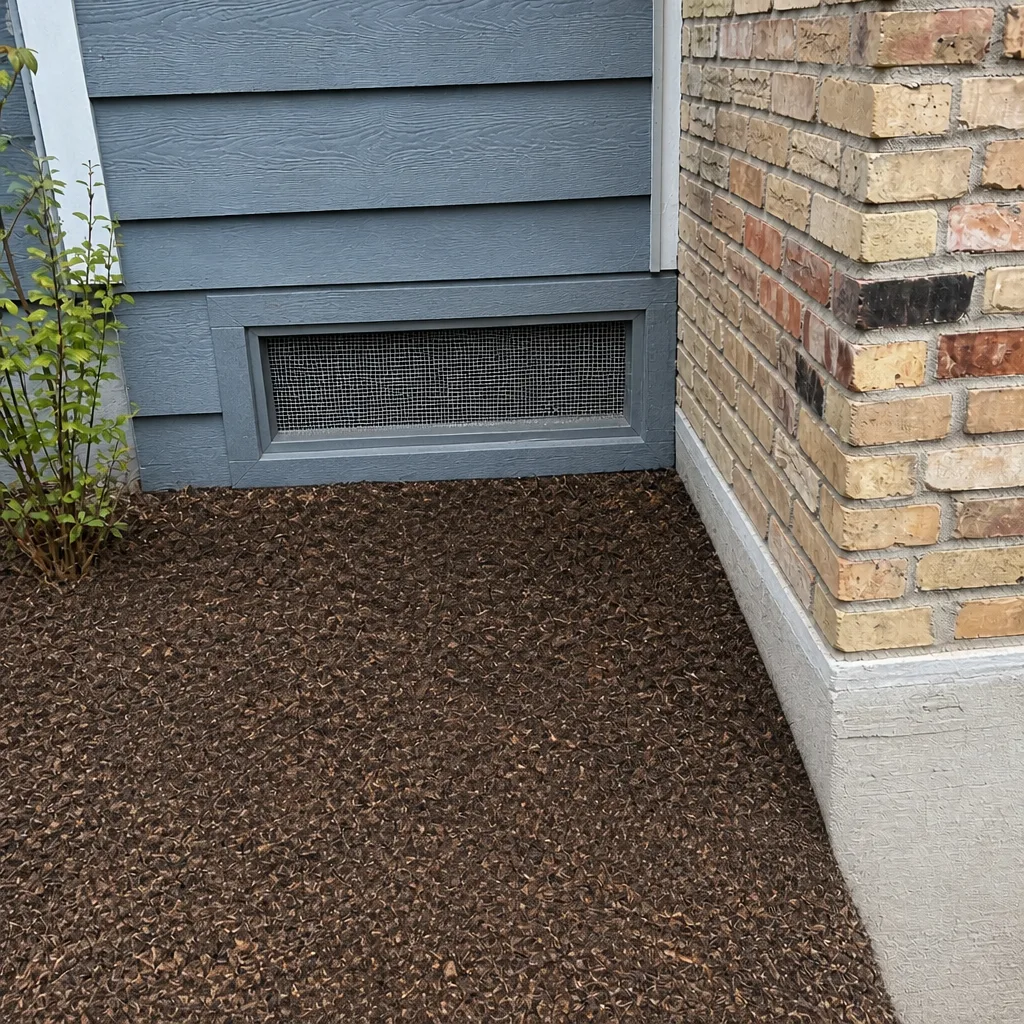 After
When to Call a Professional
Reach out to a professional when the system shows signs that point beyond a simple filter change: dust patterns around registers that return after a cleaning, musty or stale odors when the system kicks on, uneven airflow between rooms, visible dust on the coil, or allergy symptoms that cluster in a specific part of the home. An upcoming remodeling project is also the time to schedule a cleaning, before the demolition dust gets into the system. If a Heather Gardens home has never had its system inspected and it’s been many years, an inspection gives you the data to decide. Air Duct Cleaning Heather Gardens offers free estimates in Heather Gardens – call (855) 337-1174.
Frequently Asked Questions
Costs vary by system size and condition, and we don’t quote a number before we’ve seen the system. What we can tell you: we price per job by the written estimate, not per vent, and the price is agreed before work starts. Call (855) 337-1174 for a free estimate – we’ll inspect the system and give you a flat number.
Because they’re often for a much smaller scope than source-removal cleaning. A low quote may be for a surface-pass vacuuming of the visible registers, without the branch runs, plenums, blower wheel, or coil. When the customer asks for those, the invoice goes up. We fix that by quoting the whole system upfront, per job, before any work begins. Call (855) 337-1174 for a written estimate.
Ask for before-and-after documentation of your system specifically. Camera images from inside the ducts, the blower, and the coil, at the same positions before and after cleaning. If a contractor can’t produce that for your home, you don’t have proof of what was cleaned. That documentation is part of every job we do. Call (855) 337-1174 to discuss a cleaning.
It depends on the home, not a calendar. An older, under-sealed Heather Gardens home with flex duct in the attic re-contaminates faster than a newer one. Pets, remodeling, and the dry, high-altitude climate all add to the load. Inspect first and let the condition decide, rather than cleaning on a fixed schedule. Call (855) 337-1174 to schedule an inspection.
Yes. The semi-arid, high-altitude climate produces fine, dry particulate that settles deeper and adheres with static charge, so agitation is a bigger part of the job than in a humid climate. That’s why method selection matters: the right equipment and technique depends on what’s actually in the system. Call (855) 337-1174 to talk through your home’s situation.
Yes. We clean and we repair and seal. Cleaning without sealing leaves the leaks that let new debris back in, so we tell you what we find and quote the repair as a separate scope before any work starts. That’s the full-system approach. Call (855) 337-1174 for a free estimate.
The Bottom Line
Heather Gardens housing stock and climate both put their mark on what’s inside your ducts. Homes built in the 1970s and 1980s have duct material, insulation, and sealing conditions that need a method matched to them, not a template. The semi-arid, high-altitude air means fine dry dust that settles deep and adheres by static, which is different from the humid-climate problems national guides describe. Source removal cleaning, a full inspection that goes beyond the duct interior, and documentation you can read are what separate real work from a surface pass. If you have questions about your system, call (855) 337-1174. We answer 24/7. Fast dispatch from 7am to 7pm, Sunday through Friday. Estimates are free. Air Duct Cleaning Heather Gardens brings professional-grade equipment and a full-system approach to air duct cleaning.
Written by the team at Air Duct Cleaning Heather Gardens.
Ready for an inspection? Call (855) 337-1174. We answer 24/7. Fast dispatch from 7am to 7pm, Sunday through Friday.