
Last updated November 25, 2026
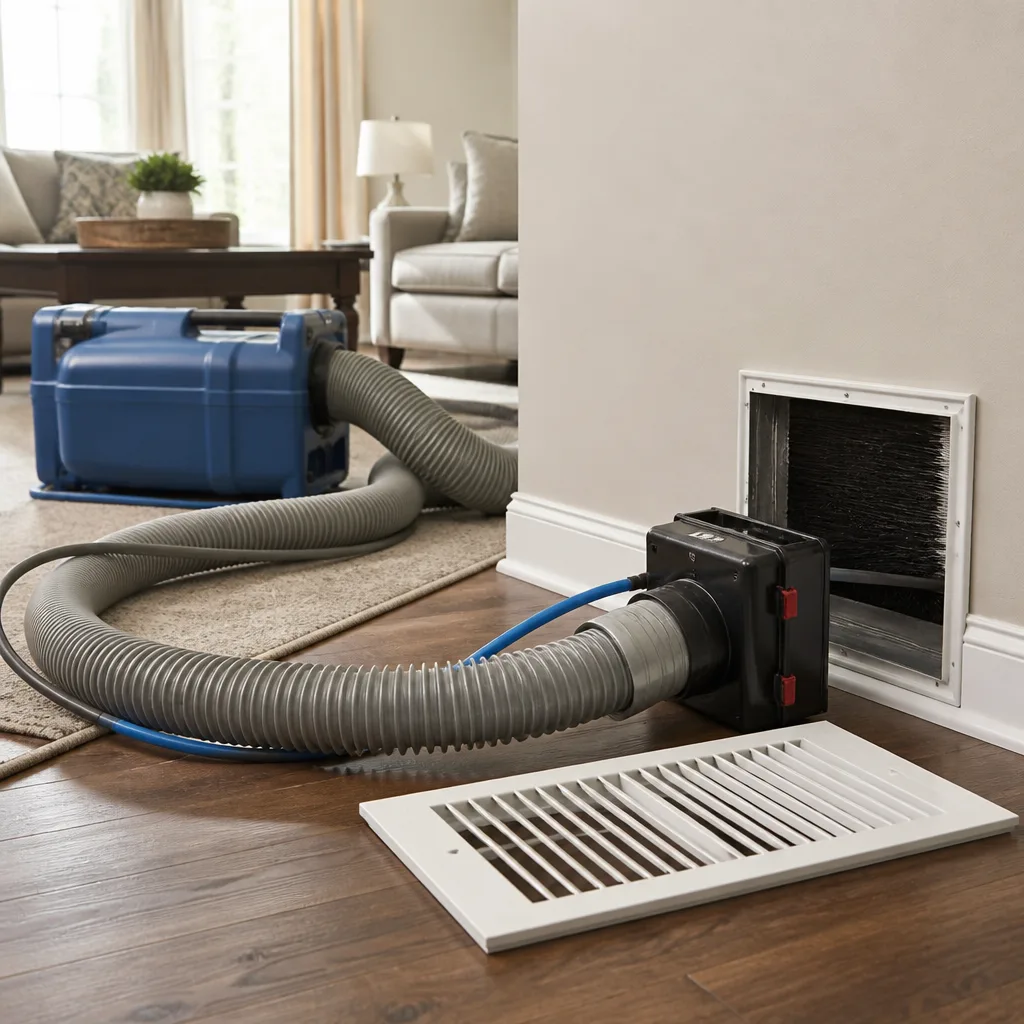 Whole-home duct cleaning
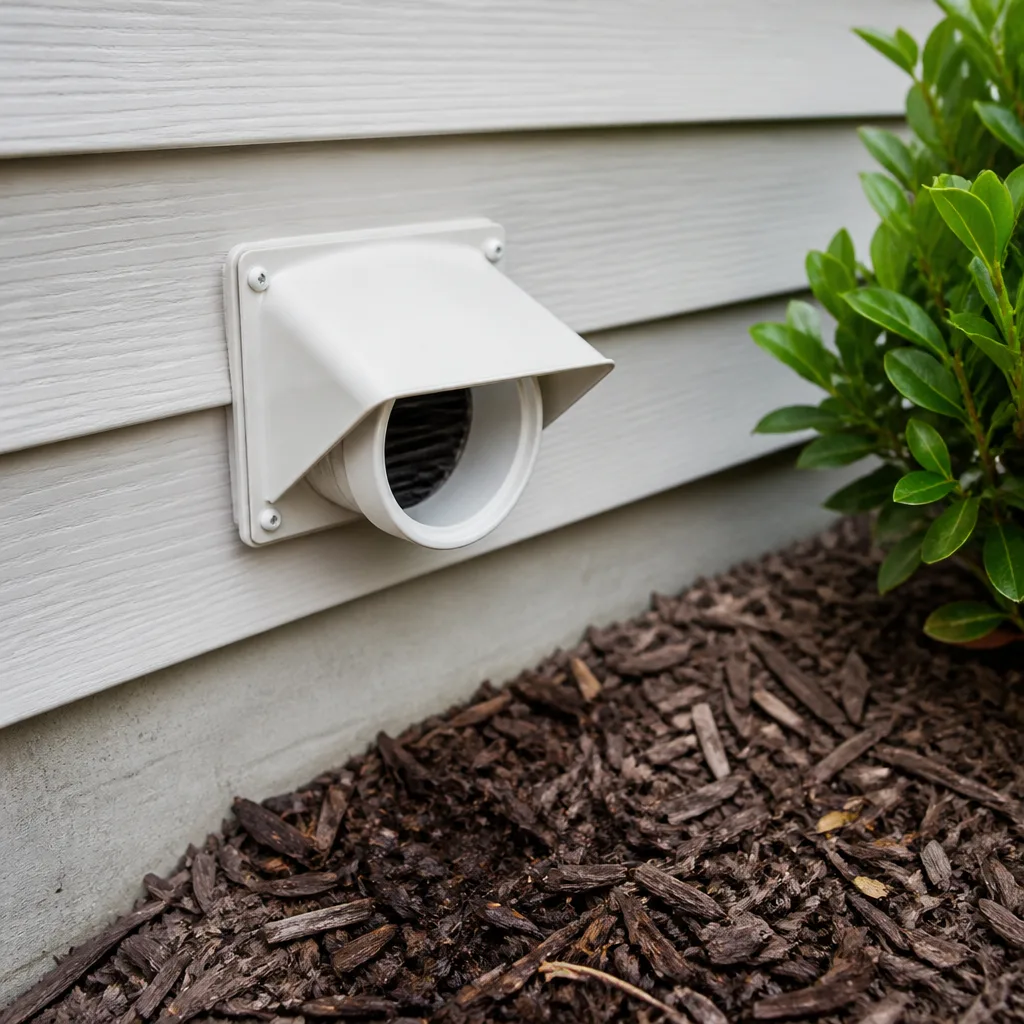 Dryer vent cleaning
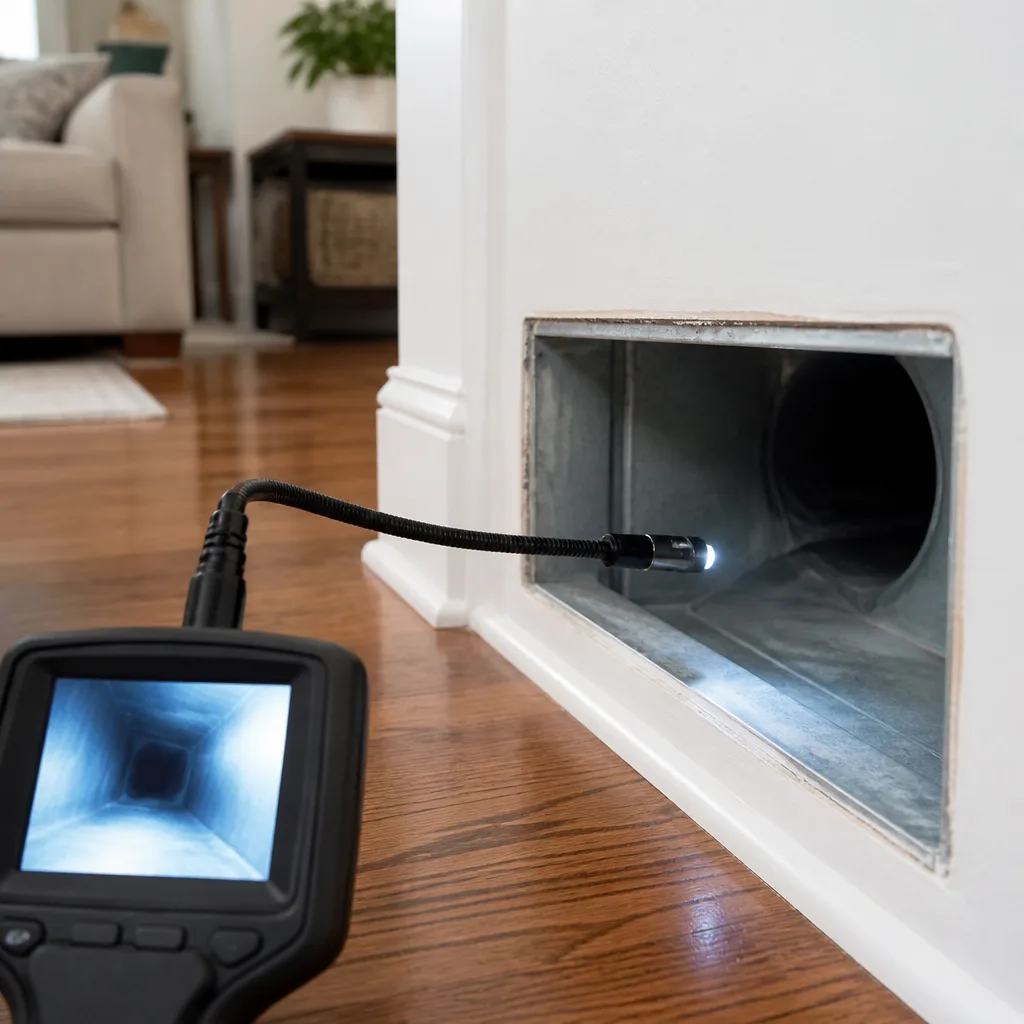 Camera inspection
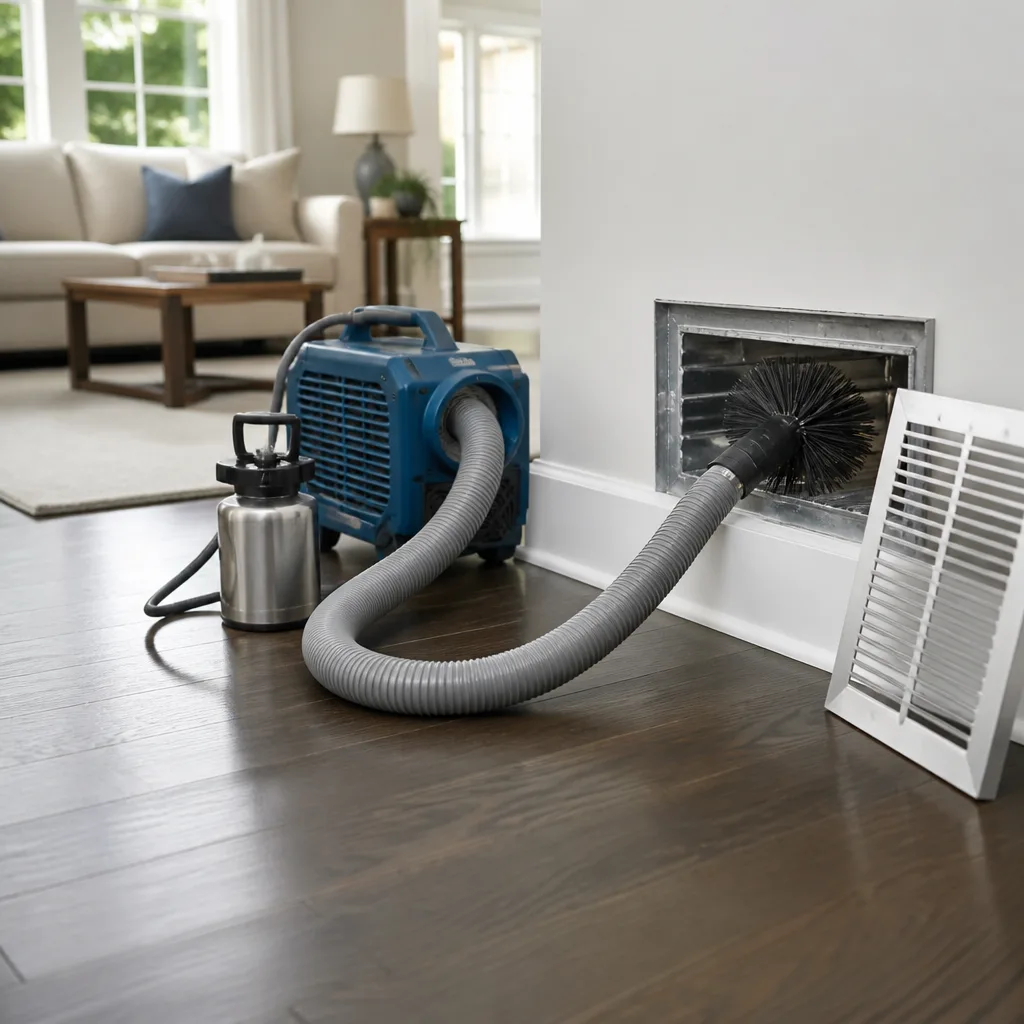 Sanitizing & deodorizing
Whole-system duct and dryer vent check with before-and-after photos - you see exactly what came out of your vents
That "$99 whole-house special" is a bait ad - the real number appears once they are in your hallway, or the "clean" is a shop-vac at the register. We photograph the inside of your ducts before and after instead.
Seasonal Air Duct Cleaning Care for Heather Gardens: Year-Round Homeowner’s Guide
Most homeowners assume duct cleaning is a once-a-year checkbox, best handled whenever it’s convenient. In Heather Gardens, that assumption costs you. Colorado’s Front Range has some of the most variable seasonal air quality in the country: spring brings wildfire smoke and high pollen counts, summer adds ozone alerts, fall reintroduces heating dust, and winter seals homes tight. Each season deposits a different contaminant profile into your ductwork, and a single cleaning timed without that cycle in mind will consistently miss the highest-contamination windows. This guide walks you through what each season does to your ducts and how to build a 12-month calendar that actually matches the climate you live in.
Quick Answer
The best schedule for air duct cleaning in Heather Gardens is a full cleaning in early fall, before heating season begins, paired with filter upgrades in spring and summer and a blower and coil inspection in late spring before cooling season loads the system. Winter is the season to check ventilation and consider sanitizing, not the season for a full duct cleaning. If you’ve never had your ducts serviced or it’s been more than three years, start with a full inspection and cleaning, then build the seasonal calendar from there.
Styles & brands we work with
- Whole-home duct cleaning
- Dryer vent cleaning
- Camera inspection
- Sanitizing & deodorizing
Table of Contents
- Why Seasonal Timing Matters in Heather Gardens
- Spring: Post-Winter Inspection Before Cooling Season
- Summer: Ozone, Wildfire Smoke, and Filter Strategy
- Fall: Pre-Heating Duct Check for Older Homes
- Winter: Tight Sealing, VOCs, and Ventilation
- How to Build Your 12-Month Service Calendar
- Signs Your Ducts Need Attention Now
- Common Mistakes to Avoid
Why Seasonal Timing Matters in Heather Gardens
Heather Gardens sits at the western edge of Aurora, in a stretch of the Front Range where the air quality genuinely changes character four times a year. That’s not marketing language. It’s the reality of living at elevation where spring pollen loads and wildfire smoke arrive together, where summer ozone alerts are common, where the first furnace run in October pushes months of settled dust back into the living space, and where winter’s cold drives homeowners to seal every gap they can find.
Each of those seasons deposits something different in your ductwork. Spring leaves fine pollen and smoke particulate. Summer adds ozone and more smoke. Fall stirs the accumulated dust as the furnace comes on. Winter traps whatever is left inside a tighter envelope, along with elevated VOCs from cleaning products and off-gassing materials.
Here’s the part most homeowners miss: the air handler and ductwork are a closed loop. Whatever settles in the ducts gets pulled back through the system every time it runs. A cleaning done in July removes spring and summer debris but leaves the ducts sitting through the fall and winter accumulation. A cleaning done in March removes winter debris but arrives too late to protect the cooling season.
In our experience across Heather Gardens, the seasonal inflection points matter more than the calendar date. The right question isn’t “when did I last have my ducts cleaned?” It’s “which contaminant window am I about to enter, and is my system ready for it?”
If you’re starting from scratch, the right first step is a full Air Duct Cleaning Heather Gardens service that includes an inspection of the whole system, not just a vacuum pass. From there, you can layer in the seasonal schedule.
Spring: Post-Winter Inspection Before Cooling Season
Spring is when the heating season ends and the cooling season begins, and the system has to shift from pushing warm air through to pushing cool air through. That transition is the right moment for a blower and coil inspection, before the cooling season loads the system with condensation and daily runtime.
Here’s what happens to your system over winter: the blower wheel collects dust, the evaporator coil gathers a film of particulate, and the condensate drain line can develop buildup. When the cooling season starts, all of that is in the path of the cool air you’re about to circulate through the house for the next four months.
Our spring inspection sequence looks like this:
- Blower wheel check. A dust-coated blower wheel moves less air and puts more strain on the motor. We check it visually and clean it if it’s loaded.
- Evaporator coil inspection. A dirty coil cools less efficiently and can freeze. We inspect the coil face and housing for film and debris.
- Condensate drain check. We verify the drain line is flowing freely before the cooling season creates daily condensation.
- Return and supply duct inspection. We look for loose joints, disconnected runs, and deteriorated sealing at the plenum and trunk connections.
- Filter review. We confirm the current filter is the right MERV rating for the system and the season ahead.
Spring in Heather Gardens also means pollen. Cottonwood, elm, and the various grasses around the community drop fine particulate that a standard filter won’t fully capture. A properly rated filter upgrade at the spring inflection point does more for indoor air quality than cleaning the ducts again in June would.
One more thing about spring: if you notice uneven airflow or a musty smell at the first cooling cycle, that’s often a duct leakage problem rather than a cleaning problem. Our air duct cleaning team inspects for leaks during the spring check, and if we find deteriorated sealing, we address it through a separate duct repair and sealing service.
Summer: Ozone, Wildfire Smoke, and Filter Strategy
Summer in Heather Gardens brings two air quality challenges that behave differently in ductwork than ordinary household dust: ground-level ozone and wildfire smoke particulate.
Ozone is a gas, not a particle. A standard filter doesn’t capture it. What ozone does inside a duct system is react with settled dust and with the residual organic material on coil and duct surfaces. That reaction is one reason a system that smells fine in May can develop a faint chemical or musty note by August. Ozone also reacts with VOC off-gassing from furniture, cleaning products, and building materials, which is why summer indoor air can feel heavy even when windows are closed.
Wildfire smoke is particulate, but it’s much finer than typical household dust. The particles that make it through a standard filter are small enough to stay suspended and small enough to penetrate deep into the respiratory system. Once they settle in ductwork, they stay there until the system moves them again.
What actually helps in summer:
- Filter upgrades at the right MERV. A higher-MERV filter captures more fine particulate, but the system’s blower has to be able to handle the pressure drop. We size the filter to the system, not the other way around.
- Air quality components from Honeywell and Aprilaire. We supply and install whole-home filtration and humidity components that address fine particulate and summer humidity swings directly, rather than relying on a duct cleaning alone.
- Professional-grade cleaning when smoke has been heavy. Our Rotobrush and Nikro systems are contractor-grade equipment built for fine particulate, not consumer vacuums.
- Duct sealing if leakage is present. Unsealed ducts in Heather Gardens pull air from attics, garages, and crawl spaces. If that’s where smoke is, that’s what gets pulled in.
Our advice for summer is close-window, filter-forward. Full duct cleaning in peak summer is usually wasted money unless you’ve had a specific smoke event or an obvious contamination problem. Save the full cleaning for the fall inflection point and focus summer attention on filtration and sealing.
Fall: Pre-Heating Duct Check for Older Heather Gardens Homes
Fall is the single most important seasonal window for duct cleaning in Heather Gardens. Here’s why: the first time the furnace runs in October, it pushes every bit of settled dust from the last six months back into the living space. That’s the visible dust plume most homeowners notice at first heat. But the reason to act before the first furnace run isn’t the visible dust, it’s the duct sealing that’s degraded over the decades the home has been standing.
Heather Gardens is a community where many homes date back to the 1970s. That’s three to four decades of thermal cycling on the duct sealing. Duct tape and mastic age, connections loosen, and small gaps open at the trunk and plenum. When those gaps are present, the furnace pulls air from unconditioned spaces, and every degree of heating air is diluted with attic or crawl space air.
Our fall check for older Heather Gardens homes includes:
- Full duct cleaning before heat comes on. Remove the accumulated debris from spring and summer before the furnace starts moving it.
- Pressure and leakage inspection. We check the trunk, plenum, and accessible runs for gaps and disconnected sections.
- Heat exchanger and blower review. A dusty blower at the start of heating season loses efficiency for the entire winter.
- Sealing recommendation if needed. When we find leakage, our HVAC cleaning team can document the gaps and recommend sealing as a separate step.
- Filter swap and system walk-through. We confirm the fall filter and note what we saw for the spring visit.
In our experience, older Heather Gardens homes get the most value from the fall visit when cleaning is paired with a duct repair and sealing evaluation on the same trip. A clean duct that’s still leaking pulls dirt straight back in. Our dryer vent cleaning team handles the dryer vent at the same fall visit if you haven’t had it inspected in the last year.
If you’ve noticed uneven heat between rooms, or the furnace seems to run longer than it used to, that’s usually a sign of duct leakage rather than a sign you need another cleaning. Address the leak first and the cleaning holds.
Winter: Tight Sealing, VOCs, and Ventilation
Winter is the season Heather Gardens homeowners seal up the house. Weatherstripping gets refreshed, window gaps get caulked, and doors stay shut. That tighter envelope is good for the heating bill. It’s also the season when indoor air quality tends to decline, and the fix is rarely “clean the ducts again.”
Two things happen in a tightened home. First, VOC concentrations rise. Off-gassing from furniture, paint, cleaning products, and cooking gets trapped inside. Second, CO2 climbs. Without fresh air exchange, CO2 from people and combustion appliances accumulates. Neither problem is solved by cleaning the ducts. Both are solved by ventilation.
What actually matters in winter:
- Ventilation system check. Bath fans, kitchen exhaust, and any HRV or ERV need to be moving air. We check for flow and blockage.
- Air Quality and Sanitizing service. Our sanitizing application uses Guardsman protective treatments to address microbial growth and residual organics on duct and coil surfaces. It’s a worthwhile finish to the fall cleaning because winter is the season the system runs hardest.
- Combustion appliance check. Any gas appliance in a tightly sealed home needs proper venting. This isn’t a duct cleaning task but it’s the most important winter air quality step.
- Filter cadence. Winter filter changes should happen more often than summer, not less. A loaded filter in a tight home is a pressure problem.
Our honest recommendation for winter in Heather Gardens is: don’t spend the season’s air quality budget on another duct cleaning. Spend it on ventilation and, if fall cleaning showed microbial or organic residue, on sanitizing. The cleaning is done. Winter is about maintaining the indoor environment.
How to Build Your 12-Month Service Calendar
A workable Heather Gardens seasonal schedule sequences filter changes, professional cleaning, coil maintenance, and sanitizing at the seasonal inflection points rather than on a fixed “clean every X years” clock. Here’s the sequence we recommend.
- March or April: Spring inspection. Blower, coil, condensate drain, and duct leakage check. Filter upgrade if you’re moving to a higher MERV. This is the “before cooling season” reset.
- May or June: Summer prep. Confirm filter rating for smoke and pollen season. Consider a whole-home filtration component from Honeywell or Aprilaire if fine particulate is a concern. No full cleaning unless you’ve had a contamination event.
- September or early October: Fall full cleaning. Full duct cleaning before first heat. Duct leakage inspection on the same visit. This is the anchor of the whole year.
- October or November: Sealing if needed. If the fall inspection found gaps, schedule duct repair and sealing before the furnace runs hard.
- November or December: Sanitizing. Guardsman-treated sanitizing application as the final protective layer before the tight winter months.
- January or February: Ventilation check. Bath fans, kitchen exhaust, and HRV or ERV flow verified.
That cadence gets you a full cleaning once a year, an inspection twice, a filter upgrade cycle that matches the actual air quality calendar, coil maintenance before each seasonal load, and sanitizing at the right moment. It’s a different schedule than “clean whenever the HVAC company mails a coupon.”
For homes with pets, allergy sufferers, or anyone with respiratory sensitivity, the spring inspection may prompt a second cleaning if the summer smoke season is heavy. For homes with no pets and no one with sensitivities, the fall cleaning may be enough on its own.
Signs Your Ducts Need Attention Now
The seasonal calendar is a plan. The signals below override the plan and mean you should call a professional for an inspection before the next scheduled visit.
- Visible dust on return grilles within a week of cleaning them. That’s usually a leakage problem pulling dirt in rather than a cleaning problem.
- Musty or chemical smell at first heat or first cool. Microbial growth or organic residue on coil or duct surfaces.
- Uneven airflow between rooms. Usually a leakage or disconnected run rather than a cleaning issue.
- Allergy flare-ups that follow the seasonal transitions. Pollen or smoke holdover in the duct system.
- Increased heating or cooling runtime without a change in weather. A dust-loaded blower or coil.
- Recent water intrusion or a musty crawl space. Contamination that needs a documentation-level clean, not a routine visit.
For the serious cases, our technicians use Abatement Technologies equipment. That’s the same grade of equipment used in remediation-level cleaning, and it’s why we can handle elevated contamination that a routine crew can’t.
Common Mistakes to Avoid
- Cleaning once a year on a fixed schedule. A fixed date misses the seasonal contaminant cycle every time. Match the cleaning to the fall inflection point and build the rest around it.
- Cleaning without inspecting for leakage. A clean duct that’s still leaking pulls dirt right back in within weeks. Our Duct Repair & Sealing service in Heather Gardens inspects for leakage on every cleaning visit for this reason.
- Skipping the blower and coil on the spring visit. Duct cleaning alone doesn’t touch the coil, and the coil is the surface your cooling air hits first.
- Running a higher-MERV filter without confirming the system can handle it. A filter that’s too restrictive chokes the blower. We size the filter to the system, not the other way around.
- Ignoring the dryer vent because the ducts were just cleaned. The dryer vent is a separate system and a separate fire risk. Our dryer vent cleaning service is scheduled separately, typically once a year.
- Cleaning in winter and expecting it to solve VOC and CO2 problems. Winter issues need ventilation, not another cleaning.
- Hiring a crew without professional-grade equipment. A shop-vac and a leaf blower don’t produce documented results. Rotobrush and Nikro systems do, and before-and-after photos show you the difference.
See the difference
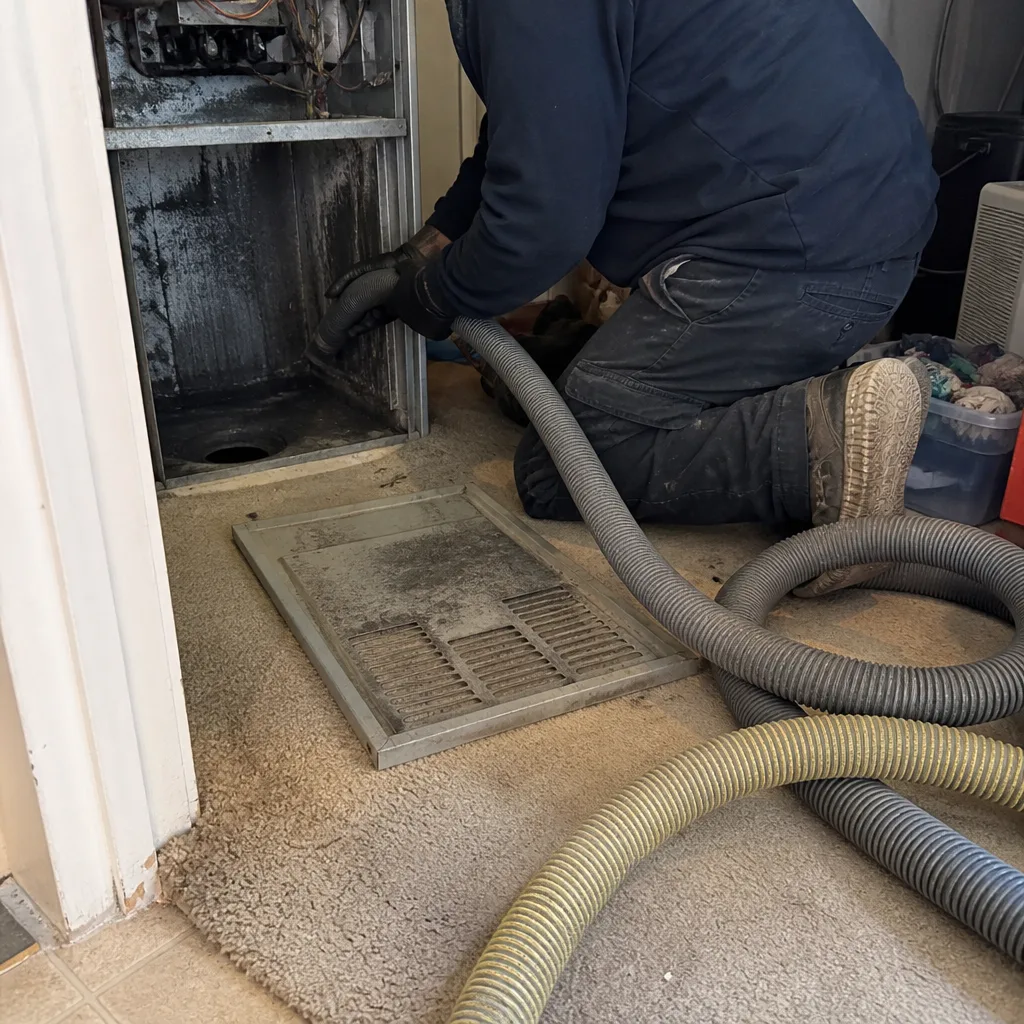 Before
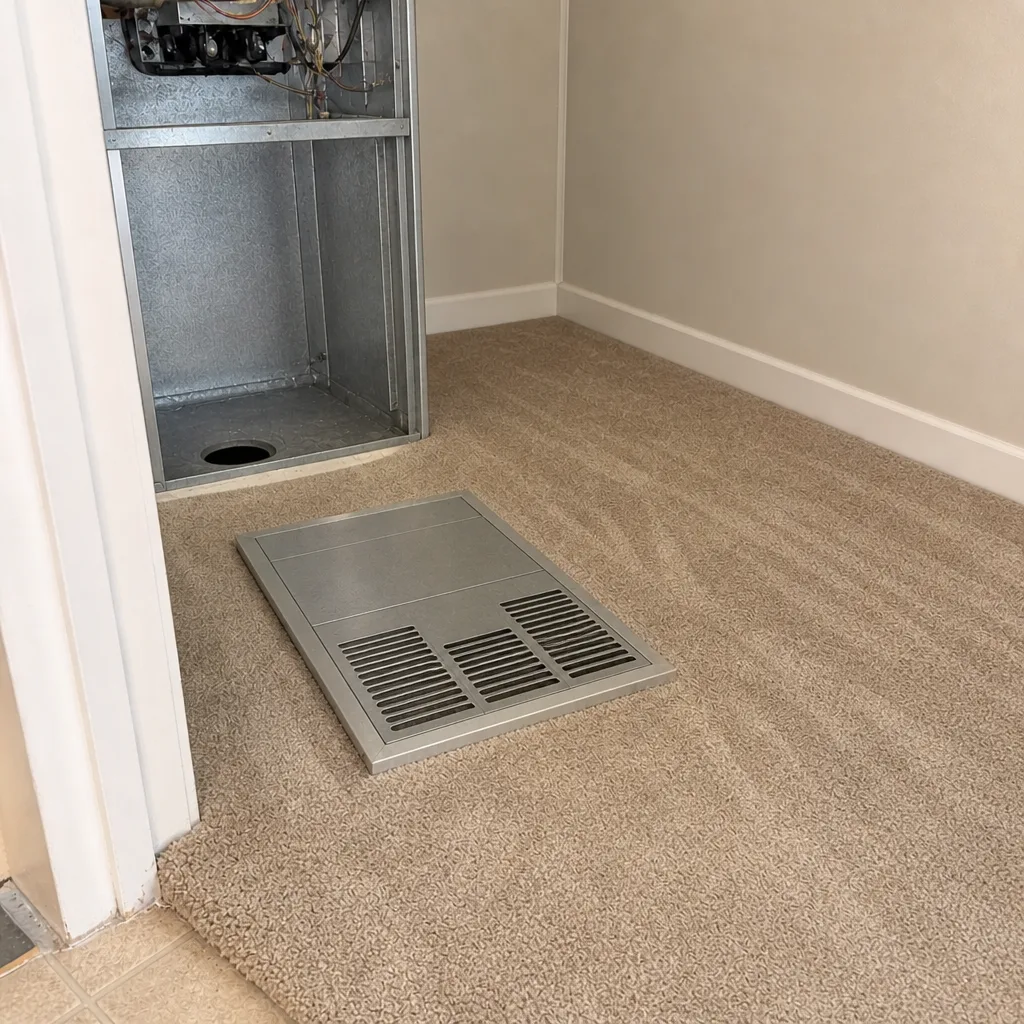 After
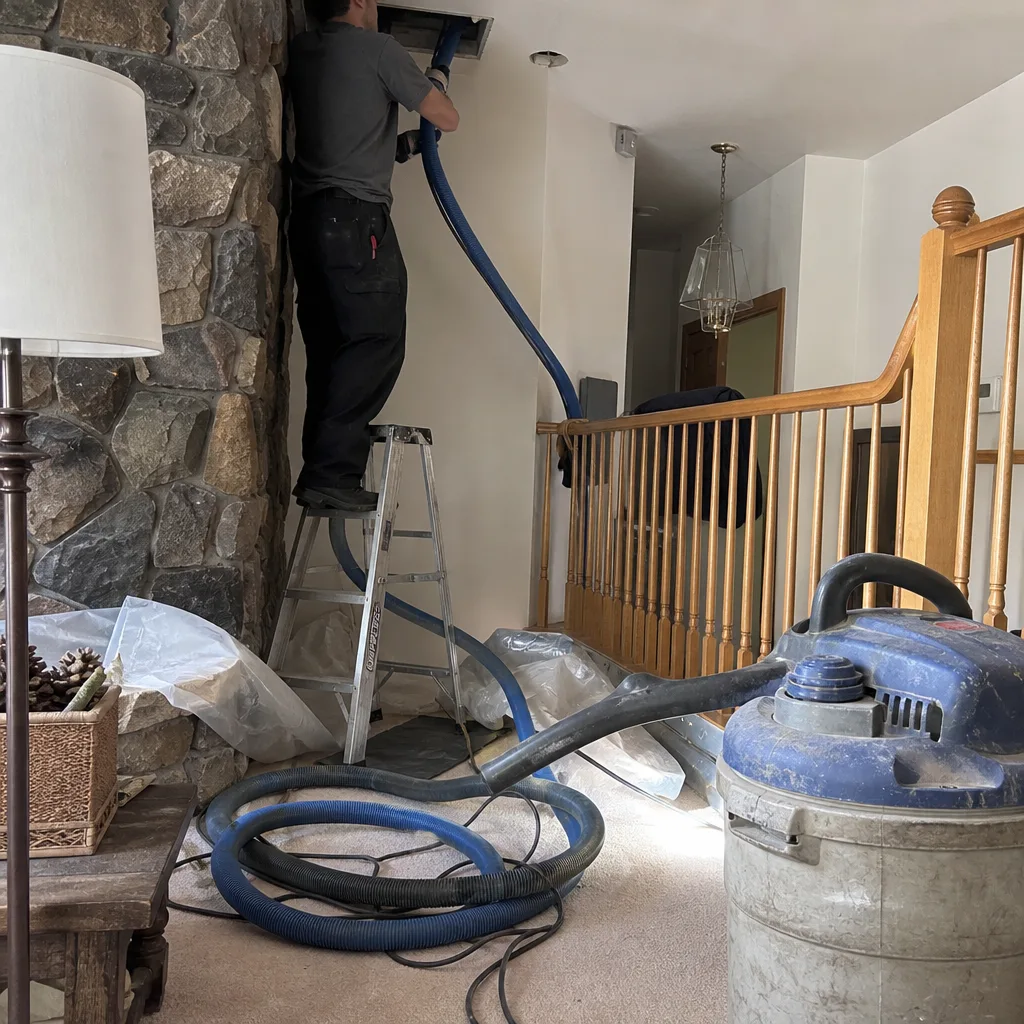 Before
 After
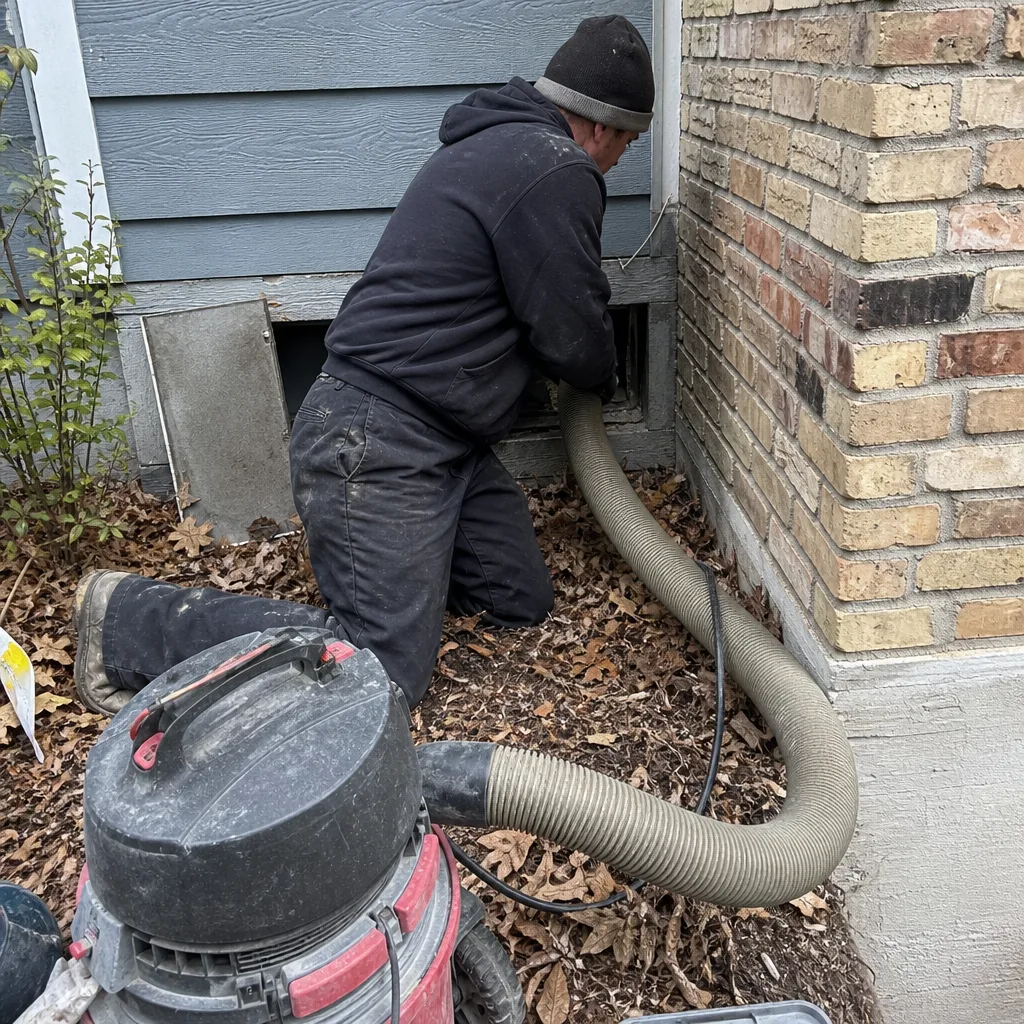 Before
 After
When to Call a Professional
Call a professional when you’ve noticed any of the signals above, when it’s been more than three years since your last full cleaning, or when you’re moving into a Heather Gardens home and don’t know the service history. Call if the furnace or AC runtime has gone up without a weather reason, if you smell something musty or chemical at the first seasonal transition, or if you’ve had water intrusion, a crawl space issue, or a smoke event that pushed fine particulate through the system. Air Duct Cleaning Heather Gardens offers free estimates in Heather Gardens – call (855) 337-1174. We answer 24/7. Fast dispatch from 7am to 7pm, Sunday through Friday, and we’re closed Saturday. Pricing is per job by written estimate, so you know the full system cost before any work starts.
Frequently Asked Questions
Once a year in the fall, before heating season begins, is the right cadence for most Heather Gardens homes. Add a spring inspection for the blower and coil, and schedule a second cleaning in the fall if summer smoke season is heavy or if you have pets or allergy sensitivities. Homes without pets or sensitivities can often stretch to every two years, but the fall visit is still the one to keep.
Fall is the anchor. Cleaning in early October, before the first furnace run, removes the spring and summer contamination before it gets pushed into the living space at first heat. Spring cleaning removes winter debris but arrives too late to protect the cooling season. Pair the fall cleaning with a fall duct leakage inspection and you’ve addressed the root of the problem rather than just the debris.
Maybe. A higher-MERV filter captures more fine particulate, but your blower has to be able to move air through it without losing efficiency. In Heather Gardens we size the filter to the specific system. If you’re not sure, have a technician confirm the rating before you upgrade.
That’s usually accumulated dust and organic residue on the coil and duct surfaces getting moved for the first time in months. Sometimes it’s microbial growth in a duct with a slow moisture source. A fall cleaning with a sanitizing application using Guardsman protective treatments addresses both. If the smell persists after cleaning, that’s the point to inspect for leakage or a moisture source.
Not effectively. A consumer vacuum doesn’t have the airflow, containment, or agitation to remove embedded debris from the trunk and runs. Professional systems like Rotobrush and Nikro are contractor-grade equipment built for the job, and before-and-after photos give you a document of what was removed. The cost of an ineffective DIY attempt is usually a second cleaning that a professional has to do anyway.
Before-and-after photos of your duct runs, a written scope on the estimate, and a technician who walks you through what was found during the inspection. We clean with Rotobrush and Nikro professional systems on every job and document the results. If a crew won’t show you photos or a written scope, that’s your answer on whether the work will be done.
The Bottom Line
Air duct cleaning in Heather Gardens isn’t a once-a-year errand. It’s a seasonal system that has to match a genuinely four-season climate. Fall cleaning before heating season is the anchor. Spring inspection before cooling season is the reset. Summer filter strategy handles smoke and ozone. Winter attention goes to ventilation and sanitizing, not another cleaning. Layer in duct leakage inspection, professional-grade equipment like Rotobrush and Nikro, air quality components from Honeywell and Aprilaire, and Guardsman protective treatments at the right moments, and you’ve got a schedule that outperforms a fixed annual visit every year. Pricing is per job by written estimate, so you know the cost before work starts.
Call (855) 337-1174 for a free estimate. We answer 24/7. Fast dispatch from 7am to 7pm, Sunday through Friday, and we’re closed Saturday. Air Duct Cleaning Heather Gardens handles cleaning, dryer vent, HVAC, repair and sealing, and sanitizing as one full-system service.
Written by the team at Air Duct Cleaning Heather Gardens.