
Top Signs You Need Air Duct Cleaning Service – Don’t Ignore These
Dust on your supply registers is not a sign your ducts are dirty. It’s a sign they’ve been dirty long enough that debris is now landing on surfaces you can see. The warning signs that actually matter show up much earlier, and most of them are invisible from the floor of your living room. Air duct cleaning in Heather Gardens is worth scheduling when those early indicators appear, not when the problem gets loud enough to smell. Here are the signs we look for, roughly in the order they tend to show up.
A quick answer if you’re in a hurry: faster filter loading, dusty indoor air that won’t settle, uneven airflow between rooms, musty odors when the system starts, and worsening allergy symptoms inside the home all point toward a duct system that needs professional attention. If you’d rather not crawl around with a flashlight, call (855) 337-1174 and we’ll take a look.
Your Filter Is Loading Faster Than It Should
Your HVAC filter catches what’s moving through the return air. When it starts loading noticeably faster than your usual replacement rhythm, that’s an early signal worth taking seriously. Filters don’t lie. If the filter is coated in weeks instead of months, something upstream is releasing debris into the airstream, and the most common culprit is the duct run itself.
Here’s how to read this without overreacting:
- A filter that loads fast after a fresh filter change. This points to a persistent source, not a one-time event. Duct debris is a strong candidate.
- Filter loading alongside visible dust in return grilles. The return side is pulling from every room, so a dusty return grille often reflects a dusty main trunk.
- A filter that loads fast in the same rooms every time. Uneven loading can mean a specific branch is contaminated, or that a leak is pulling dirty air in from an attic or crawl space.
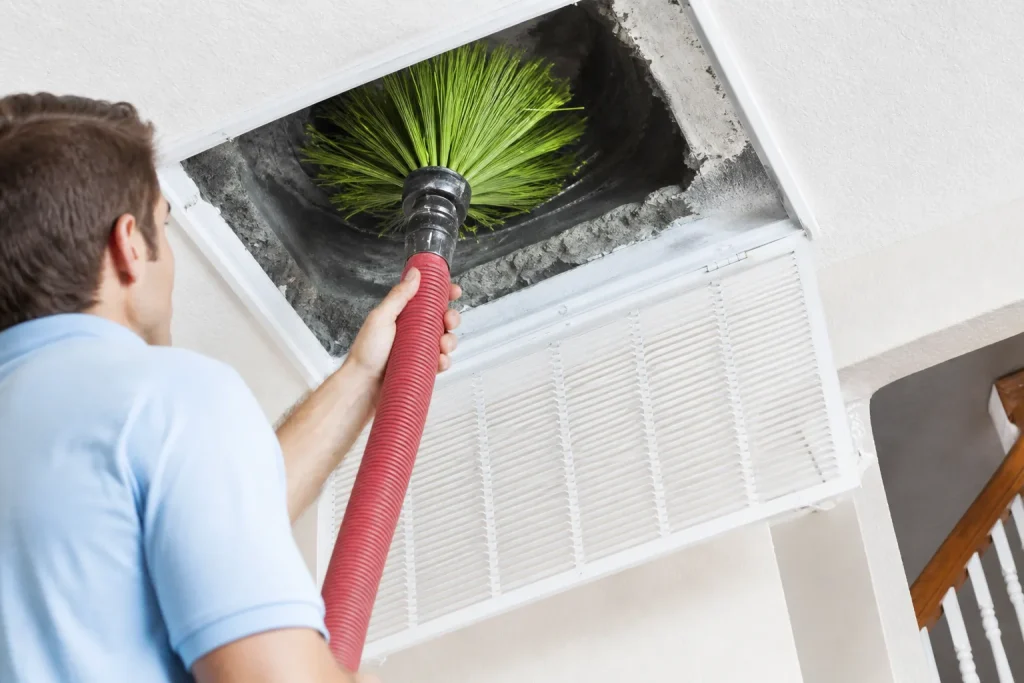
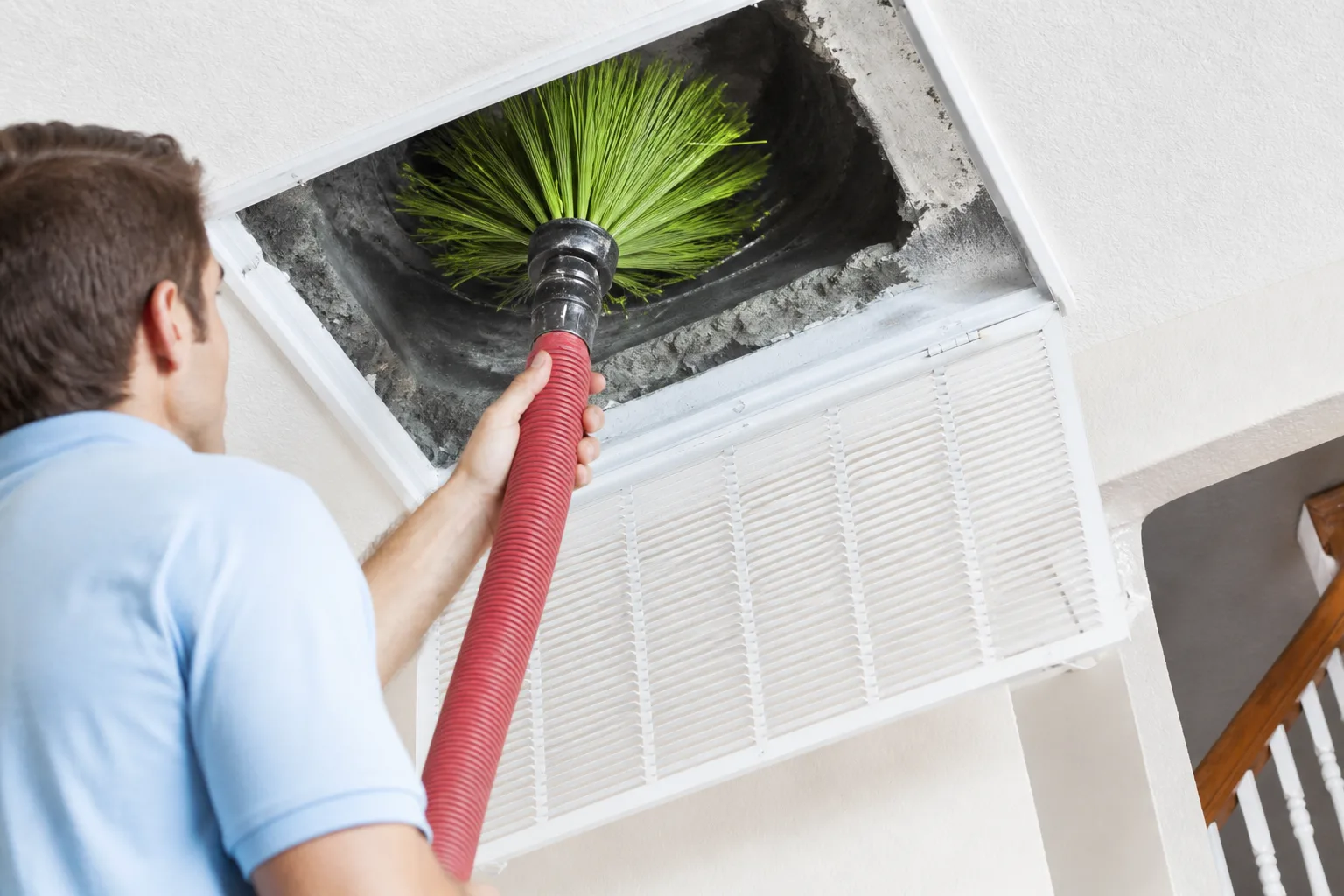
One filter change tells you almost nothing. Three consecutive filter changes that load faster than usual tell you a lot. In our experience across Heather Gardens homes, that pattern is the one homeowners kick themselves for ignoring. A professional-grade look with equipment like Rotobrush and Nikro reveals what a replacement filter can’t: the volume of debris that has settled on the duct walls themselves, where the filter has already let the smaller particles pass.
Dust That Settles Faster Than It Used To
Static buildup on furniture and fine dust that reappears within days of cleaning are signs the air in your home is carrying more particulate than it should. A little dust is normal. Dust that reappears on the same coffee table a day after you wiped it is telling you the source is still running.
Two things drive this in Heather Gardens. First, the dry winter air creates static charge that makes fine dust cling to surfaces and fabrics, so household dust becomes more visible and harder to clear than it would be in a humid climate. Second, the construction and remodeling activity that’s constant around the broader Denver metro area keeps outdoor particulate in the air, and that particulate enters the home through the return system, not just through open windows.
What to check before assuming it’s the ducts:
- Does the dust pattern change when the HVAC fan runs? If dust appears most heavily after a heating or cooling cycle, the airstream is the likely delivery path.
- Do your cabinet tops, ceiling fans, and light fixture tops show the same film? If the whole house is dusting up evenly, suspect the ducts. If just one room is dusty, you may have a leak at that branch or a filter issue.
- Is the dust fine and gray, or coarse and dark? Fine gray dust is more typical of duct debris and worn system materials; coarse dark dust usually comes from outside tracking in.
We’ve seen homes in Heather Gardens where the homeowner had been dusting twice a week for years without ever suspecting the ducts, then scheduled air duct cleaning and found the dust recurrence time dropped to normal within a week. Repeated dust is one of the most common early indicators, and one of the easiest to dismiss.
Your HVAC Cycles More Than the Season Explains
A system that short-cycles more often than the weather would justify is often fighting restriction in the ductwork. Restricted airflow forces the blower to work harder, and the system’s controls respond by running more cycles to maintain the same temperature. If the filter is fresh and the equipment checks out but the system still runs longer than the season explains, the duct path itself is a strong suspect.
This is where the clean-only versus full-system distinction matters. A crew that runs a vacuum through the ducts removes debris but won’t tell you whether restricted airflow is being caused by contamination, a crushed flex run, or a disconnected joint. Rotobrush and Nikro equipment does the deep clean, but the diagnostic step comes first: trace the whole system, find the restrictions, and fix what the cleaning surfaces.
Our HVAC cleaning service exists exactly because duct contamination and equipment contamination are different problems. A dirty evaporator coil and a dirty duct run both cause short cycling, but the fix lives in different places. Cleaning the ducts without inspecting the air handler, or the reverse, leaves the other half of the restriction in place. If your system is running long cycles on a mild day, the answer starts with a look at all of it: the ducts, the returns, the coil, and the equipment cabinet. That’s the diagnosis a full-system provider should give you before any work begins.
Musty Odors When the System Starts
A musty smell that shows up when the heating or cooling kicks on is the system telling you something is damp inside. Clean ductwork doesn’t smell like much of anything. If you notice a distinct musty or earthy smell in the first minute after startup, that’s a sign of organic material and moisture meeting inside the system, and that’s the pattern where surface cleaning alone tends to underdeliver.
Heather Gardens homes face a specific combination that makes this worse. Wildfire smoke seasons push fine particulate into the return air, and that particulate carries moisture with it in some weather. Once that material settles on the duct walls and the coil, it becomes a food source for the biofilm that causes the smell. Wiping a grille won’t fix it, and neither will a spray freshener. The system interior needs to be addressed with Abatement Technologies-grade equipment that’s built for contaminated environments, then finished with a proper sanitizing step.
When we handle odor situations, the process usually goes:
- Inspect the ducts, coil, and air handler to confirm the source.
- Clean the full system with contractor-grade equipment, paying extra attention to the accessible interior walls of the return trunk where odors concentrate.
- Seal any leaks found during inspection, since a leak lets outdoor air and particulate back in.
- Apply Guardsman protective treatment as the final layer in our Air Quality & Sanitizing service, so the cleaned surfaces resist recontamination longer.
That last step is where a lot of single-service crews stop short. Clean ducts are only half the job; sealed and sanitized ducts are the finish line.
Allergy Symptoms That Get Worse Indoors
Allergy symptoms that flare on contact with the home environment, not the outside environment, point toward an indoor contamination source. The pattern to watch is simple. If symptoms ease on days when you’re out for hours but flare again within an hour of being home, the home air is doing something to you. That’s a different signal than hay fever, which tends to track the outdoor counts of pollen and smoke.
What specific signs deserve a professional look:
- Morning congestion that clears later in the day, when the HVAC has run a normal cycle.
- Itchy eyes or a scratchy throat that starts after the heating or cooling system kicks on.
- Symptoms that are worse in specific rooms and better in others, suggesting a contaminated branch.
- Household members with asthma noticing more frequent rescue-inhaler use at home than away from home.
None of this is a diagnosis; that’s a conversation for a doctor. But the physical pattern of where symptoms occur is one of the most reliable early indicators of duct contamination we hear from Heather Gardens homeowners. The ducts are moving a full household’s air plus everything it carries – dust, pollen, pet dander, and fire-season smoke particulate. When the system is loaded, every cycle delivers a little more of that elevated particulate into the breathing zone.
Uneven Airflow Between Rooms
Some rooms always being warmer or cooler than others is common, but a sudden change in the pattern is different. If a room that used to cool well now stays warm, or a second-floor bedroom has gone from fine to stuffy within a season, the balance of the system has shifted. Contamination is one possible cause. A separated joint, crushed flex run, or an unsealed trunk leak is another, and typically the real one.
This is where air duct cleaning Heather Gardens as a service has to include more than cleaning. If a length of duct has come loose in an attic, cleaning it won’t bring airflow back; the joint needs to be repaired and sealed. Our Duct Repair & Sealing service was built for this exact reason: warm rooms, hot spots, and disappearing airflow are usually leak problems before they are cleaning problems. And here’s the irony – a leaky duct system pulls in attic or crawl-space air, which is often dirtier than the outdoor air or the house air it was supposed to be delivering. So the leak not only loses airflow, it contaminates what does get through.
Diagnosing this properly means tracing every branch with the system running, checking pressures at each register, and looking at the ducts themselves rather than only at the thermostat reading. When we inspect a Heather Gardens home for uneven airflow, we frequently find a mix of problems: a bit of debris in the trunk, a joint that’s opened up at one branch, and a register damper that’s been half closed for so long the family forgot. That’s a three-part fix, not a one-tool job. We bring the full set of tools for exactly that reason.
The Sign That Means Call Now, Not Schedule Later
Visible mold on a register face is the one sign that moves from “schedule an appointment” to “call today.” Here’s why. Registers are the visible end of the duct run, so what’s showing on the surface is the part of the system you can see, and the duct interior is the part you can’t. Mold appearing at the register face means there’s moisture and organic material in the system, and the interior of the run is very likely worse than the surface where it’s showing.
Wiping the register clean does not solve this. It hides it. The mold will grow back from the source, and meanwhile the system keeps moving spores through the whole house with every cycle. The right response is to stop, inspect, and treat the full system: identify the moisture source (a duct leak pulling in humid attic air, a condensate drain issue, or a coil problem), clean and remediate the duct interior, seal what needs sealing, and finish with a sanitizing treatment. This is exactly the situation where remediation-grade equipment like Abatement Technologies matters, and where a household vacuum or a consumer-grade tool is the wrong piece of equipment for the job.
If mold at a register is what you’re looking at, call us at (855) 337-1174. We’ll book you in.
And one more early indicator worth naming: it’s been many years since the ducts were professionally cleaned. Duct contamination is a slow process, but it does accumulate. If nobody in the household remembers the last cleaning, that’s a sign in itself.
When to Call a Pro
You can check the easy indicators yourself: filter load time, dust recurrence, musty smells at startup, and dust patterns on the returns. Watching those for a few weeks tells you a lot. What you can’t check from the floor is the condition of the duct walls themselves, the interior of the air handler, and the seal on every branch of the system. That’s where the professional equipment earns its place. Rotobrush and Nikro systems are purpose-built for duct interior cleaning, not for household surfaces, and they produce a documented clean rather than a surface pass.
Related services in Heather Gardens that often pair with what this article describes: dryer vent cleaning for households noticing longer dry times, and Duct Repair & Sealing for homes where uneven airflow is the main complaint.
The Bottom Line
Most of the signs reviewed here are easy to see once you know what they are. Filter load time, dust recurrence, musty startup smells, room-specific airflow changes, and indoor allergy patterns are all indicators you can watch for yourself. The one signal that shouldn’t wait is visible mold at a register, because that’s a moisture problem, not a surface problem, and it needs system-level remediation rather than a wipe-down.
If you’ve noticed one or more of these signs in your Heather Gardens home, the answer is a proper inspection of the full system, not a guess. Air Duct Cleaning Heather Gardens offers free estimates and a flat price per system agreed before work begins, so you’ll know the cost before anyone starts moving equipment. We bring the Rotobrush and Nikro systems, the Abatement tools for elevated contamination, the Honeywell and Aprilaire air quality components for the long-term side of the job, and Guardsman-protected sanitizing as the final step. Call (855) 337-1174 for a free estimate. We answer 24/7. Fast dispatch from 7am to 7pm, Sunday through Friday.
Frequently Asked Questions
There’s no universal rule that fits every home in Heather Gardens, but the right interval depends on what the ducts are showing. If your filter loads at the normal rate, dust recurrence hasn’t changed, and there are no odors at startup, a professional cleaning every several years is reasonable. Homes in wildfire smoke season territory, homes with pets, and homes near active construction often need it more frequently. Watch the signs, not the calendar.
Cleaning and sanitizing the duct system reduces the particulate load that the system delivers into the breathing zone on every cycle, and that’s the mechanism through which it can help with indoor allergy symptoms. It is not a medical treatment and doesn’t replace what a doctor recommends. What it does is remove a source of indoor airborne irritants that many homes don’t address. If you’re seeing indoor-pattern symptoms, a full-system inspection is worth the call.
You can replace filters and wipe the register covers, and you should. What you can’t achieve with household tools is the deep clean of the duct interior, the diagnosis of the air handler and every branch, or the sealing that keeps the system clean after the job is done. Professional-grade equipment like Rotobrush and Nikro is the difference between surface cleaning and a documented clean. For the duct interior itself, use a professional.
Not necessarily, but “no problem noticed” is not the same as “no problem present.” The initial indicators are quiet: filter load rate, dust recurrence, and small airflow changes. If your ducts have gone many years without a professional inspection and you’re noticing any of those patterns, it’s worth scheduling a look. A free estimate is the right place to start.
Written by the team at Air Duct Cleaning Heather Gardens.
Need Air Duct Cleaning Help?
Call Air Duct Cleaning Heather Gardens - the local pro we connect you with is licensed and insured, here with fast help in Heather Gardens.
(855) 337-1174