
Rotobrush Air Duct Cleaning in Heather Gardens: A Homeowner’s Guide
Most homeowners in Heather Gardens have never actually seen inside their own ducts. They’ve been told the system is “dirty” or “fine” by someone holding a clipboard, and they took it on faith. Rotobrush changes that dynamic because the equipment carries a camera at the brush head, so the contamination and the clean result both show up on screen. This guide explains how Rotobrush air duct cleaning in Heather Gardens actually works, where the method excels, where it needs a careful hand, and what questions to ask before anyone touches your ductwork. If you’d rather not sort through the equipment details yourself, call (855) 337-1174 and we’ll walk you through it.
What makes Rotobrush different from a big vacuum truck?
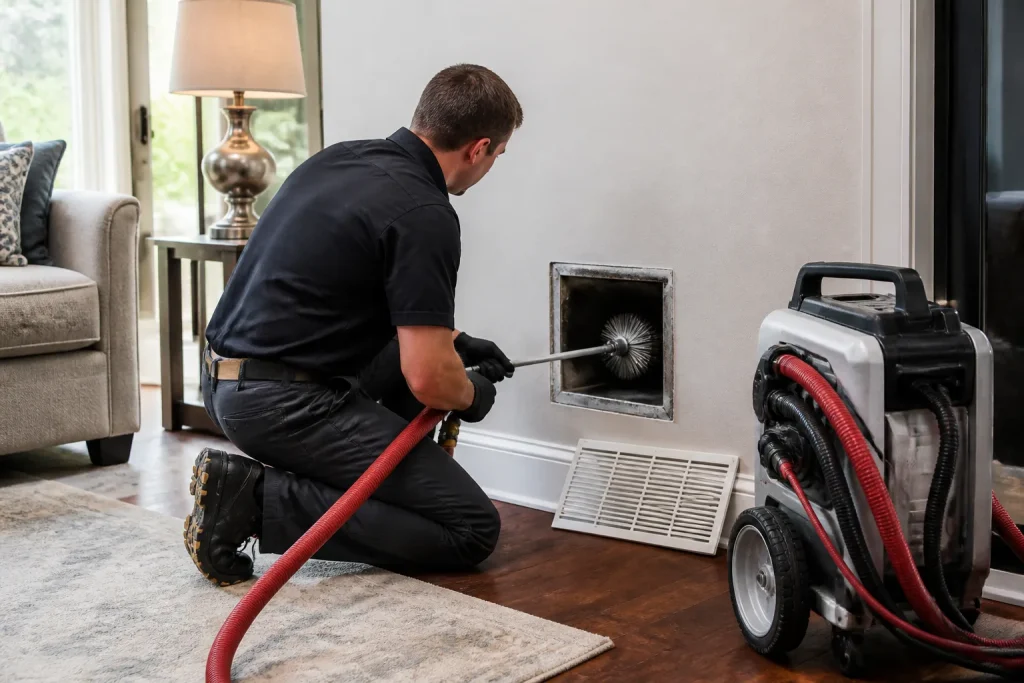
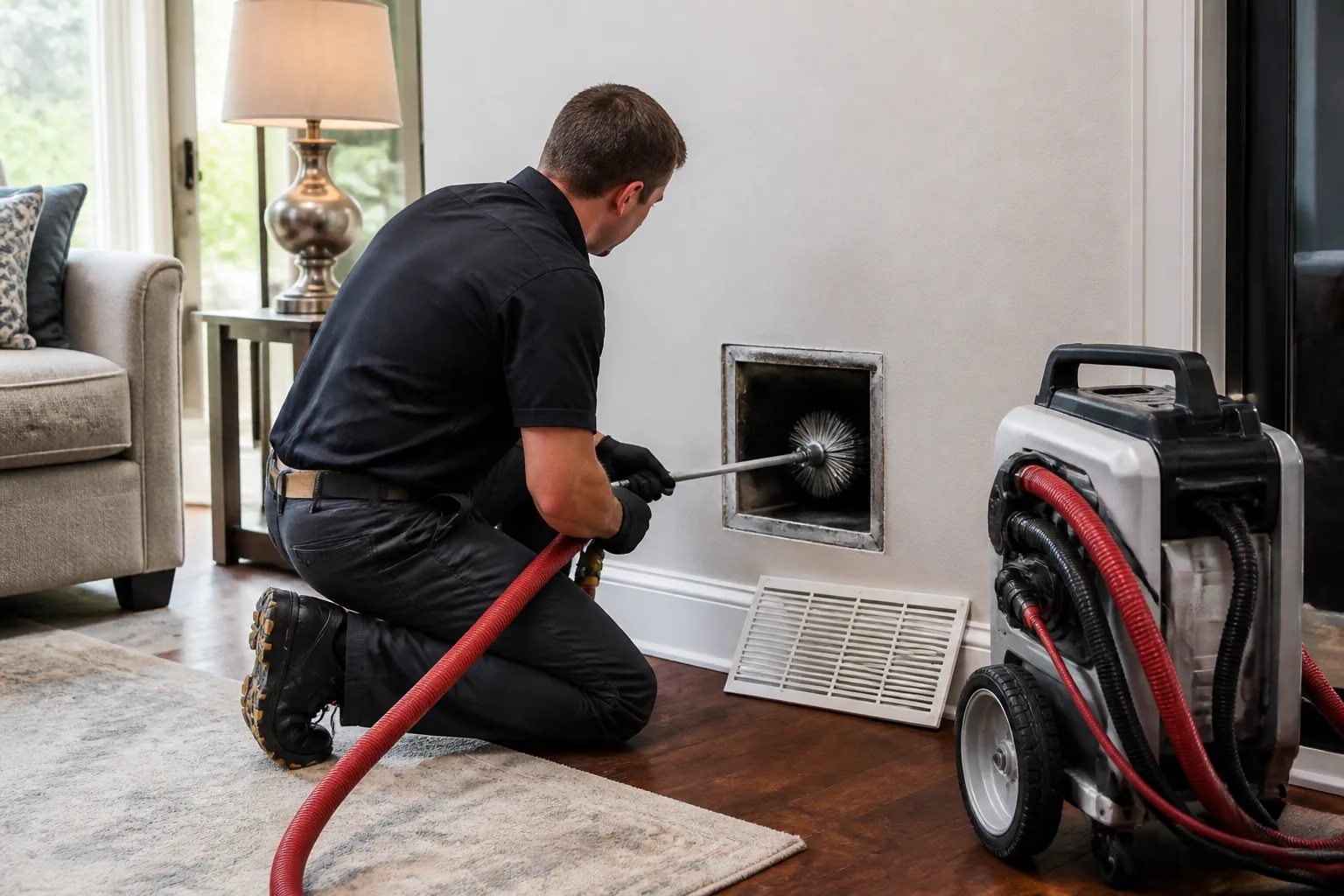
Rotobrush is a contact-cleaning system. A rotating brush physically scrubs the duct wall while a high-powered vacuum pulls loosened debris into a collection unit at the same time. That’s the core difference from negative-pressure source removal, where a large vacuum truck pulls the whole system under suction and relies on airflow alone to lift contamination.
Neither method is universally better. They solve different problems:
- Contact cleaning (Rotobrush): Best for dislodging adhered debris, dust that has bonded to duct walls, and light buildup in branch runs. The brush reaches surfaces suction can’t pull free on its own.
- Negative pressure (source removal): Best for bulk debris volumes, heavily contaminated trunk lines, and containment during a large cleaning so nothing escapes into living space.
- Combined approach: Many full-system jobs benefit from both, using containment and high-volume extraction on the mains while the Rotobrush handles branch runs and adhered material.
In our experience, the equipment that matters is the one matched to what’s actually inside the ducts. A technician who reaches for the same tool on every Heather Gardens job isn’t diagnosing; they’re defaulting. Our Air Duct Cleaning Heather Gardens work starts with an inspection, and the tool choice follows from what the inspection finds.
Can you really see before-and-after footage of your ducts?
Yes, and you should ask to see it. The Rotobrush brush head carries a camera that feeds live video to a monitor, so the technician can show you the condition of a duct run before cleaning and the same run afterward. This is the single most useful thing the equipment offers a homeowner: documentation.
Here’s how to make that footage work for you:
- Ask to see the pre-clean inspection footage on the monitor before work starts, not after.
- Ask which runs are being recorded and why (main trunk, branch runs, or both).
- Ask for footage of the same locations after cleaning, so the comparison is apples to apples.
- Ask whether you’ll receive copies or stills of that footage as part of the service.
The footage should be part of what you’re paying for, and a technician using Rotobrush equipment has no excuse not to show it. Bad lighting, a rushed angle, or footage from a different run aren’t documentation. In our experience, the camera is also a diagnostic tool: it’s where a technician spots a separated joint or a crushed flex run that no amount of cleaning will fix.
Why does duct material matter so much with Rotobrush?
Rotobrush is at its best on rigid sheet metal ductwork. The brush can run at full contact pressure against a hard metal wall without risking damage, which is exactly the scenario the system was built for. Flex duct is a different story. Flex duct has a thin inner liner supported by a wire helix, and an aggressive brush at the wrong speed or pressure can tear that liner, crush the helix, or pull joints apart.
Heather Gardens homes commonly have flex duct in branch runs and in retrofitted sections, so this is not a theoretical concern here. A technician running Rotobrush equipment has to calibrate brush speed and vacuum pressure to the duct material on the run in front of them, and switch attachments or methods where the ducting requires it. It’s the difference between cleaning a system and damaging it.
What to watch for during a Heather Gardens service call:
- The technician inspects duct material before choosing a brush or speed.
- Flex runs get a gentler approach than rigid metal.
- Any damaged liner, crushed run or separated joint is identified and discussed with you, then repaired through air duct cleaning and sealing rather than cleaned over.
If a technician can’t tell you what your ducts are made of, that’s the moment to ask. Duct material is the first thing a careful operator checks.
What does “Rotobrush-certified” actually mean?
“Rotobrush-certified” is not a single standardized designation with one issuing body. It can refer to training completed through the equipment manufacturer, certification programs offered to contractors, or a technician’s own internal training record. Because the term isn’t tightly regulated, the claim alone doesn’t tell you much. What matters is whether the person in your home knows how to use the equipment correctly on your specific ductwork.
How to verify the claim in practice:
- Ask what training the technician completed and when.
- Ask how they decide brush speed and pressure for flex versus rigid duct.
- Ask them to walk you through the camera footage and explain what they see.
- Ask what happens if the brush encounters a damaged section mid-clean.
A technician with solid training answers these without hesitation. Someone reciting a marketing line won’t. Our technicians have up to 10 years of experience with professional-grade equipment, and we treat the camera and the calibration conversation as part of the job, not a sales flourish.
Is Rotobrush cleaning the whole job, or just one step?
It’s one step, and an important one. Rotobrush handles the mechanical cleaning pass, dislodging and extracting contamination from duct surfaces. It does not seal leaks, restore crushed flex runs, or provide sanitation on its own. Clean ducts are only half the job; sealed, sanitized ducts are the finish line.
A full indoor air quality scope in Heather Gardens typically looks like this:
- Mechanical cleaning: the Rotobrush pass through the system, with camera documentation.
- Repair and sealing: identifying leaks and damaged runs, then sealing them so air loss and re-contamination stop.
- Sanitizing: a Guardsman protective treatment applied as a final step to address microbial growth and odors a cleaning pass alone leaves behind.
- Filtration and air quality components: where the system calls for it, supplying and installing Honeywell or Aprilaire equipment to improve what the ducts deliver.
For homes with elevated contamination or compromised duct environments, remediation-level tools like Abatement Technologies equipment come into play, which goes beyond what routine cleaning calls for. The point is the cleaning pass is where the work starts, and the scope should account for what the camera finds.
When should you call a pro instead of waiting?
Call a professional when you notice symptoms that point to the duct system itself rather than to surface dust. Musty odors that return after cleaning, uneven airflow between rooms, visible debris blowing from registers, or allergy flare-ups that track with the HVAC running are all signs worth investigating. So is a system that hasn’t been serviced in years and shows visible buildup at the registers.
We answer 24/7 and send crews with fast dispatch from 7am to 7pm, Sunday through Friday. If you’re not sure whether your situation warrants a visit, ask. A free estimate is a low-cost way to get an answer instead of guessing. And if the camera shows a problem, you’ll know exactly what it is before anything is decided.
Related services in Heather Gardens: our HVAC cleaning covers the equipment side of the system, and dryer vent cleaning handles a separate airflow risk worth checking while we’re in the home.
The Bottom Line
Rotobrush is a professional-grade contact-cleaning system that dislodges adhered contamination and documents the result on camera, which makes it genuinely useful for homeowners who want to see the before and after rather than take a technician’s word for it. It’s at its best on rigid sheet metal and requires a careful hand on flex duct, so the skill of the operator matters as much as the equipment. It’s the mechanical cleaning pass, not the full solution, and a complete scope includes repair, sealing and sanitation where the inspection calls for it.
Key takeaways for Heather Gardens homeowners:
- Ask to see before-and-after camera footage of the same duct runs.
- Confirm the technician inspects duct material before choosing brush speed and pressure.
- Treat “certified” as a starting question, not an answer.
- Expect the work to include sealing and sanitizing, not just cleaning.
If you’re in Heather Gardens and need help, Air Duct Cleaning Heather Gardens offers free estimates – call (855) 337-1174. We answer 24/7. Fast dispatch from 7am to 7pm, Sunday through Friday.
Frequently Asked Questions
It’s safe when the technician calibrates brush speed and pressure to the duct material. Rigid sheet metal handles full contact cleaning well. Flex duct, which is common in Heather Gardens branch runs, needs a gentler approach to avoid tearing the inner liner or crushing the wire helix. Ask your technician how they adjust for flex before work begins. Call (855) 337-1174 for an exact quote – estimates are free.
Yes, if you ask. The Rotobrush brush head carries a camera that displays live footage on a monitor, and the technician can show you the same run before and after cleaning. Ask for that comparison as part of the service, and ask for copies or stills if you want documentation. Call (855) 337-1174 for an exact quote – estimates are free.
It addresses the contamination source, which is often part of the odor and airflow picture, but it doesn’t seal leaks or repair crushed runs on its own. Musty odors and uneven airflow usually call for a full-system look that includes repair, sealing and sanitizing alongside the cleaning pass. Call (855) 337-1174 for an exact quote – estimates are free.
There’s no single schedule that fits every home. Visible buildup at registers, musty odors that return, allergy symptoms tied to the HVAC running, and years without service are reasonable triggers to have the system inspected. Let the camera and the condition of the ducts guide the timing rather than a fixed interval. Call (855) 337-1174 for an exact quote – estimates are free.
Written by the team at Air Duct Cleaning Heather Gardens.
Need Air Duct Cleaning Help?
Call Air Duct Cleaning Heather Gardens - the local pro we connect you with is licensed and insured, here with fast help in Heather Gardens.
(855) 337-1174