
Guardsman Air Duct Cleaning in Heather Gardens: A Homeowner’s Guide
The word “professional” on a duct cleaning company’s website means nothing until you know what’s actually pulling air through your ducts. A shop-vac-class machine and a Guardsman-class machine are not the same tool, even when both arrive in a van with a logo on the side. If you’ve been comparing quotes around Heather Gardens and wondering why one number is half the other, the equipment sitting in the driveway usually explains it. If you’d rather not sort through the fine print yourself, call (855) 337-1174 and we’ll walk you through what a real Guardsman-equipped job looks like.
What Guardsman Equipment Actually Does That a Shop Vac Can’t
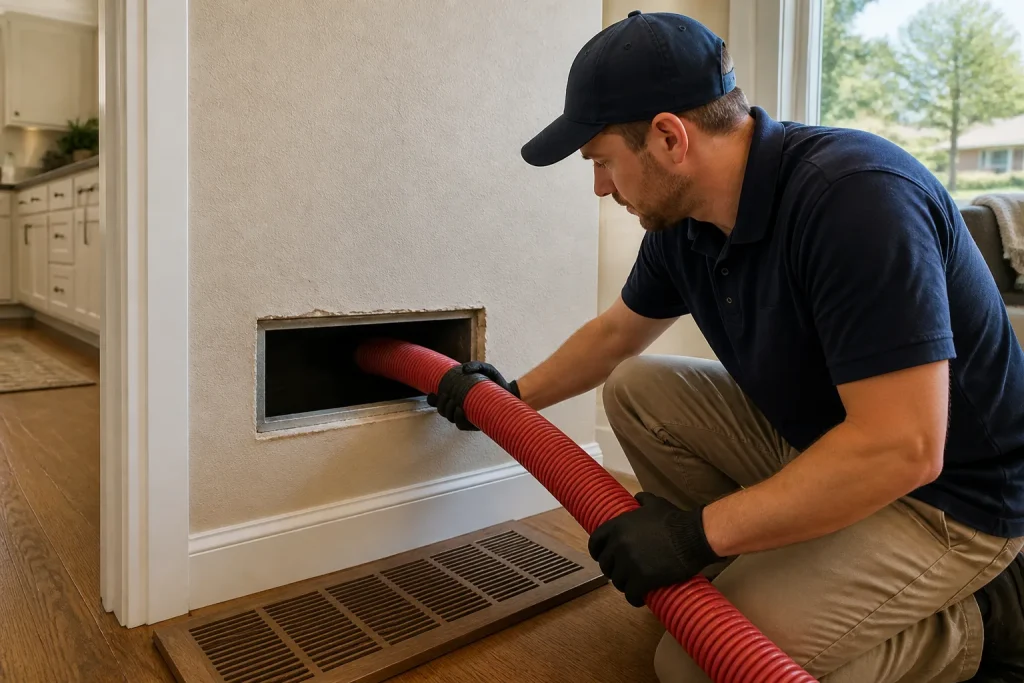
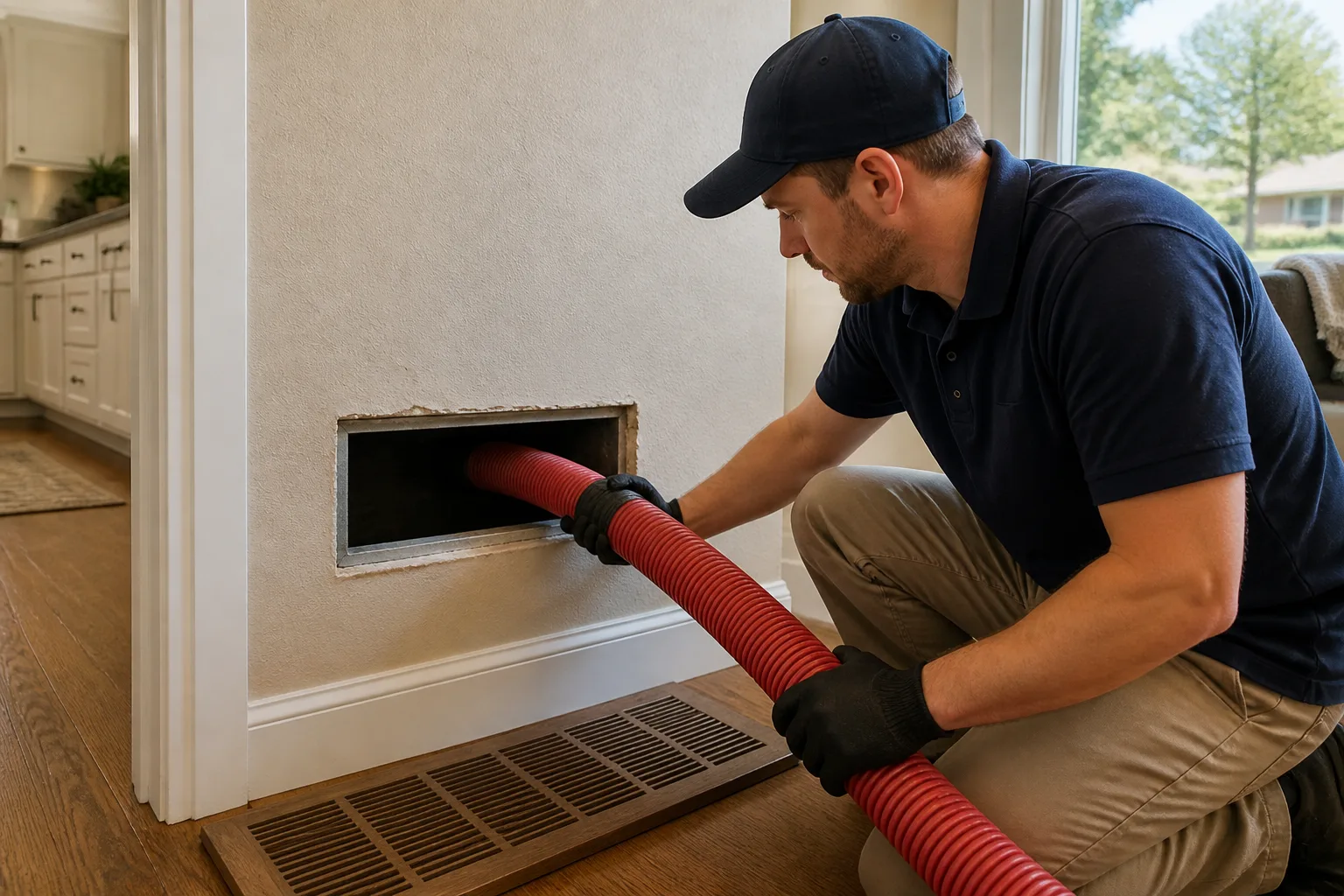
Guardsman air duct cleaning relies on negative pressure: a powerful vacuum pulls the whole duct system into a vacuum while a rotary brush and compressed air knock debris loose from the walls. The machine has to move enough air (measured in cubic feet per minute, or CFM) to keep the entire duct run under suction during the whole job. A shop-vac-class unit moves a fraction of that. It creates a little suction right at the hose and almost nothing fifty feet down the trunk line. Debris loosened in a far room simply settles back into the duct before anyone reaches it.
Filtration matters just as much. Guardsman-class equipment pairs the vacuum with a multi-stage filtration stack that traps what it pulls out instead of exhausting fine dust back into your living space. That’s the part nobody photographs. A machine with weak filtration turns a cleaning into a dust event, and you’ll see the evidence settle on the furniture hours later.
What this means for you in practical terms:
- Suction has to be strong enough to hold the full duct run, not just the register under the hose.
- Filtration has to capture fine particulate, not just hair and lint.
- The brush and air whip have to reach the duct walls, because dust clings to metal and flex duct alike.
- The technician has to show you the machine, not just describe it.
Rotobrush and Nikro systems are the equipment we work with on every job, and they’re built to meet that same standard. If a crew shows up with a portable unit the size of a shop vacuum and a promise, you’re paying for a surface pass. If you’re ready to schedule a proper air duct cleaning, we can talk through the scope before anyone sets foot inside.
Why Negative Pressure Matters in Heather Gardens Home Layouts
Heather Gardens sits at roughly 5,500 feet in the Denver metro area, in dry high-plains air that pulls dust and lint through HVAC systems faster than most homeowners expect. That altitude and dryness matter for duct work, but the building layouts matter just as much. Heather Gardens has a large stock of mid-rise condominiums and townhomes alongside single-story and two-story houses, and the duct design in each one changes what equipment a job actually needs.
In the mid-rise buildings, duct runs stack vertically between floors and often share a chase with neighboring units. A weak vacuum on the top floor barely reaches the trunk line below, and debris loosened in one section can drop back down the riser. Truck-mounted or high-CFM negative pressure holds the whole vertical run under suction so material travels one direction: out. In slab-on-grade homes, the supply trunks run beneath the floor, which means the technician can’t see most of the system. Negative pressure and a camera are the only way to know what’s happening inside those runs.
In two-story houses, the return-air path is usually longer and more restricted than the supply side. A machine without enough CFM to pull the entire return run will leave that side of the system essentially untouched. That’s often why a homeowner in Heather Gardens notices uneven airflow upstairs even after a “cleaning” was done.
Sealing matters here too. Loose joints and disconnected flex sections bleed pressure, so even a strong machine struggles if the system leaks. That’s why we pair cleaning with duct repair and sealing rather than treating them as separate jobs. It’s also why HVAC cleaning belongs in the same conversation: the air handler, coils, and blower are part of the same pressure picture.
What You Should See, Hear, and Be Shown During a Guardsman-Equipped Service
A real Guardsman-class job has observable markers. You don’t have to be an HVAC technician to check them, and asking for them up front is entirely reasonable. Here’s what to look for:
- Before work starts: the technician shows you the machine, explains where it hooks up, and walks the system with you to identify returns, registers, and the air handler location.
- During the job: the vacuum runs continuously. You’ll hear it, and the suction should be strong enough at each register that you can feel it when the brush passes. Registers are removed rather than cleaned in place.
- Filtration running: the machine’s filtration stack should be visible and connected, not bypassed.
- Before-and-after photos: ask for images of the inside of the ducts from the same vantage point, not a generic shot of a brush.
- After the job: the technician should show you what came out, describe what was found (debris type, any damage or disconnected runs), and explain what was sealed or repaired.
Vents and registers get wiped down and reinstalled, and the work area is left as clean as it started. If the technician can’t describe the CFM rating of the equipment or the filtration stages in use, that’s your answer about what class of tool showed up. Guardsman is one name among several credible systems; Rotobrush and Nikro fall into the same contractor-grade category. Knowing the class of machine matters more than the badge.
How to Verify the Equipment Before Work Begins
Ask before you book, not after. A short, direct conversation filters out most of the mismatch between the quote you got and the equipment that arrives. Here’s what to ask, in plain terms:
- What machine will be used, and what CFM does it move?
- Is the vacuum truck-mounted or a portable contractor unit, and what filtration stages does it have?
- Are the return and supply sides both cleaned, or only the supply registers?
- Will I get before-and-after photos of my own ducts?
- Does the price cover the whole system, or is it per-vent?
- If the technician finds disconnected or damaged runs, is sealing part of the scope?
Per-vent pricing is the tell. Whole-system, negative-pressure cleaning is priced as one job because the equipment and labor are one job. A per-vent price usually means a quick pass at each register with a small machine, and the duct walls between the registers go untouched. We quote one flat price per system, agreed before any work starts, so the invoice matches the estimate.
It’s also fair to ask whether the crew works with dryer vent cleaning at the same time. Dryer vents are a lint fire risk and a separate run from the HVAC ducts, but they’re worth scheduling in the same visit. Guardsman equipment is designed for the HVAC system, so it isn’t the tool for a dryer vent, and an honest provider will say so.
Where Guardsman Cleaning Stops and Other Services Start
Guardsman-class cleaning removes accumulated debris and restores airflow capacity. That’s a real, worthwhile result. It is also not the whole picture, and any provider who tells you one pass fixes everything is overselling.
Three things sit outside what cleaning alone can do:
- Mold and microbial growth: if the moisture source is still present, cleaning removes the visible growth and it returns. Abatement Technologies equipment is what we bring to elevated contamination situations where remediation-level work is needed rather than a routine clean.
- Leaks and disconnected runs: cleaning doesn’t seal a joint. Duct repair and sealing addresses the root cause of air loss and re-contamination, and it’s the difference between clean ducts and ducts that stay clean.
- Sanitizing and air quality components: applying a Guardsman protective treatment after cleaning adds a final layer that most single-service providers skip. Beyond that, installing a Honeywell or Aprilaire component at the air handler can address humidity, filtration, or ventilation at the source.
That full chain, clean, seal, sanitize, and improve, is why we handle five service categories under one roof. Cleaning is the starting point, not the finish line. If you want to see how that full scope fits together, start with Air Duct Cleaning Heather Gardens and we’ll map out which parts your system actually needs.
What happens when you call
- 1
A real person answersNo phone trees – you reach a local pro.
- 2
You get an upfront price rangeHonest numbers before anyone is dispatched.
- 3
A background-checked tech heads outLicensed & insured, dispatched right away.
- 4
You approve before work beginsNothing starts until you say go.
When to Call a Pro Instead of Waiting
Some signs mean it’s time for a technician. Visible dust blowing from registers right after a filter change, a musty smell that gets stronger when the heat comes on, uneven airflow between rooms, or a noticeable increase in allergy symptoms indoors all point to a system that needs attention. If you’ve never had the ducts serviced and you’ve lived in the same Heather Gardens home for years, a professional assessment is worth the call. A technician with up to 10 years of experience can tell the difference between a dusty return and a disconnected trunk line in a way you can’t from the register.
The Bottom Line
Guardsman air duct cleaning in Heather Gardens comes down to one question: does the equipment move enough air under negative pressure, with real filtration, to clean the whole system rather than the register faces? Ask what machine is coming, ask for before-and-after photos of your own ducts, and ask whether the quote is per system or per vent. A provider who can answer those three questions clearly is the one worth booking. Professional-grade equipment, not shop-vac shortcuts, is the standard to hold anyone to.
If you’re in Heather Gardens and need help, Air Duct Cleaning Heather Gardens offers free estimates. Call (855) 337-1174. We answer 24/7. Fast dispatch from 7am to 7pm, Sunday through Friday.
Frequently Asked Questions
Guardsman air duct cleaning refers to service performed with contractor-grade negative-pressure equipment that pulls the entire duct system under suction during cleaning, paired with multi-stage filtration to capture what’s removed. It’s the class of equipment, not a single brand, that determines the result. Call (855) 337-1174 for an exact quote. Estimates are free.
Ask for before-and-after photos of the inside of your own ducts from the same vantage point, plus a walkthrough of what was found and what was sealed. A technician should be able to point to the returns, the supply trunks, and the air handler and explain what happened at each. Call (855) 337-1174 if you want that walkthrough built into the estimate.
Cheaper quotes usually reflect a smaller machine, per-vent pricing, or a supply-side-only pass. A shop-vac-class unit doesn’t hold negative pressure across a full duct run, so the work is faster and shallower. Whole-system pricing with contractor-grade equipment costs more up front and delivers a different result. Call (855) 337-1174 for an exact quote on your system. Estimates are free.
Most homes benefit from a cleaning every three to five years, sooner if you’ve had renovation dust, pets, recent water intrusion, or noticeable allergy symptoms indoors. Homes in dry, high-altitude conditions like Heather Gardens tend to accumulate fine dust quickly, so an assessment after a few years is reasonable. Call (855) 337-1174 and we’ll help you decide whether your system is due.
Written by the team at Air Duct Cleaning Heather Gardens.
Need Air Duct Cleaning Help?
Call Air Duct Cleaning Heather Gardens - the local pro we connect you with is licensed and insured, here with fast help in Heather Gardens.
(855) 337-1174