
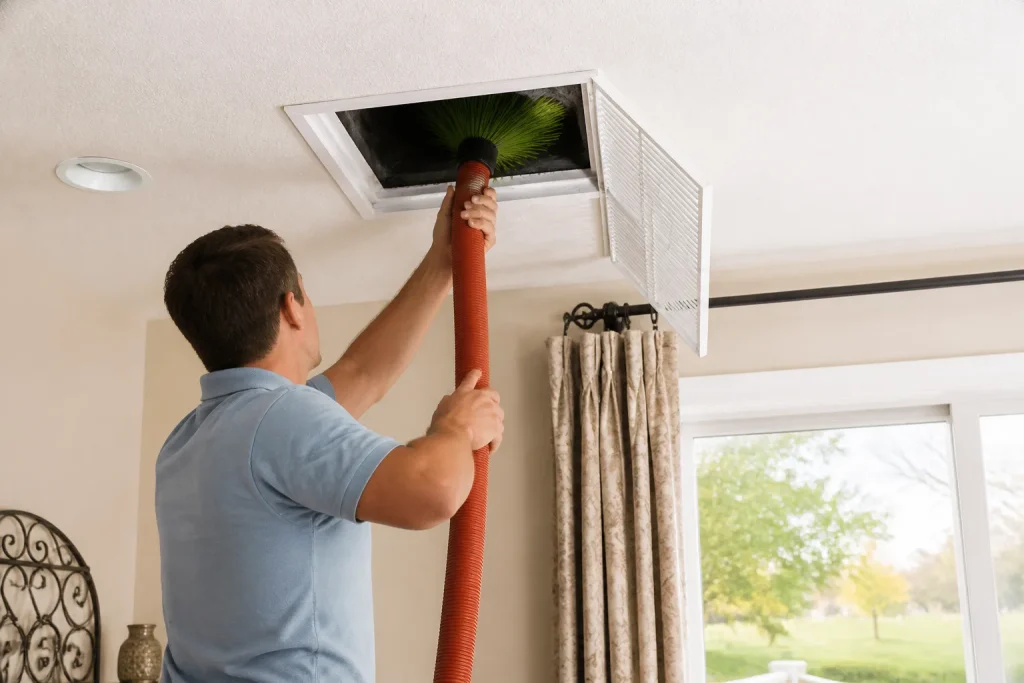
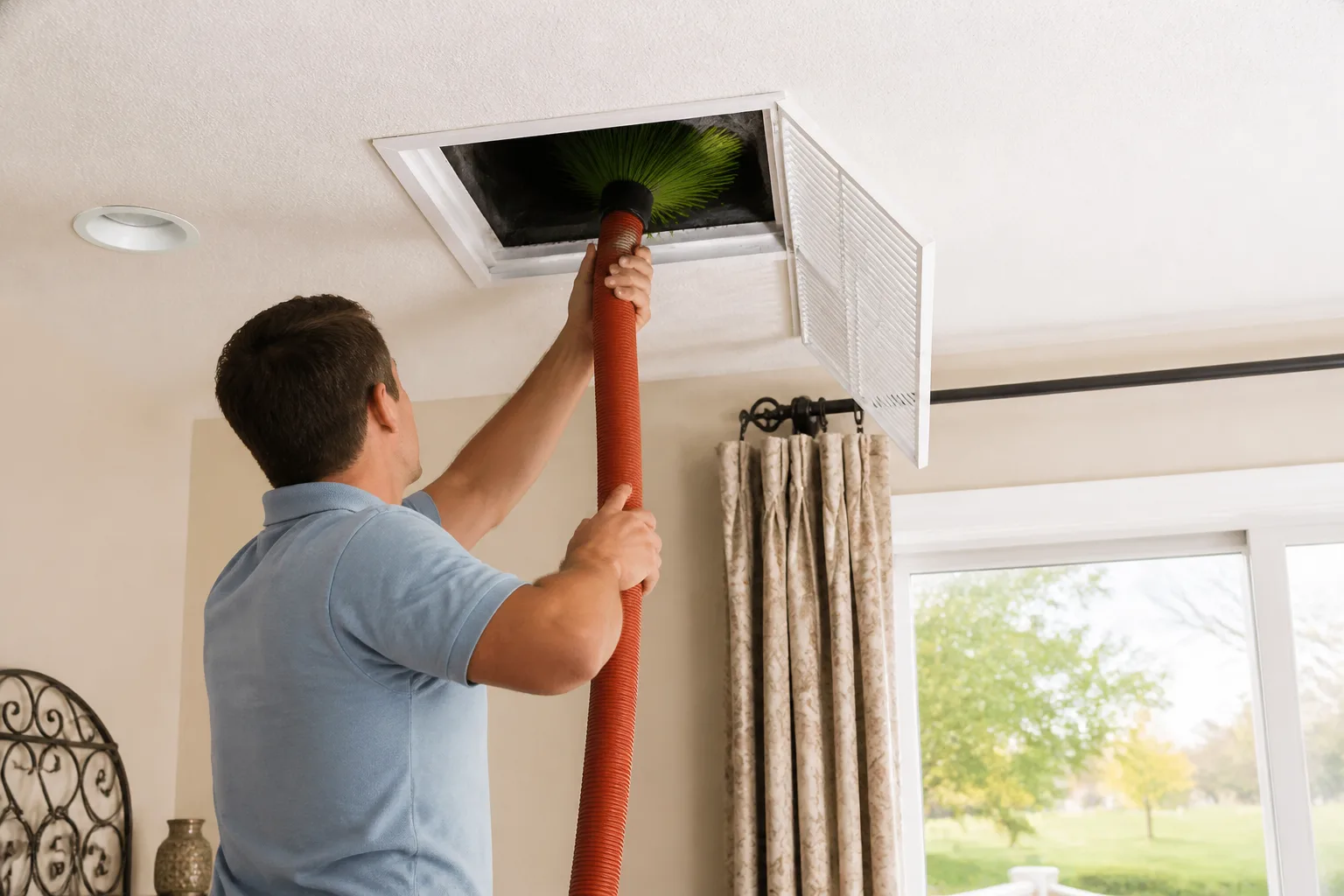
Emergency Air Duct Cleaning Near Me: What Heather Gardens Homeowners Should Do First
If water, smoke, or a failed HVAC system has just pushed contamination into your ducts, the first move is not to search for a company and start dialing. It’s to shut the system down, contain what you can, and document everything before anyone walks through the door. Those first 30 minutes decide whether you’re facing a cleaning job or a full remediation project. Here’s how to handle them, and how to vet who you call. If you’d rather have a pro walk you through it, call (855) 337-1174.
What Actually Counts as a Duct Emergency in Heather Gardens?
Most “emergency” duct calls we hear about aren’t emergencies at all. A genuine duct emergency has three triggers: water intrusion into the system (a flooded basement reaching a return, a burst pipe, a roof leak dumping into a ceiling chase), smoke or soot from a fire or a puffback, and a mechanical failure that’s been blowing unfiltered air through the house for days. Anything else, including musty smells and uneven airflow, can wait for a scheduled appointment.
Here’s the distinction in plain terms:
- Water intrusion into ducts. Emergency. Wet ductwork creates a growth environment fast, and the clock is running.
- Smoke, soot, or fire-suppression residue. Emergency. Odors set into porous surfaces and spread every time the system runs.
- HVAC failure blowing unfiltered air. Urgent. Not a fire, but worth addressing within a day or two rather than a month.
- Musty odor, allergy flare-ups, uneven airflow, “haven’t done this in years.” Scheduled. Real, worth fixing, not an emergency.
Heather Gardens sits in a dry climate, and that shapes the timeline. Water in a duct doesn’t pool the way it would in a humid climate, but dry air also pulls moisture into the duct surfaces and evaporates it unevenly, which means the wet pockets can persist longer than you’d expect. Fast surface drying is not the same as a dry system. Treat any water intrusion into ductwork as a 24-to-48-hour window before it moves from cleaning problem to remediation problem.
What Should You Do Before Anyone Arrives?
Shut the HVAC system off at the thermostat and, if you can safely reach it, at the breaker. Then contain, and then document. In that order. Every minute the blower runs after water or smoke enters the system, it distributes contamination further into the house.
- Kill the system. Thermostat to off, then the air handler breaker if it’s accessible. Don’t run the fan to “dry things out.”
- Contain the source. If water is still coming in, stop it. If it’s a fire or smoke event, keep windows closed until you know whether outside air is helping or hurting. Towels and plastic sheeting on wet returns are fine; don’t seal a system you haven’t had looked at.
- Photograph everything. Wide shots of the affected area, close-ups of the return grille, the air handler, any visible moisture or soot. Timestamped phone photos are enough for most insurers.
- Keep a written log. Time of discovery, what you did, when the system was shut off, who you called. Insurance adjusters care about sequence.
- Don’t run a shop vac or a household fan in the duct system. That’s the opposite of containment.
Once the system is off and contained, you can make calls. That’s the right order.
How Do You Vet an Emergency Duct Provider in Under 10 Minutes?
Two questions separate remediation-capable companies from standard cleaning crews. First: “What equipment do you bring for contaminated or compromised systems, and do you test for moisture before and after?” Second: “If you find leaks or damage, do you repair and seal, or do you only clean?” A clean-only crew will hand you back the same duct system with the same leaks, which means the problem comes back. A full-spectrum provider fixes the cause.
What good answers sound like:
- Contamination-specific equipment on hand, not just a truck-mounted vacuum. In our experience, that means Abatement Technologies tools for elevated contamination scenarios and contractor-grade systems like Rotobrush and Nikro for a deeper, documented clean.
- A clear process for identifying leaks and damage before cleaning, not after. If they can’t describe how they find leaks, they aren’t looking.
- A finish step beyond vacuuming. Guardsman-treated sanitizing applications and a documented before-and-after photo set are the marks of a company that expects to be asked what it actually did.
- Willingness to put the price in writing before work starts. One flat price per system, agreed up front, is the honest structure. Bait-and-switch pricing is the industry’s worst reputation problem, and Heather Gardens homeowners are right to be wary of it.
If a company gives vague answers to either question, thank them and call the next one.
What Does Heather Gardens’ Dry Climate Mean for Mold Risk?
Dry air evaporates faster. It does not make mold grow slower. Mold needs moisture, and inside a closed duct system moisture has nowhere to go. A wet return in Heather Gardens can stay wet inside the insulation or the duct lining long after the visible surface looks dry, which is why moisture readings matter more than a visual check.
Three things follow from that:
- The 24-to-48-hour window is not a rough guess. It’s the honest outside limit for getting water intrusion handled before the severity of the problem changes.
- “It dried out” is not a diagnosis. Ask for moisture readings on the affected runs.
- Sanitizing after the clean is a real step, not a sales add-on. Contamination left in a still-damp system comes back.
This is where a full-system approach pays for itself. Cleaning without repair and sealing leaves the leaks that let water and dust back in. Seal first, then clean, then treat. If you’d like the whole system looked at rather than just vacuumed, we diagnose what’s there and fix what we find.
When to call a pro: if water reached the return, if there’s a soot smell in the house, or if a prior HVAC failure has been blowing unfiltered air, stop reading and call. Same-day appointments exist for real emergencies.
Related services in Heather Gardens: air duct cleaning, HVAC cleaning, and dryer vent cleaning. If the ducts were compromised by water or fire, Air Duct Cleaning Heather Gardens is the place to start.
What Do Insurers Need for a Duct Contamination Claim?
Insurers want proof of cause, proof of scope, and proof of result. A qualified company should hand you a written report identifying the affected runs, moisture readings before and after, the equipment used, and a photo set showing the condition of the ducts before cleaning and after. That last part is the one most people forget to ask for, and it’s the one that wins borderline claims.
Ask any company you’re considering for these four items up front:
- Written scope with system counts, not a per-vent guess.
- Before-and-after photos of your own ducts.
- Moisture readings, dated.
- A stated remediation-level determination if contamination is elevated, not a standard cleaning invoice.
If the job is a real remediation scenario, a company that carries Abatement Technologies equipment is equipped to document it the way an adjuster expects. If it’s routine, say so, and get a cleaning report that matches. Never let a company invoice remediation work for a routine cleaning. Ask for the written estimate first, and hold them to it.
The Bottom Line
The first 30 minutes after a flood, fire, or HVAC failure decide how the next several days go. Shut the system off. Contain. Document. Then call, with two questions ready: do you handle contamination properly, and do you repair and seal, not just clean? That pair of questions separates the real operators from the ones who show up with a vacuum and a smile.
If you’re in Heather Gardens and need help, Air Duct Cleaning Heather Gardens offers free estimates – call (855) 337-1174. We answer 24/7. Fast dispatch from 7am to 7pm, Sunday through Friday. Our technicians have up to 10 years of experience, and the local pro we connect you with is licensed and insured as their state requires. You’ll get a written estimate before any work starts, one flat price per system, and before-and-after photos of your own ducts when the job is done.
Frequently Asked Questions
Duct cleaning for a typical single-family system runs in a range set by the size of the system, the number of runs, and whether contamination is present. Emergency situations that involve water, smoke, or remediation-level contamination cost more than a routine cleaning because more equipment and documentation are involved. The written estimate sets the final price. Call (855) 337-1174 for an exact quote – estimates are free.
Roughly 24 to 48 hours. In Heather Gardens’ dry climate the visible surfaces dry quickly, but moisture trapped inside duct lining or insulation can persist much longer. If water reached the return, treat it as urgent, not a wait-and-see.
No. Running the system after water or smoke enters it spreads contamination through the whole house. Shut the system off at the thermostat and at the breaker if you can reach it, then call a professional before turning it back on.
Usually because they’re quoting a different job: a vacuum pass with no leak inspection, no moisture readings, no sanitizing, and no before-and-after photos. The low price is real; the scope is what shrank. Ask what’s included, ask whether they seal leaks, ask for the report, and ask for a written estimate. A qualified provider will answer all four plainly.
Contamination-specific equipment, not just a vacuum. In our work that means Rotobrush and Nikro contractor-grade systems, Abatement Technologies gear for elevated contamination, and Guardsman-treated sanitizing as a finish step. We also supply and install Honeywell and Aprilaire air quality components when the ductwork has been compromised and needs more than cleaning.
Ask for before-and-after photos of your own ducts, and a written report with moisture readings and the equipment used. A provider with nothing to show didn’t do much to show. Call (855) 337-1174 for an exact quote – estimates are free.
Written by the team at Air Duct Cleaning Heather Gardens.
Need Air Duct Cleaning Help?
Call Air Duct Cleaning Heather Gardens - the local pro we connect you with is licensed and insured, here with fast help in Heather Gardens.
(855) 337-1174