
Air Duct Cleaning: Repair or Replace? How Heather Gardens Homeowners Decide
Most homeowners ask us the wrong question first. They want to know whether their ducts need cleaning, and by the time we’re on the phone, the real question was never cleaning at all. It was whether the duct system itself is worth cleaning. A duct run that leaks or has collapsed insulation will still leak and sag after a good vacuuming, which makes cleaning an expensive way to avoid a harder decision. So here’s the direct answer: cleaning fits a sound system that’s dirty, repair fits a solid system that leaks or has localized damage, and replacement fits ductwork that’s past its material lifespan or failing in more than one place. Those are three different diagnoses, and you can’t choose a service until you know which one you have.
How do you tell whether ducts need cleaning, repair, or replacement?
You assess three conditions independently, because each one points toward a different answer. Contamination level tells you how dirty the inside is. Structural integrity tells you whether the duct is still doing its job as a container. Leakage rate tells you how much conditioned air is escaping before it reaches the room it’s meant for. A system can score well on one and badly on another, which is exactly why cleaning-only outfits and replacement-only contractors tend to hand you different recommendations for the same house.
Here’s how each condition drives the decision in Heather Gardens:
- Contamination: Visible debris buildup, musty odor when the system kicks on, or allergy flare-ups that track with HVAC use point to cleaning, plus sanitizing if the contamination is microbial. Contamination alone almost never justifies replacement.
- Structural integrity: Sagging flex duct, disconnected joints, torn or crushed sections, or interior liner peeling away. Localized problems can be repaired and sealed. Widespread material failure means you’re patching a losing battle.
- Leakage rate: The hidden one. A duct run can look fine on a visual walkthrough and still bleed a large share of your conditioned air into a crawlspace or attic. Leakage that’s concentrated at joints responds well to sealing. Leakage spread across failing duct material does not.
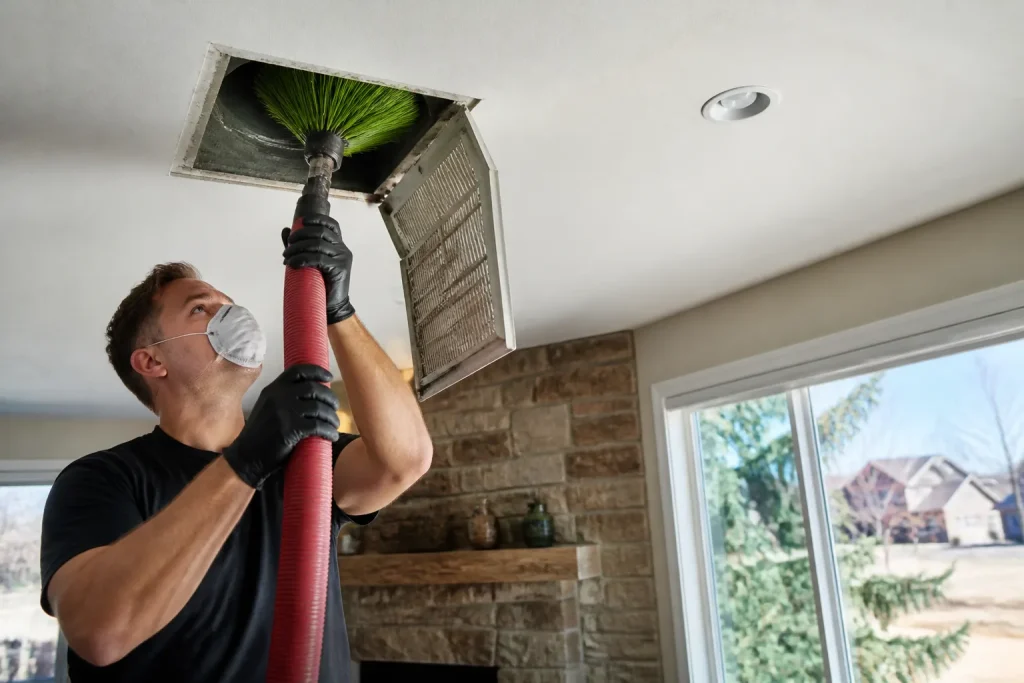
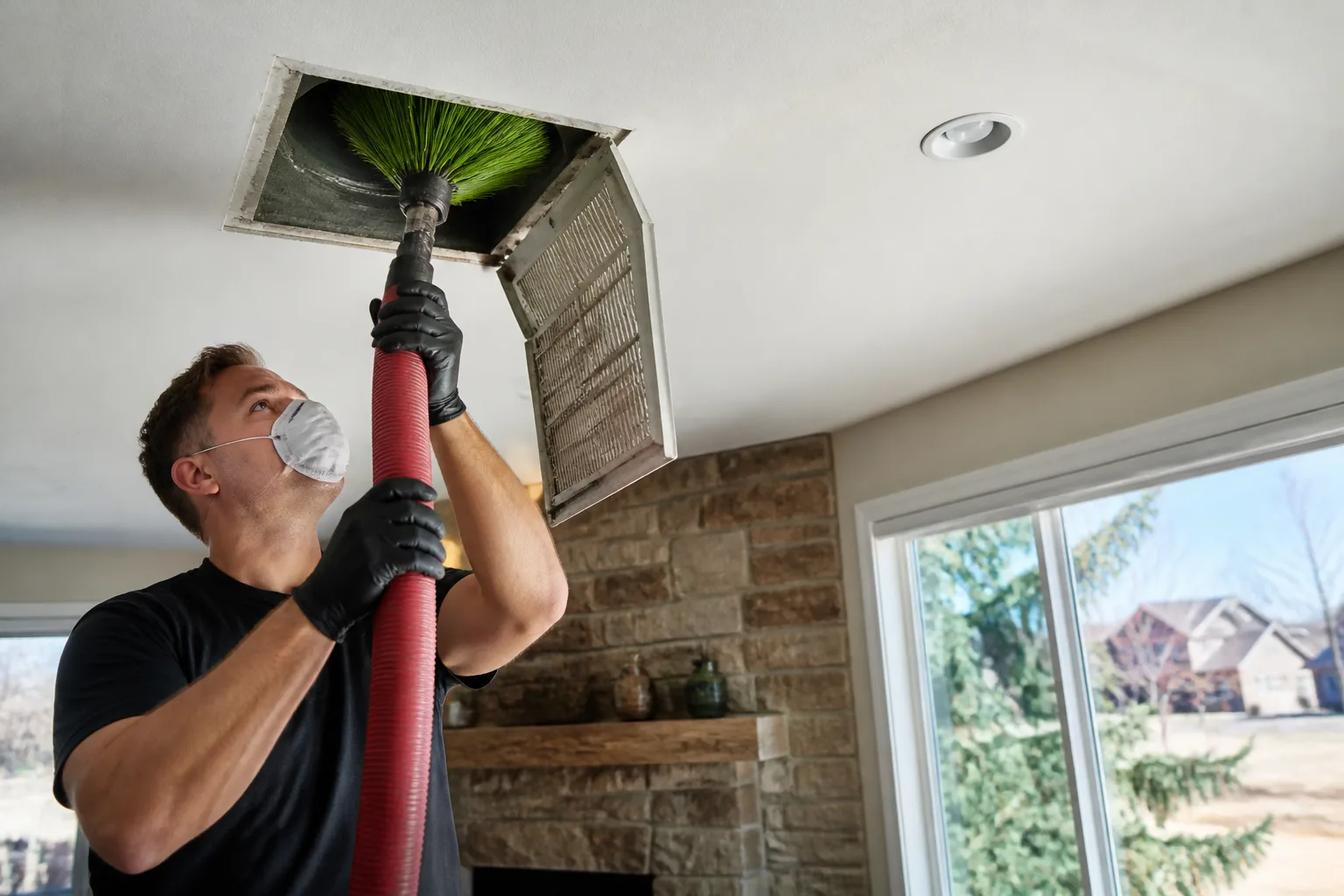
Order matters. Assess all three first, then decide. Cleaning a system with structural problems only buys you a shorter interval before the same problems return, because debris finds its way back into unsealed, damaged runs faster. We use professional-grade equipment from Rotobrush and Nikro for the cleaning itself, and Abatement Technologies tools when contamination levels call for remediation-grade work, but none of that gear decides the question for you. Diagnosis does.
Why Heather Gardens’ 1970s to 1990s housing stock matters for duct lifespan
Much of the housing in Heather Gardens went up between the 1970s and 1990s, and that’s the single most useful piece of context for this decision. Duct material has a design life, and a lot of the flex duct and early insulated ductwork from that era is at or past it. Flex duct that age commonly develops internal liner deterioration, sagging between hangers, and joint failures that no amount of cleaning will reverse.
What that means practically:
- If your home dates to that window and the ductwork has never been replaced, assume it’s a candidate for more than cleaning until a technician proves otherwise.
- Exterior foil-and-insulation duct from that era often fails from the inside out. The liner flakes, debris collects at low points, and airflow drops before anything looks wrong from the outside.
- Rigid metal duct from the same period can still be perfectly serviceable. Age alone doesn’t condemn it; condition does.
This is where a generic “we’ll clean anything” pitch misses the point. If your Heather Gardens home still has original ductwork from the 1970s or 1980s, the useful question isn’t how dirty it is. It’s whether the material can still hold air. Cleaning dirty but sound ducts is money well spent. Cleaning ducts that are falling apart is money spent on a problem that hasn’t been solved.
What does a leakage test reveal that a visual inspection misses?
A leakage test measures air that never arrives. A technician pressurizes the duct system and measures how much air escapes, usually with a duct blaster or pressure pan readings at individual registers. A visual inspection can’t tell you that, because most leakage happens at joints, seams, and connections buried inside walls, ceilings, or crawlspaces where no flashlight reaches.
When you get leakage results, you learn three things a walkthrough can’t show you:
- How much air you’re paying to condition and then losing. If a system is shedding a significant share of its conditioned air before it reaches living space, that’s a real operating cost every month.
- Where the leakage concentrates. Joint and connection leakage responds well to duct repair and sealing. Leakage spread along deteriorated duct material is a replacement signal.
- Whether cleaning will hold. Sealed ducts stay cleaner longer. Unsealed ducts pull dust and contaminants back in, which shortens the life of any cleaning job.
Ask for duct blaster or pressure pan results before you agree to any work order. A company that can’t produce leakage numbers is guessing. In our experience across Heather Gardens, the leakage test is the step most often skipped, and it’s the one that most often changes the recommendation. If you’d like that measured before deciding, call (855) 337-1174. We answer 24/7.
Air duct cleaning vs. repair vs. replacement: what does each typically cost in Heather Gardens?
Here’s the cost-benefit math that makes the decision clearer, using typical estimates for this area. These are ranges, not quotes, and the written estimate after a system assessment sets your actual price.
| Option | Typical estimated cost | Best fit when |
|---|---|---|
| Full air duct cleaning | Around $500 | Ducts are dirty but structurally sound with acceptable leakage |
| Partial duct repair & sealing | Around $1,200 | Localized damage, disconnected joints, or concentrated leakage |
| Full duct replacement | $4,000 – $8,000 | Duct material past design life, widespread failure, or leakage that sealing can’t fix |
Cleaning is the cheapest move and the right one when the system is sound. Repair sits in the middle and often makes sense when damage is localized, since sealing leaky joints recovers airflow you’re already paying for. Full replacement costs several times more, and it’s rational when the efficiency payback arrives through recovered airflow and lower conditioning costs over the years the new system serves you, not through the cleaning itself. A clean, sealed, correctly sized system moves air the way it was designed to. That’s the finish line, and it’s why we treat cleaning and repair as one conversation rather than two separate sales calls.
When should you call a pro instead of deciding on your own?
Some of this you can judge yourself: musty odors, visible debris at register boots, uneven airflow between rooms. But the moment the question turns to leakage, duct material condition, or whether a failed section can be sealed, it’s time for a trained technician with measuring equipment. Ductwork sits alongside electrical and gas systems in the same tight spaces, and a careless repair can confuse system pressures or disrupt connections you can’t see. We recommend a professional for anything beyond filter changes and visual checks.
Before you hire anyone for a clean, repair, or replacement decision, ask two questions:
- Do you offer all three? A company that only cleans has a reason to recommend cleaning. A company that only replaces has a reason to recommend replacement.
- Can I see the assessment results before you write a work order? Leakage readings, photos of duct condition, and contamination findings should come before any recommendation, not after.
We handle all three under one roof, which means the recommendation we give you can be diagnosis-driven instead of revenue-driven. Our technicians have up to 10 years of experience, and we work with Honeywell and Aprilaire air quality components when the assessment calls for filtration or humidity improvements alongside the repair. If the ducts are only half the solution, we’ll tell you what the other half is.
Related services in Heather Gardens: for the cleaning side of the decision, see our air duct cleaning page; if your assessment points toward HVAC components, HVAC cleaning covers the equipment side, and dryer vent cleaning rounds out the airflow work in the same home.
The Bottom Line
Clean, repair, or replace comes down to three readings: how contaminated the inside is, whether the duct material still holds its shape, and how much air the system loses. If the ducts are dirty but sound, cleaning at around $500 is the sensible spend. If damage is localized, repair and sealing around $1,200 recovers airflow and keeps the clean from being undone. If the ductwork is original to a 1970s to 1990s Heather Gardens home and failing in more than one place, replacement at $4,000 – $8,000 is the honest call, and the efficiency payback is why it’s worth the cost. Get the assessment first. The decision writes itself after that.
If you’re in Heather Gardens and need help, Air Duct Cleaning Heather Gardens offers free estimates. Call (855) 337-1174. We answer 24/7. Fast dispatch from 7am to 7pm, Sunday through Friday. The written estimate sets the final price, one flat price per system agreed before work starts, and you’ll get before-and-after photos of your own ducts. If you’d like the full picture of what we do, start at air duct cleaning in Heather Gardens.
Frequently Asked Questions
Typical estimates for full air duct cleaning in Heather Gardens run around $500 per system, while partial duct repair and sealing runs around $1,200 and full replacement runs $4,000 – $8,000. These are ranges, and the written estimate sets your final price. Call (855) 337-1174 for an exact quote. Estimates are free.
Cheap quotes usually cover a surface vacuuming, not a full system clean with the diagnosis that should come before it. A low figure that skips the leakage test and the structural assessment tells you nothing about whether cleaning is even the right service for your home. A real estimate starts with assessment and gives you one flat price per system, agreed before work starts. Call (855) 337-1174 for an honest range.
Ask for before-and-after photos of your own ducts and the leakage readings taken before and after. Documentation is the difference between a service you can verify and a promise you have to take on faith. We photograph the system as a standard part of the job. Call (855) 337-1174 to schedule an assessment.
Most homes need it every few years, and a sealed, well-maintained system holds its cleanliness longer than an unsealed one. If your Heather Gardens home has original ductwork from the 1970s to 1990s, the assessment matters more than the calendar, because material condition can move the answer from cleaning to repair or replacement. Call (855) 337-1174 for a free estimate and find out which answer fits your system.
Written by the team at Air Duct Cleaning Heather Gardens.
Need Air Duct Cleaning Help?
Call Air Duct Cleaning Heather Gardens - the local pro we connect you with is licensed and insured, here with fast help in Heather Gardens.
(855) 337-1174