
Last updated November 25, 2026
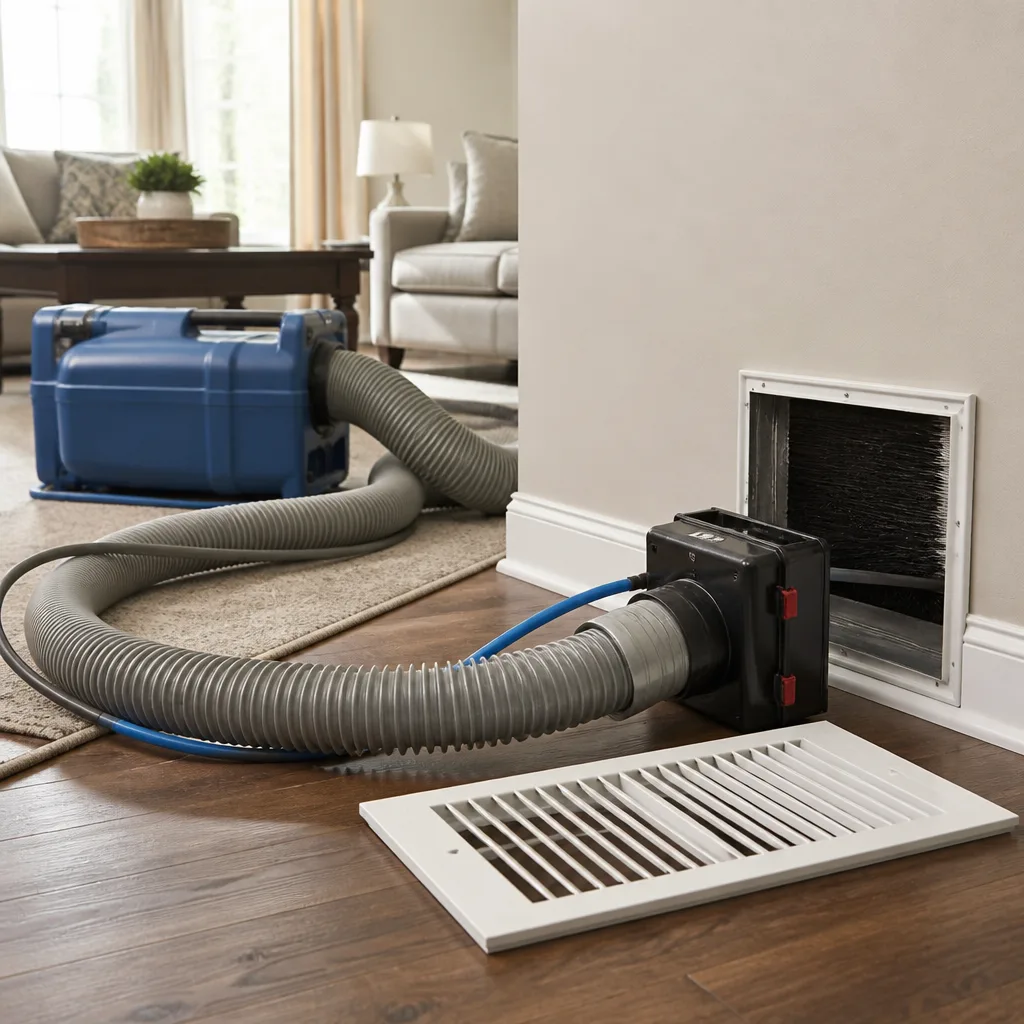 Whole-home duct cleaning
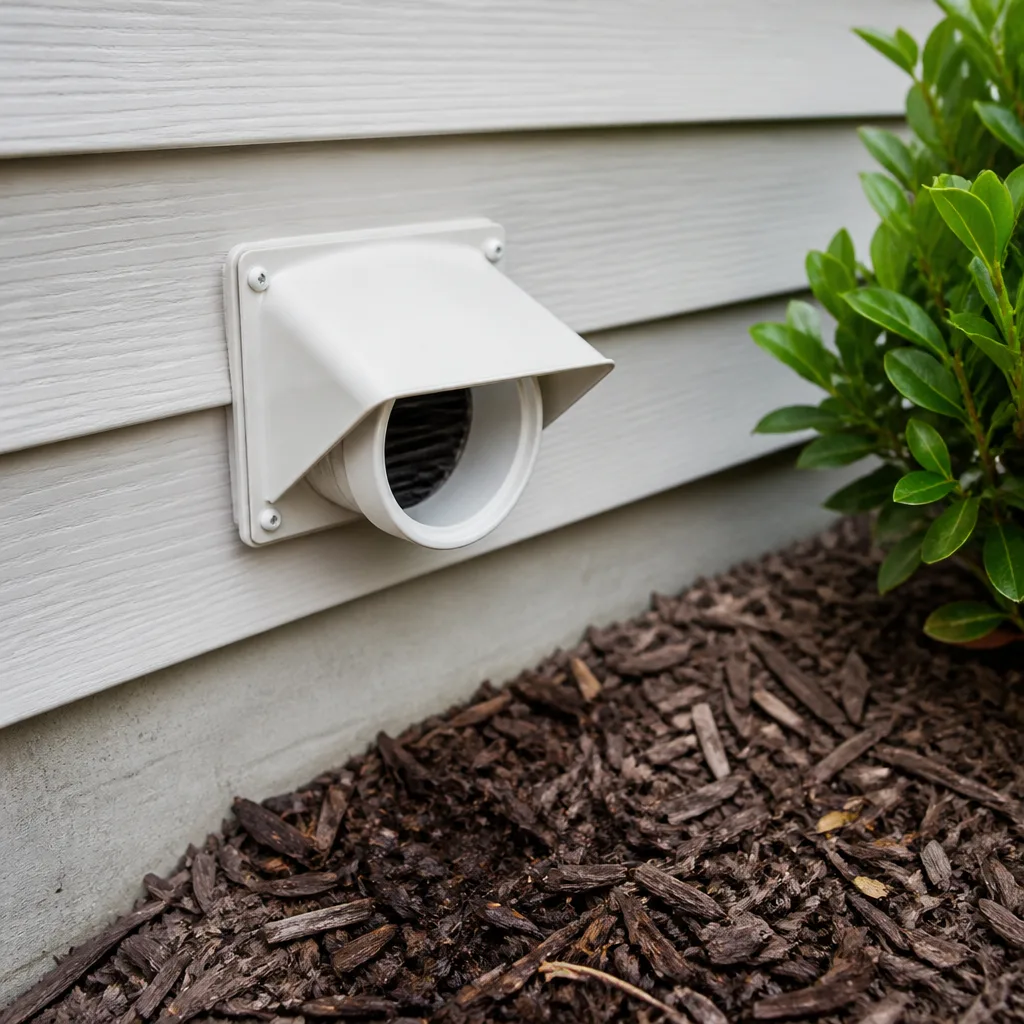 Dryer vent cleaning
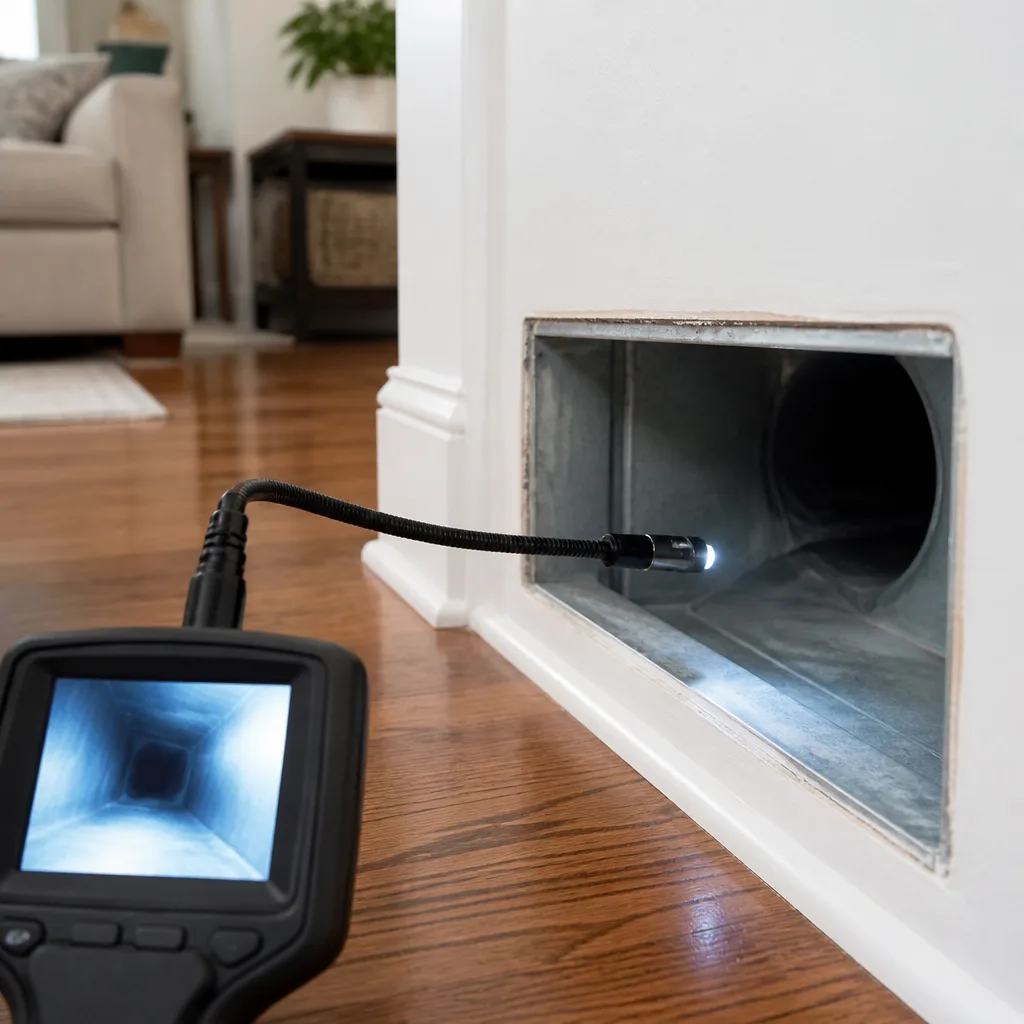 Camera inspection
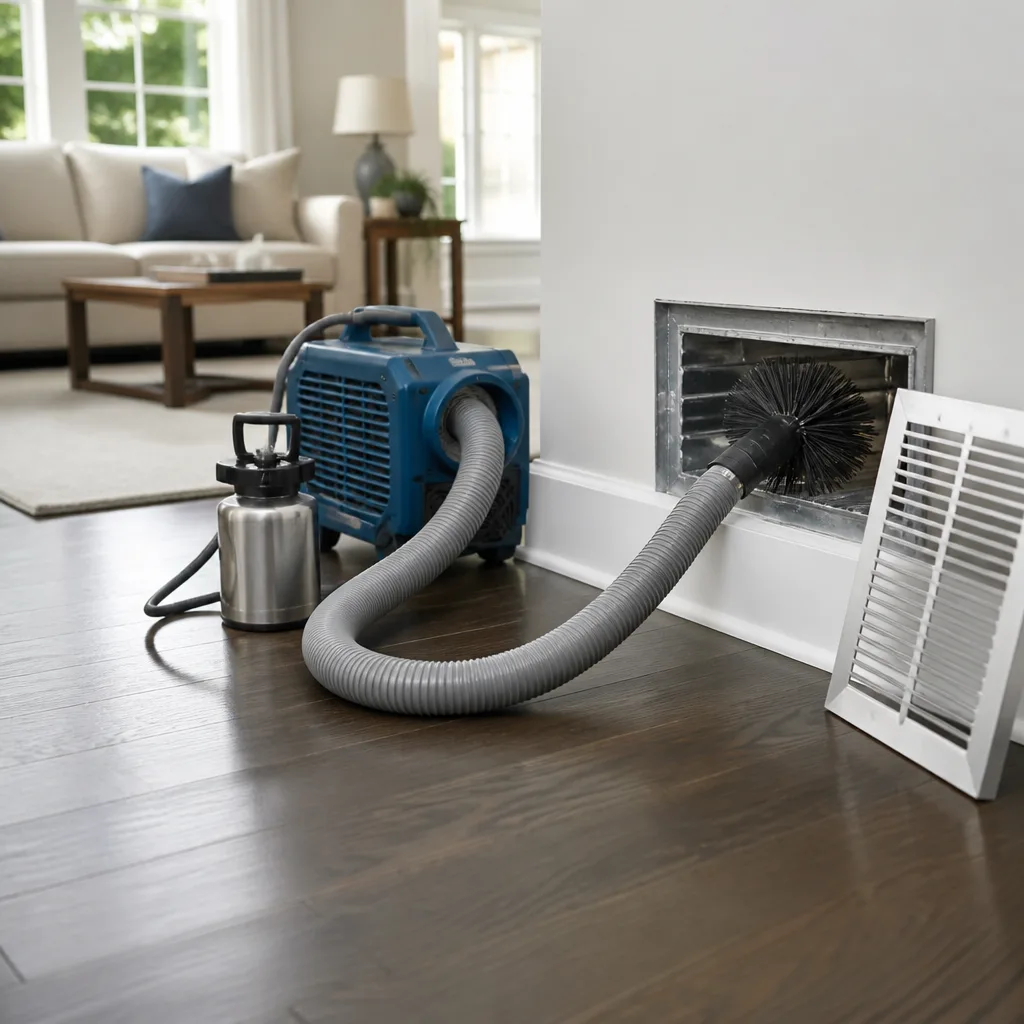 Sanitizing & deodorizing
Whole-system duct and dryer vent check with before-and-after photos - you see exactly what came out of your vents
That "$99 whole-house special" is a bait ad - the real number appears once they are in your hallway, or the "clean" is a shop-vac at the register. We photograph the inside of your ducts before and after instead.
Air Duct Cleaning Emergency Preparedness Guide for Heather Gardens Homes
Most households in Heather Gardens treat emergency preparedness as a battery, a water jug, and a flashlight. Few homeowners think about the ductwork running through their walls and ceilings, yet it can quietly become a distribution network during a wildfire smoke event, a flood, or a sewage backup that reaches the mechanical room. After the 2021 Marshall Fire, homes miles from the burn zone documented smoke particulate inside their HVAC systems within hours of the fire starting. Households that knew how to isolate their forced-air systems immediately limited the contamination; households that ran their systems into heavily compromised air did the opposite. This guide explains how to shut down, filter, and prepare your ducts before an emergency, how to inspect a system before you restart it, and how to document the work if you ever need to file a claim.
Quick Answer
To prepare your Heather Gardens home for an air quality emergency, isolate your forced-air system the moment outdoor air turns hazardous: shut the HVAC off, close fresh-air intakes, and tape over return grilles if smoke is visibly entering. After smoke, flooding, or a backup that may have reached the mechanical room, don’t restart the system until a technician has inspected the ducts and mechanical equipment. Duct sealing, upgraded filters, and professional cleaning before and after any event are what keep a compromised air supply from spreading through the whole house.
Styles & brands we work with
- Whole-home duct cleaning
- Dryer vent cleaning
- Camera inspection
- Sanitizing & deodorizing
Table of Contents
- How to Isolate Your Duct System During Wildfire Smoke
- Pre-Event Prep: Filters, Sealing, and What Actually Helps
- Post-Event Assessment: What to Check Before Restarting
- Smoke Odor vs. Particulate: Which Problem Do You Have?
- After Flooding or a Sewage Backup
- Documentation That Holds Up for Insurance Claims
- Why Duct Repair and Sealing Belong in Your Emergency Plan
- When It’s Time to Call a Professional
How to Isolate Your Duct System During Wildfire Smoke
The single most useful thing you can do during a smoke event is stop moving bad air through the house. A forced-air system does exactly that: it pulls return air from each room, sends it through the filter and heat exchanger, and pushes it back out. In a smoke event, a running system becomes a very effective way of spreading particulate evenly through the living space. If you can hear the fan running while you smell smoke indoors, you’re not filtering the air. You’re redistributing it.
Here’s the sequence to follow when outdoor air quality drops fast, whether from a fire nearby or a plume arriving from another county. In Heather Gardens and similar Front Range neighborhoods, an afternoon wind shift can move smoke in ahead of any official warning, so it’s worth rehearsing these steps before you need them.
- Switch the thermostat to Off. Not to Fan, not to Auto. Off. This stops the blower from pulling return air through the house.
- Close the fresh-air intake. If your system has a ducted outdoor air intake or an economizer, close the outdoor damper. If you don’t know where it is, find it now while things are calm and mark it.
- Close windows, doors, and any dampers connected to crawl space or attic ventilation. Seal obvious gaps around exterior doors with a towel if smoke is visibly seeping in.
- Set up stand-alone air cleaners in the rooms you use most. A freestanding HEPA unit in a bedroom works far better right now than running the central system.
- Tape over return grilles only if you can still keep the system off. Sealing the grilles on a running system pressurizes the ducts and can push leaks harder. Off first, then seal.
- Leave the furnace filter in place. Do not swap it out in the middle of the event; that exposes you to the duct air while you work.
If you have an intake for a balanced ventilation system or a heat-recovery ventilator, shut it down as well. The goal is not perfect sealing, which is rarely achievable in a house. The goal is to stop your duct system from doing the spreading. Once the outdoor air clears, you can restart the system and turn your attention to what’s built up inside.
Pre-Event Prep: Filters, Sealing, and What Actually Helps
The best time to protect a duct system is before anything happens. Most Heather Gardens homes sit in a high-wind corridor with a lot of dry grass and scrub nearby, which means wildfire smoke is not a hypothetical risk in this area. The filter you use and the condition of your duct seals matter more than most homeowners realize. A leaky return duct in a wall cavity or attic will pull in outdoor air under every smoke event, no matter how good the filter is.
Here’s what makes a measurable difference, ranked roughly by impact:
- Seal first, then filter. A MERV 13 filter on a system with unsealed duct joints is only filtering a fraction of the air you’d think it is. Duct sealing brings the return path back to what it should be.
- Move up to MERV 13 for smoke season. MERV 13 captures the smaller smoke particles a typical MERV 8 misses. Check your blower’s capacity before you jump ahead, though. Too high a MERV on an older furnace can overwork the motor and cause pressure drop. If you’re unsure, ask before you buy.
- Add a media or thick pleated filter with a proper frame. A filter that slips or flexes in its slot leaks air around the edges. A rigid media cabinet (Aprilaire makes well-regarded ones, and we install their filter housings) holds the filter flat so it actually sees the air.
- Close the bypass. If your system has a humidifier bypass duct or a fresh-air damper, know how to shut it. This is the single most overlooked prep step we hear about.
- Have a duct inspection done. A visual inspection of accessible duct runs identifies missing connections and gaps that will pull in exterior air before you ever need to worry about smoke.
For a practical inspection and cleaning before the next smoke event, air duct cleaning is the right starting point. It also gives you a baseline for comparison later, so if contamination does occur, you have documentation of what the system looked like when it was clean. Our technicians have up to 10 years of experience and we use professional-grade Rotobrush equipment to work through the whole system, not just the easy runs.
Post-Event Assessment: What to Check Before Restarting
Once a smoke event passes, the instinct is to flip the system back on and let it air out. Don’t. The first restart after a fire event, flood, or sewage backup is the moment you can force contamination deeper into the system, the furnace, and the evaporator coil. A short walk-through before restarting saves a much larger cleanup afterward.
Work through this list before you turn the system back on:
- Check the furnace filter. If it’s gray, black, or visibly loaded with fine ash, it caught the smoke and should be swapped. Note the date and take a photo before tossing it; you may need that for a claim.
- Look at the return grilles and the first few feet of duct at each. A flashlight will show you soot streaks, ash film, or water staining.
- Inspect the mechanical room. After a flood or backup, this is where water damage often starts and where you’ll find the plumbing leak, the water heater base, and the furnace cabinet. Any standing water or water staining around the furnace cabinet, blower, or duct start collar needs professional evaluation before power-on.
- Sniff the return duct at the furnace. Sharp, wet ash smell means recent smoke; musty, damp-earth smell means moisture got in and mold growth is a real possibility. Either way, don’t restart.
- Check the condensate drain and the coil cabinet. Standing water here after a flood or heavy rain can grow mold spores and then distribute them on the next call for cool air.
- Read your smoke and CO detectors. A post-event test takes a minute and confirms nothing in the combustion path was disturbed.
For a broader cleaning of the whole system after any of these events, HVAC cleaning covers the coil, the blower compartment, and the cabinet where duct runs meet the equipment. That’s where smoke film and post-flood microbial growth tend to hide.
Smoke Odor vs. Particulate: Which Problem Do You Have?
Two different problems come out of a smoke event, and they need different responses. Particulate deposit is what’s sitting on the duct surfaces: ash, soot, and fine char film. It can be physically removed. Odor adsorption is different. Smoke compounds chemically bind to porous surfaces, including the sheet metal, the flex duct liner, and any fiberglass board in the system. The particles may be gone, but the smell keeps coming back because the source is bound into the material. You can’t vacuum it out.
Here’s how to tell them apart in practice:
- Particulate deposit: visible soot or ash film on grilles, return openings, and the furnace filter. Smell fades after a proper cleaning. Ducts look cleaner afterward (and a before-and-after photo shows it).
- Odor adsorption: smell returns whenever the system runs, even after one round of cleaning. Smell is stronger in rooms with more airflow. Grilles may look clean. This signals chemical binding on duct surfaces, and you need a sanitizing treatment, not a stronger vacuum.
- Both: common after a nearby fire. The cleaning removes the deposit, and a Guardsman-treated sanitizing application addresses the adsorption so the smell doesn’t keep returning. This is a standard part of an Air Quality & Sanitizing service for us, and it’s worth asking about on any post-fire job.
One more thing to know: duct cleaning alone doesn’t always solve the smell. If the source is an odor compound that’s bonded into the flex liner or the fiberglass board, replacing those sections may be the right answer. Our Duct Repair & Sealing service includes identifying sections that can’t be cleaned effectively and recommending replacement where it matters.
After Flooding or a Sewage Backup
Flooding and backups are different emergencies with different risks. A clean-water flood that only reached the crawl space and not the duct system is usually a perimeter problem. A sewage backup that reached the ductwork is a contamination problem that needs to be treated as one. The mechanical room is often where these events announce themselves first, because it’s where the water heater, the furnace, and the duct start collars meet.
After any flood or backup, here’s the protocol before you run the system:
- Leave the HVAC off. Do not run the fan to “dry things out”. That spreads moisture and any biological contamination through the house.
- Photograph everything. Stand in each room and take wide shots and close-ups of the furnace cabinet, the filter slot, the duct joints, and any water staining.
- Do not use a shop-vac on wet duct interiors. Household vacuums don’t capture fine biological material and can aerosolize it.
- Call a professional for evaluation. Sewage contamination in the duct path is a remediation scenario, not a cleaning job. We use Abatement Technologies equipment for these situations because they involve capturing and containing contamination rather than just moving air.
- Replace the filter and treat the system. Once the system is dry and evaluated, a full cleaning plus sanitizing application is the baseline. Replacing any wet flex duct or porous liner is normally cheaper over the long run than trying to clean it.
If your water damage was limited to the basement or the mechanical room and the ducts themselves are intact, the sequence above still applies. In a Heather Gardens home, the furnace closet and the return path often share a wall with a plumbing chase, which means a small supply-line leak can wick into the duct insulation before you notice. On dryer vent cleaning visits, we frequently find water staining at the mechanical room exhaust and would flag it if we saw duct moisture loss like that.
Documentation That Holds Up for Insurance Claims
Claims after a wildfire or flood event are easier when you can show what the system looked like before, during, and after. Insurers generally want to see that the loss occurred, that the repair was reasonable, and that the work was done by a qualified provider. A duct cleaning invoice with no supporting detail often gets scrutinized more than a well-documented one.
What a claim-ready file should include:
- Pre-event photos of the system if you have them. This is where a routine cleaning beforehand pays off; it establishes a clean baseline.
- Post-event photos taken before cleaning begins. Grilles, filter, visible ducting, and the furnace cabinet.
- The written estimate and the final invoice, with line items matching the work performed and the service category named (Air Duct Cleaning, HVAC Cleaning, Duct Repair & Sealing, or Air Quality & Sanitizing).
- Before-and-after photos of your own ducts. These are the most persuasive piece of documentation in most claims; they show the change directly.
- A written scope note describing what was found during inspection (visible soot, odor adsorption, water staining, damaged flex sections) and the reasoning for each recommended service.
- The date and time of the event and the date of the cleaning, kept in the same file as your other documentation.
We can help you put this file together. Our invoices name each service category and include before-and-after photos as a standard part of the job. If your claim is with a Colorado insurer, we’ll work with your insurer’s requirements, though the policy itself determines what’s covered. Call (855) 337-1174 if you need photographs or a scope note for a claim already in progress.
Why Duct Repair and Sealing Belong in Your Emergency Plan
A duct system tight enough to pass a routine inspection is not automatically tight enough to perform during a smoke event. Most of the leaking we find on Heather Gardens air duct cleaning visits happens at joints, boots, and returns located in wall cavities or unconditioned attics. Under normal conditions, a few small gaps barely change your comfort. During a wildfire smoke event, those same gaps allow smoke-laden air to be pulled directly into the return plenum and distributed through the house without ever passing the filter.
Duct Repair & Sealing is the only service category that addresses this. Cleaning removes what’s already inside; sealing prevents new contamination from getting in during the next event. The two belong together in any emergency plan for a Heather Gardens home.
Three sealing priorities for a pre-event plan:
- Seal the return side first. Leaks on the return side pull outdoor air directly into the system, short-circuiting the filter. This is the highest-priority fix for smoke resilience.
- Seal connections at boots and grilles. These are where the largest gaps usually live, and they’re the easiest to identify with a visual inspection.
- Check the mechanical room connections. The seam where the trunk line meets the furnace cabinet is a common source of unfiltered air. Seal it properly with the appropriate duct mastic, not tape.
If you’ve never had your duct system inspected for leaks, a pre-season evaluation is the most useful single step you can take. We work through the full system because that’s the only way to find leak points a surface job would miss.
When It’s Time to Call a Professional
Some steps you can handle yourself: shutting off the thermostat, taping grilles, swapping the filter, documenting with photos. Some you shouldn’t. Call a professional if any of the following is true: the smell doesn’t fade after cleaning you can do yourself; you see soot streaks or water staining inside accessible duct runs; the mechanical room was affected by a flood or a sewage backup; the system is running but airflow is weak; you have allergy flare-ups or musty odors that keep returning to a particular room; or your insurance claim needs professional documentation. Duct interiors are a confined space with sharp edges and mechanical hazards, and electrical equipment in the airstream is not a homeowner repair. Air Duct Cleaning Heather Gardens offers free estimates in Heather Gardens; call (855) 337-1174. We answer 24/7. Fast dispatch from 7am to 7pm, Sunday through Friday.
Common Mistakes to Avoid
- Running the fan to “clear the air” during a smoke event. It doesn’t clear anything; it distributes carbon and ash into every room. Shut the system off first and use a stand-alone air cleaner instead.
- Buying a MERV 16 filter for a system that can’t handle it. A filter too dense for the blower can cause pressure drop and shorten equipment life. Match the filter to the system before smoke season, not during it.
- Replacing the filter and considering the problem solved. A new filter catches particulate; it doesn’t address what’s already on the duct surfaces or bound into the liner. Cleaning and sanitizing are separate steps.
- Restarting after a flood without a mechanical room check. Water can wick into duct insulation and be invisible from below. A quick flashlight inspection of the furnace cabinet before power-on can save a contractor visit later.
- Skipping before-and-after photos on a claim-ready job. These are your strongest documentation. Skipping them makes a legitimate claim harder to support.
- Hiring a company that won’t specify which services it’s doing. “Duct cleaning” could mean a vacuum pass or could mean cleaning, sealing, and sanitizing. Ask which service categories are included and get it in writing.
- Assuming a pre-event inspection is an upsell. It’s the cheapest step in the whole plan and the one that most changes the outcome of the next event.
See the difference
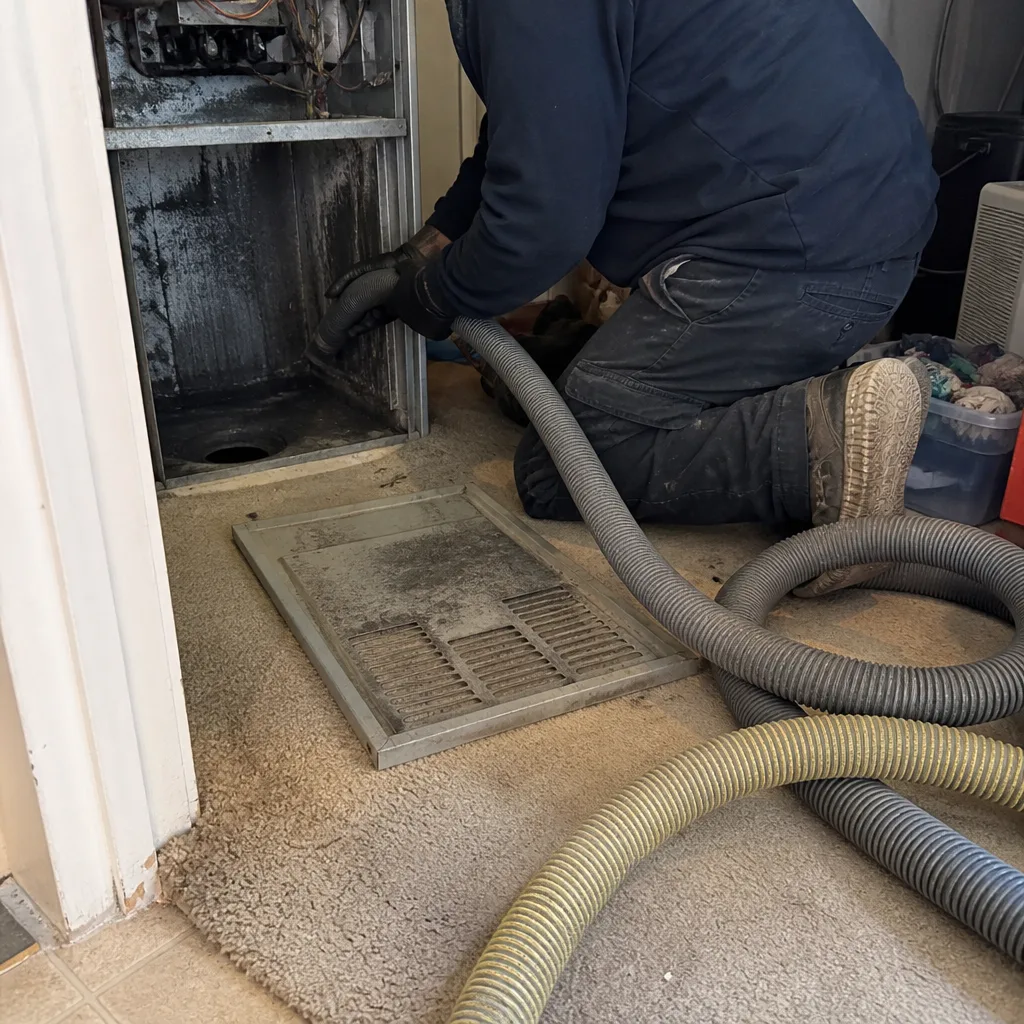 Before
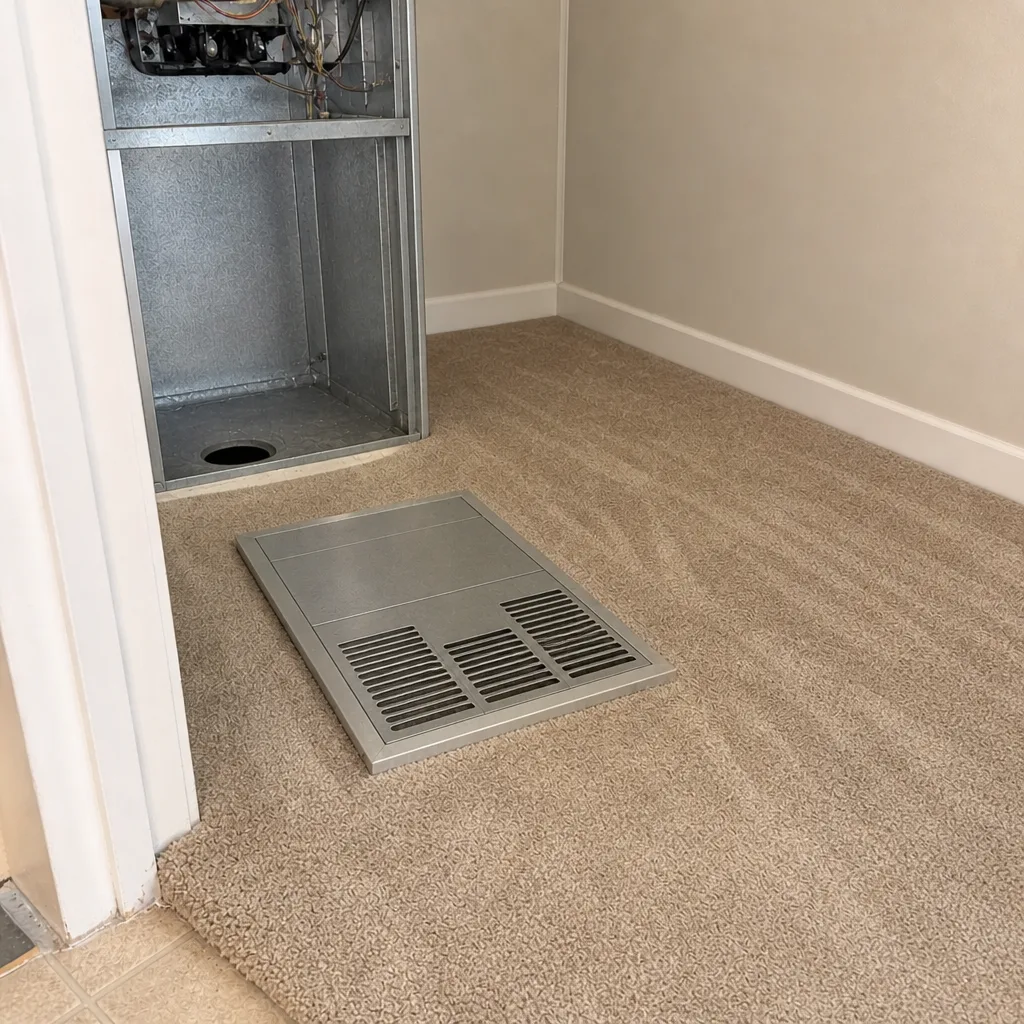 After
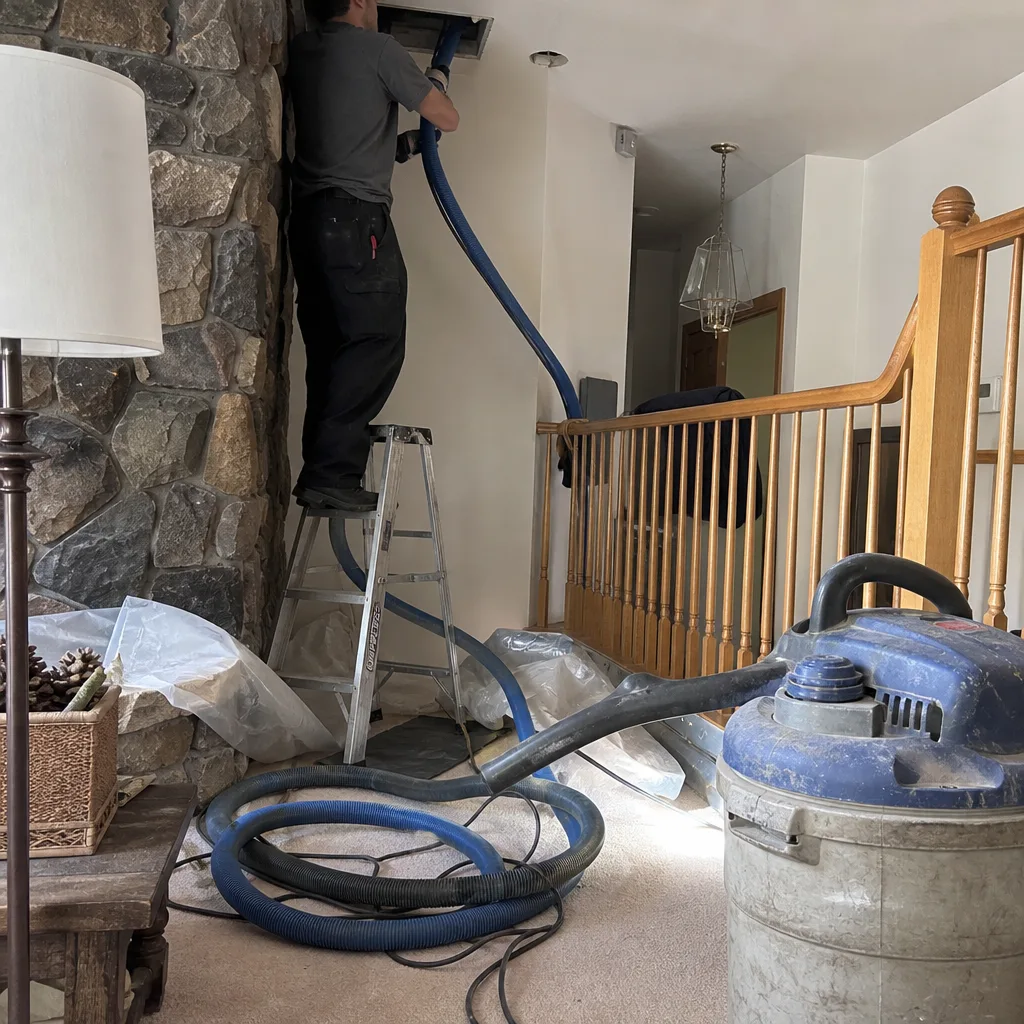 Before
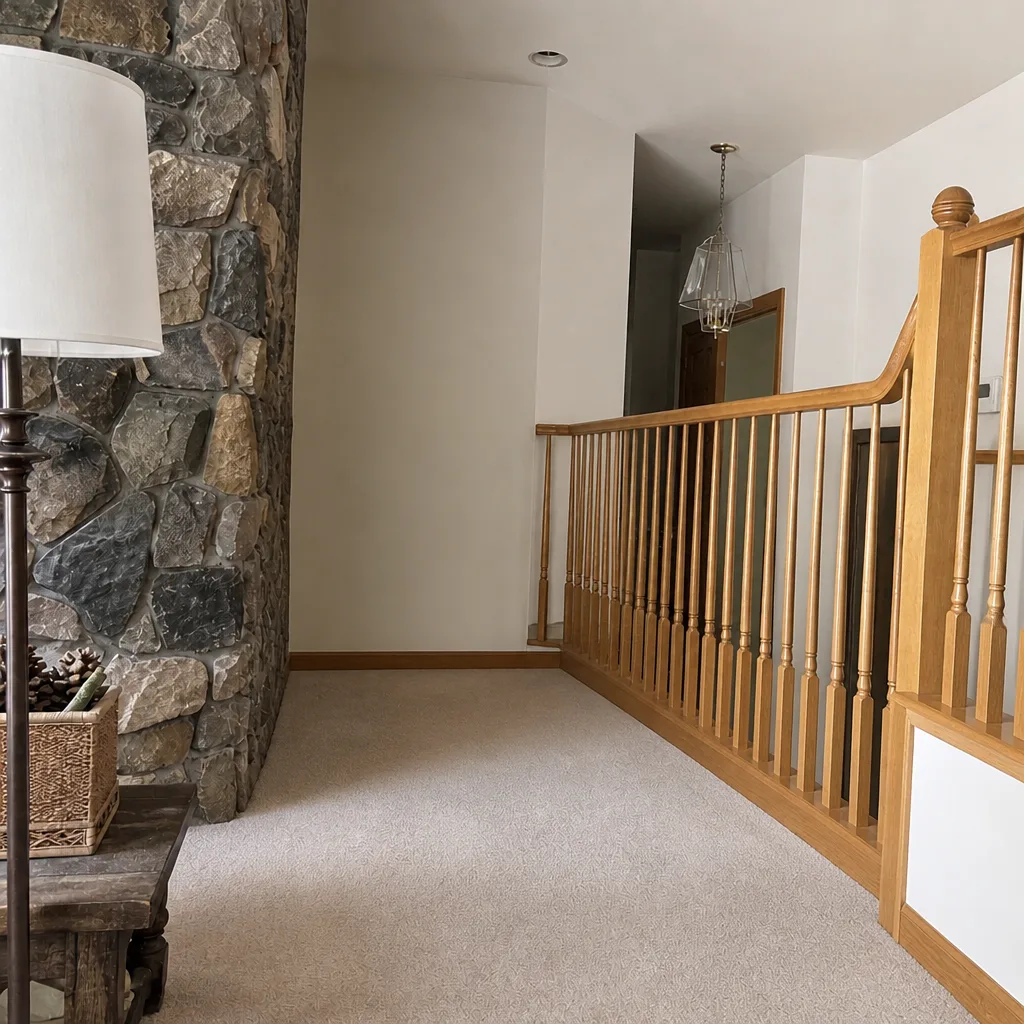 After
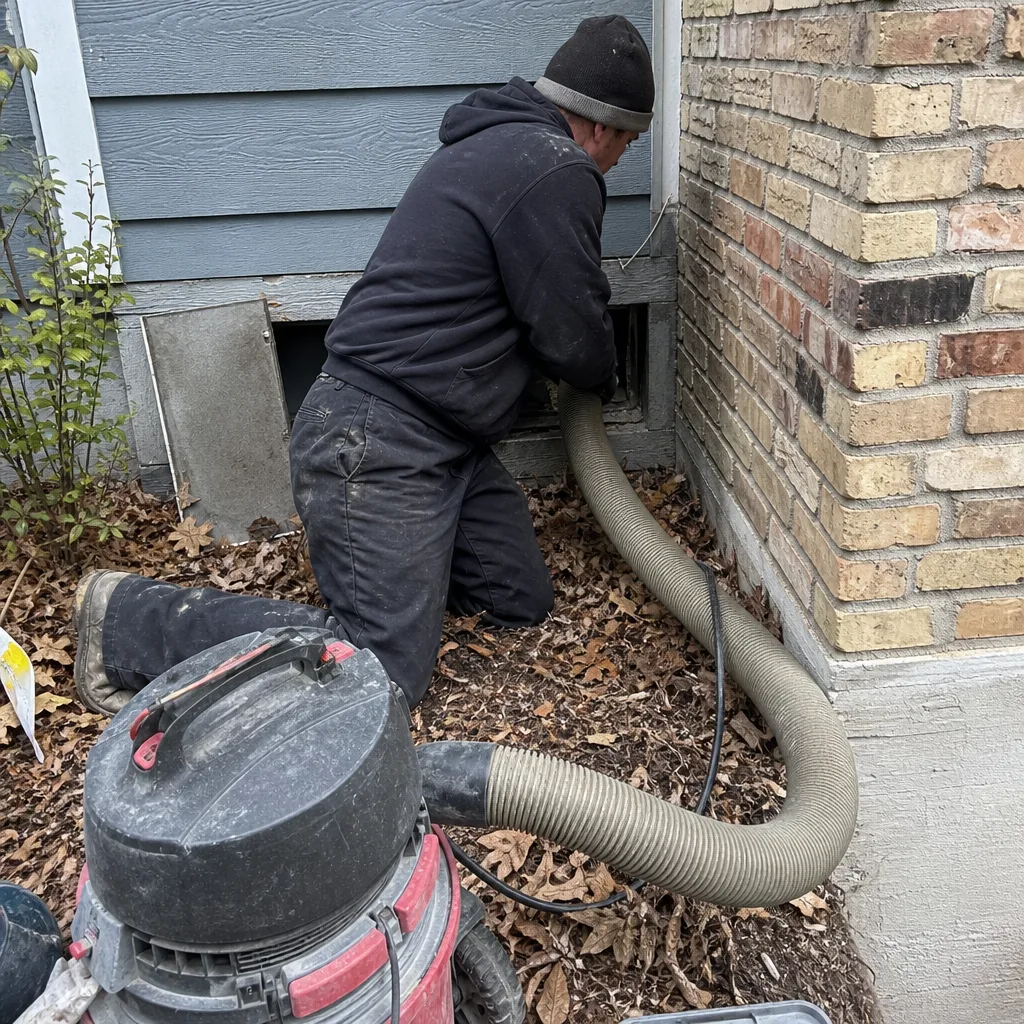 Before
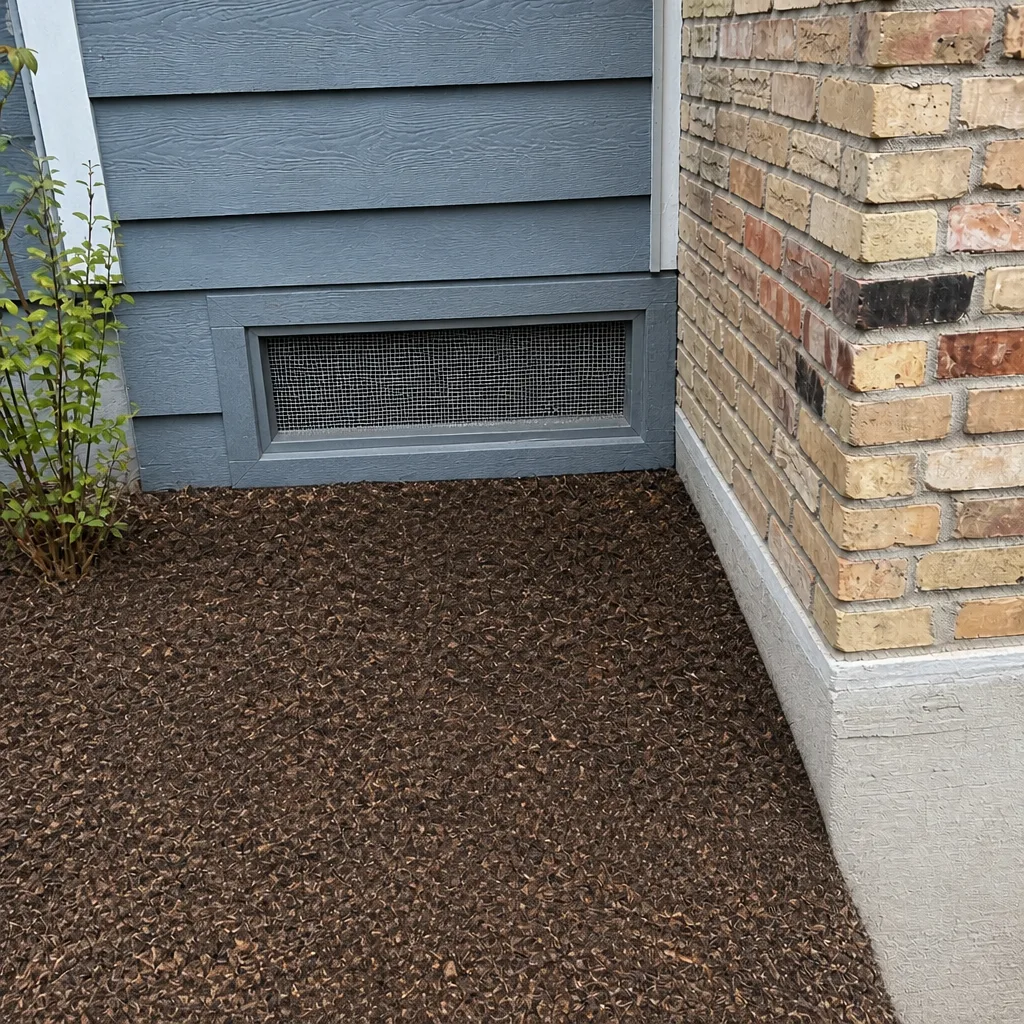 After
When to Call a Professional
If you’re reading this and wondering whether your own system needs attention, a free estimate is the fastest answer. We can walk through the ducts, check the return side for leaks, look at the mechanical room, and tell you plainly what we’d recommend and what we wouldn’t. That’s true whether you’re preparing for the next smoke season, recovering from a flood, or filing a claim after one. Our technicians have up to 10 years of experience and use Rotobrush and Nikro professional-grade equipment on every job, so what comes out of your ducts isn’t guesswork. We quote one flat price per system before work starts, and the written estimate sets the final price. If you’ve been putting off a duct inspection, this is a reasonable time to schedule it. Call (855) 337-1174. We answer 24/7. Fast dispatch from 7am to 7pm, Sunday through Friday.
Frequently Asked Questions
Set your thermostat to Off, not Fan or Auto, and close any fresh-air intake or economizer damper. Sealing return grilles is fine as long as the system is off. Then run a stand-alone HEPA unit in the room you use most. If you can’t find your fresh-air intake, that’s worth identifying before the next smoke event rather than during one.
Coverage depends on your policy, but many Colorado policies will cover duct cleaning after a covered loss such as wildfire smoke damage or water intrusion. In our experience, the claims that go smoothly have pre-cleaning photos, a written estimate, and before-and-after photos of the ducts. Call (855) 337-1174 if you need help documenting a claim.
If the smell returns every time the system runs after one round of cleaning, or gets stronger in high-airflow rooms, the compounds have likely bonded to duct surfaces. That’s an odor adsorption problem, and it needs a sanitizing treatment rather than more vacuuming. If the smell fades and the ducts look cleaner, you had particulate deposit, which cleaning can fully address.
MERV 13 is the usual target for smoke season because it captures fine smoke particles that MERV 8 misses. Check the blower’s capacity first; some older furnaces don’t have the static pressure headroom for it. Have a technician confirm the right filter for your system before you buy.
Leave the HVAC system off and call a professional for evaluation immediately. Duct interiors affected by sewage are a remediation scenario, not a routine cleaning job. Don’t run a household shop-vac on wet duct interiors; it can aerosolize biological material. Abatement Technologies equipment is what a remediation-grade response looks like, and we use it for these calls.
Yes, we schedule same-day service when capacity allows, and a call outside our dispatch hours is booked into the next opening, Sunday through Friday, 7am to 7pm. If you need an estimate first, that part is free. Call (855) 337-1174 for exact quote timing. We answer 24/7 and can usually confirm availability on the call.
The Bottom Line
Your ducts are part of your emergency plan whether or not you’ve planned for them. The steps that matter most are simple: know how to shut down and isolate your forced-air system before a smoke event, check the mechanical room after a flood or backup before restarting anything, and document what you find with photos and a written scope. Pre-event preparation (filter upgrades, duct sealing, a clean baseline) costs far less than post-event remediation. Air Duct Cleaning Heather Gardens handles all five service categories, from cleaning and HVAC work to repair, sealing, and sanitizing, so one call can address the whole system. Call (855) 337-1174 for a free estimate. We answer 24/7. Fast dispatch from 7am to 7pm, Sunday through Friday.
Written by the team at Air Duct Cleaning Heather Gardens.